
Pest Control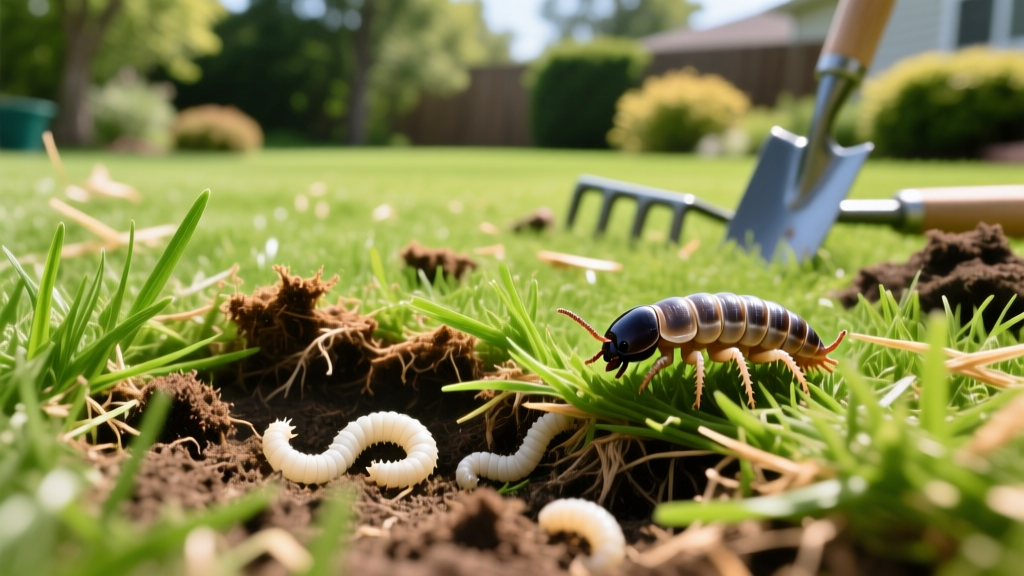
The Grubs Bug Threat: Identification and Lawn Treatment
Understanding the Grubs Bug: Beyond the Surface Damage
When homeowners refer to the 'grubs bug,' they are actually describing the larval stage of several scarab beetle species, most notably the Japanese beetle, European chafer, and June bug. These pests live entirely underground during their destructive phases, feeding on the root systems of turfgrass. A severe infestation severs the grass from its nutrient and water supply, causing the turf to roll back like a loose carpet.
Effective management requires abandoning reactive, guesswork-based pesticide applications. Instead, successful defense relies on aligning your treatment strategy with the specific biological lifecycle of the scarab larvae present in your microclimate, combined with precise soil threshold testing.
The Lifecycle Matrix: Timing Your Defense
The efficacy of any active ingredient is entirely dependent on the developmental stage of the grub. Applying a curative chemical during the egg stage, or a preventative during the pupal stage, results in wasted product and continued turf decline.
Expert Insight: Soil temperature dictates grub movement. When soil temperatures at a 2-inch depth drop below 50°F in late autumn, grubs migrate 4 to 8 inches deep to overwinter, rendering surface-applied treatments entirely ineffective until spring warming occurs.
- June to Early July (Egg Stage): Adult beetles lay eggs in the top inch of soil. This is the window for preventative chemical applications.
- August to October (Early Larval Instars): Eggs hatch. The young grubs are small, actively feeding near the surface, and highly susceptible to both biological nematodes and curative fast-acting chemicals.
- November to March (Overwintering): Grubs are deep in the soil profile and dormant. No treatment should be applied.
- April to May (Late Larval Instars): Grubs return to the root zone to feed heavily before pupating. Curative treatments are required, though the grubs' larger size and increased fat reserves make them harder to kill than in autumn.
Diagnostic Framework: Confirming the Culprit
Brown patches in your lawn are not a guaranteed indicator of the grubs bug. Drought stress, brown patch fungus (Rhizoctonia solani), and chinch bug damage present similar above-ground symptoms. Before purchasing any treatment, you must perform a physical soil audit.
The 1-Square-Foot Sod Cut Test
Using a sharp spade, cut three sides of a 12-inch by 12-inch square in your turf, about 2 inches deep. Peel the sod back like a hinge. Count the number of C-shaped white larvae in the exposed soil and the root mat. Replace the sod and step on it to ensure root contact.
According to Ohio State University Extension, the economic threshold for treatment is generally 5 to 10 grubs per square foot for healthy, well-irrigated lawns, and as few as 3 to 5 grubs per square foot for drought-stressed or heavily shaded turf.
| Symptom | Grubs Bug | Brown Patch Fungus | Chinch Bugs |
|---|---|---|---|
| Turf Attachment | Roots severed; sod rolls back easily | Roots intact; leaf blades blighted | Roots intact; stems pierced and hollowed |
| Damage Pattern | Irregular, expanding brown patches | Circular rings with smoke-gray margins | Yellowing edges near driveways/sidewalks |
| Secondary Signs | Birds, skunks, or raccoons digging up turf | Presence during high humidity/heat | Tiny black/white insects at soil line |
Chemical vs. Biological Controls: Cost and Efficacy Analysis
Selecting the right active ingredient requires balancing immediate eradication needs with long-term soil ecology. The market offers distinct classes of grub control, each with specific failure modes.
Preventative Chemicals (Neonicotinoids & Anthranilic Diamides)
These must be applied in early summer before eggs hatch. They take 2 to 4 weeks to translocate into the root zone but offer residual protection for months.
- Chlorantraniliprole (e.g., Acelepryn G): The gold standard for modern turf management. It is highly targeted, posing virtually zero risk to pollinators and earthworms. A 30 lb bag (covering roughly 5,000 sq ft) costs around $65. It requires early application (May/June) because of its slow systemic movement.
- Imidacloprid (e.g., Merit 0.5G): An older neonicotinoid. While effective, Penn State Extension notes increasing regulatory scrutiny on neonicotinoids due to their potential impact on non-target pollinators if applied to flowering weeds like clover in the lawn.
Curative Chemicals (Organophosphates & Carbamates)
Used when active feeding damage is already visible in late summer or early spring. These act as contact poisons and degrade rapidly in the soil (within 2 to 3 weeks).
- Trichlorfon (e.g., Dylox 6.2G): The most reliable curative option. It kills large, late-instar grubs within 48 hours. Priced at approximately $45 for a 30 lb bag. Critical Edge Case: Trichlorfon degrades rapidly in high-pH soils (above 7.2). If your soil test shows alkaline conditions, Dylox will fail to provide adequate control.
Biological Controls (Nematodes & Bacteria)
For organic lawn care, biologicals offer sustainable suppression, though they require strict environmental adherence.
Nematode Storage Warning: Beneficial nematodes (Heterorhabditis bacteriophora) are living organisms. Ordering them online in July often results in dead inventory due to heat exposure in delivery trucks. Always buy from suppliers who use insulated, ice-packed shipping, and apply them immediately upon arrival during overcast conditions or at dusk.
- Milky Spore (Paenibacillus popilliae): Only effective against Japanese beetle grubs. It takes 2 to 3 years to establish a protective spore matrix in the soil. Do not use Milky Spore if your infestation is driven by European chafers or June bugs; it will not work.
Step-by-Step Curative Application Protocol
If your sod cut test reveals more than 8 grubs per square foot in late August, execute this precise curative protocol using a fast-acting granular like Trichlorfon:
- Mow and Dethatch: Lower your mower deck to 2 inches. If your thatch layer exceeds 0.5 inches, rent a power dethatcher. Thatch acts as a physical barrier, trapping granules and preventing them from reaching the soil.
- Calibrate the Spreader: Set your broadcast spreader to the exact setting listed on the product label for 'grub control.' Walk at a steady pace of 3 feet per second to ensure uniform distribution.
- Apply the Granules: Apply in a grid pattern (North-South, then East-West) to prevent striping and missed zones.
- Water-In Immediately: This is the most common failure point. Granular curatives must be washed off the grass blades and into the top 2 inches of soil. Apply exactly 0.5 inches of water via your irrigation system or a sprinkler. Use a tuna can placed on the lawn to measure the 0.5-inch threshold. Under-watering leaves the chemical in the thatch; over-watering pushes it past the root zone.
Post-Treatment Lawn Recovery and Soil Health
Killing the grubs bug is only half the battle. The severed root systems will not reattach. For areas where the turf has rolled back or died completely, you must perform localized renovation.
Rake out the dead thatch and debris from the damaged patches. Apply a starter fertilizer high in phosphorus (e.g., a 10-18-10 NPK ratio) to stimulate rapid root development. Overseed with a turf-type tall fescue or Kentucky bluegrass blend matched to your existing lawn, and keep the top inch of soil consistently moist for 14 days until germination is complete. Integrating deep, infrequent watering practices (1 inch per week, applied in a single session) will force the new roots to grow deeper, making the turf naturally more resilient to future shallow-feeding pest incursions.

