
Pest Control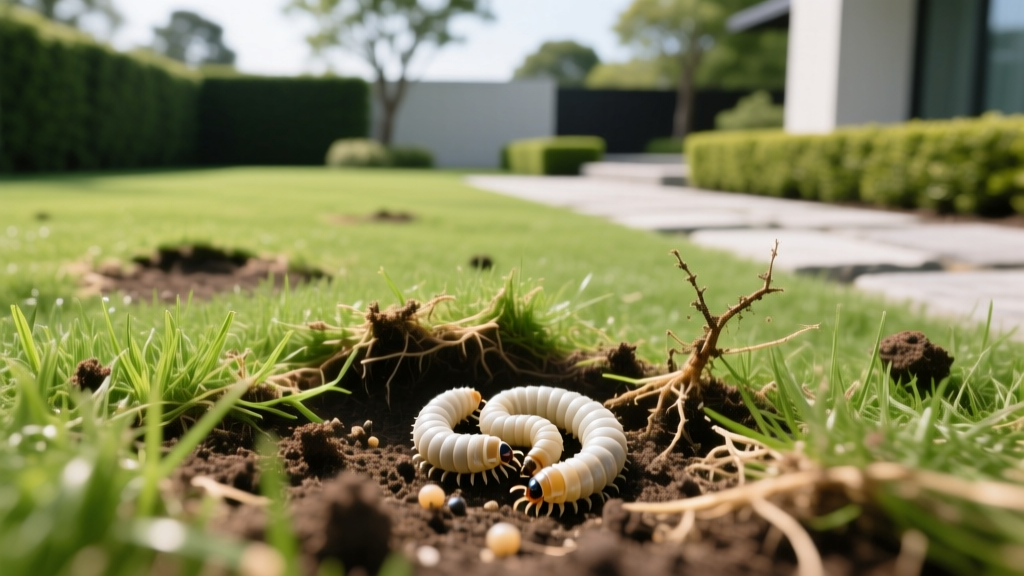
Grubs Insect Guide: Identify, Prevent, and Treat Lawn Damage
The Biology of the Grubs Insect
The term 'grubs insect' refers to the larval stage of various scarab beetles, most notably the Japanese beetle (Popillia japonica), European chafer (Rhizotrogus majalis), and June bug (Phyllophaga spp.). These pests spend the majority of their lifecycle underground, feeding aggressively on the root systems of turfgrass. A mature grub is easily identified by its plump, cream-colored, C-shaped body, brown head capsule, and six segmented legs near the head.
Understanding their lifecycle is critical for effective yard defense. Adult beetles emerge in early summer (June to July) to mate and lay eggs in the soil. By late August, these eggs hatch into first-instar larvae. This is the stage where the grubs insect causes the most catastrophic damage, as they are actively feeding near the soil surface to build fat reserves before burrowing deeper to overwinter. In spring, they return to the root zone, feed briefly, pupate, and emerge as adults, restarting the cycle.
Diagnostic Framework: Confirming an Infestation
Homeowners often mistake grub damage for drought stress, fungal diseases like brown patch, or dog urine spots. Because curative treatments are time-sensitive and expensive, you must confirm the presence of the grubs insect before applying chemicals.
The 1-Square-Foot Peel Test
Use a flat-edged spade to cut three sides of a 12x12 inch square in your turf, about 3 inches deep. Peel the sod back like a carpet. Count the number of grubs exposed in the soil and on the root mat. Replace the sod and water it immediately. Repeat this in three different areas of the lawn, prioritizing the margins between damaged and healthy grass.
- 0-5 grubs per sq. ft.: No treatment necessary. Healthy turf can outgrow this feeding.
- 6-9 grubs per sq. ft.: Monitor closely. Treat if the lawn is already stressed or if wildlife (skunks, raccoons, crows) is tearing up the yard to eat them.
- 10+ grubs per sq. ft.: Immediate curative treatment is required to prevent total root loss.
Another key indicator is the 'Tug Test'. If you can grab handfuls of brown, dead turf and pull it up from the soil with zero resistance—like lifting a loose rug—the root system has been completely severed by grub feeding.
Preventive vs. Curative Treatment Matrix
Selecting the right chemistry depends entirely on the time of year and the size of the grubs insect larvae. Applying a preventive product in the fall is a waste of money, just as applying a fast-acting curative in May will miss the hatching window. According to turf entomologists at the University of Massachusetts Amherst Extension, timing your active ingredient to the insect's instar stage is the single biggest factor in treatment success.
| Active Ingredient | Product Examples | Strategy | Application Window | Avg. Cost (per 5k sq ft) |
|---|---|---|---|---|
| Chlorantraniliprole | Scotts GrubEX1, Acelepryn | Preventive | April - Early June | $25 - $35 |
| Imidacloprid / Clothianidin | Bayer Advanced Season Long | Preventive | May - Mid July | $20 - $28 |
| Trichlorfon | Bayer 24-Hour, Dylox | Curative | August - October | $35 - $45 |
Step-by-Step Curative Application Protocol
If you discover an active infestation in late summer or early fall, you must use a curative product containing Trichlorfon. This chemical degrades rapidly, especially in soils with a high pH, making precise application critical. The University of Kentucky Entomology Department notes that Trichlorfon has a half-life of just a few days in alkaline soils, meaning it must be watered into the root zone immediately after spreading.
- Pre-Water the Lawn: Apply 0.25 to 0.5 inches of water to the lawn 24 hours before application. This draws the grubs insect larvae closer to the surface and softens the soil for chemical penetration.
- Calibrate Your Spreader: Set your rotary spreader to the exact setting listed on the product label. Overlapping passes are mandatory; missing a 2-inch strip will leave a corridor of surviving grubs.
- Apply the Granules: Broadcast the Trichlorfon evenly. Avoid applying on windy days to prevent granule drift onto non-target garden beds.
- Immediate Water-In: Within 12 hours of application, apply 0.5 inches of water via irrigation or hose-end sprinkler. This dissolves the granule and carries the active ingredient down to the 2-to-3-inch depth where the grubs are feeding.
- Wait 48-72 Hours: You will begin finding dead, brown or black grubs near the surface. The feeding will stop almost immediately, though the turf will still need time to regenerate roots.
Organic and Biological Controls
For homeowners avoiding synthetic neurotoxins, biological controls offer a viable, albeit slower, defense strategy against the grubs insect.
Beneficial Nematodes (Heterorhabditis bacteriophora)
These microscopic, unsegmented worms actively hunt grub larvae in the soil, entering their bodies and releasing bacteria that kill the host within 48 hours. To succeed, you must purchase live nematodes from a reputable supplier (costing roughly $40-$60 per 10,000 square feet) and apply them when soil temperatures are strictly between 60°F and 85°F. They are highly sensitive to UV light; apply them at dusk and water them in immediately. You must keep the soil consistently moist for the next two weeks to allow them to reproduce and spread.
Milky Spore (Paenibacillus popilliae)
Milky spore is a bacterium that specifically targets Japanese beetle grubs. While highly publicized, it is a long-term play. It takes 2 to 3 years of annual applications to build up enough spore density in the soil to provide meaningful control, and it is entirely ineffective against European chafers or June bugs. At $60+ for a 40lb bag, it is an investment best suited for established, organic-only landscapes.
Post-Treatment Lawn Recovery
Killing the grubs insect is only half the battle; the severed turf will not magically reattach to the soil. For localized dead patches (under 4 feet in diameter), use a heavy garden roller to press the dead turf back into contact with the soil, followed by deep watering. The surviving roots may re-anchor. For completely destroyed areas, rake out the dead thatch, loosen the top 2 inches of soil with a bow rake, and overseed with a turf-type tall fescue or Kentucky bluegrass blend matched to your region. Apply a starter fertilizer (high in phosphorus, e.g., 10-18-10) to accelerate root development before the first winter freeze.
Frequently Asked Questions
Will treating for grubs stop animals from digging up my yard?
Yes, but not immediately. Skunks, raccoons, and crows dig up lawns to eat the larvae. Once you apply a curative treatment and the grubs die, the food source is eliminated. However, animals may continue to dig out of habit for a week or two. Watering the lawn heavily can help deter them, as they prefer digging in softer, drier soil.
Do I need to treat for grubs every single year?
No. Grub populations fluctuate based on weather conditions. Heavy, saturated soils in late summer can drown eggs, while severe droughts can desiccate them. Only apply preventive chemicals if you have a documented history of damage, if your neighbors are experiencing an outbreak, or if you observe massive swarms of adult Japanese beetles in early July.
Can I apply grub control and grass seed at the same time?
If you are using Chlorantraniliprole (GrubEX/Acelepryn), it is safe to use alongside grass seed. However, avoid using older curative chemicals or broad-spectrum insecticides like Carbaryl or Trichlorfon directly over newly germinated seed, as the tender new roots are highly susceptible to chemical burn and stress.

