
Pest Control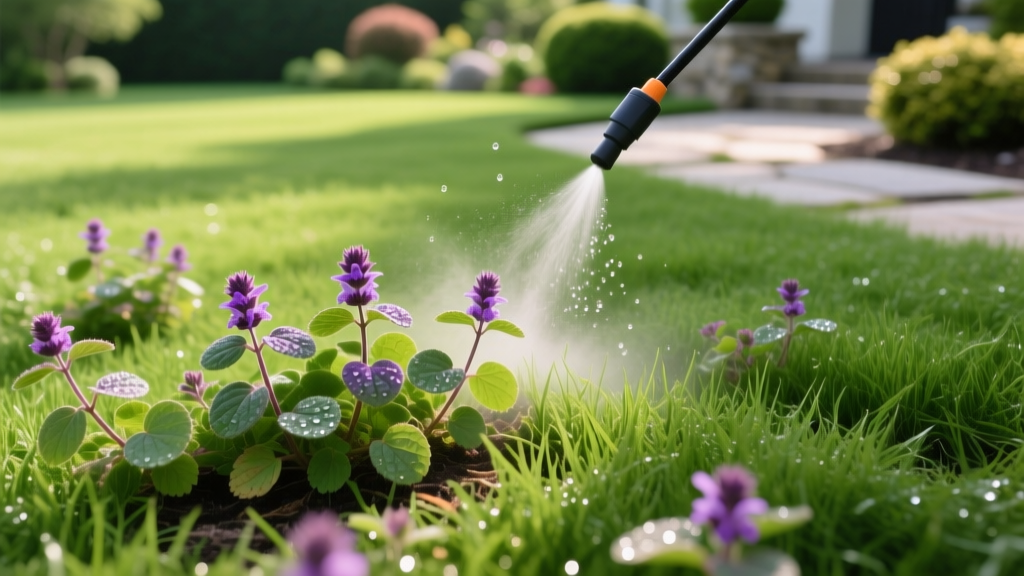
Best Henbit Herbicide Options for Lawn Spot Treatment
The Winter Annual Threat: Why Henbit Requires Spot-Treatment Precision
Henbit (Lamium amplexicaule) is a prolific winter annual weed that exploits thin, dormant turf from late fall through early spring. Unlike perennial weeds that require systemic, multi-season eradication strategies, henbit operates on a compressed lifecycle. It germinates when autumn soil temperatures drop, overwinters as a rosette, flowers in early spring, and dies off naturally as summer heat sets in. Because of this lifecycle, broadcast spraying entire lawns is often an unnecessary chemical burden and a waste of resources.
Targeted spot treatment is the most efficient, cost-effective, and environmentally responsible method for managing henbit. By isolating the herbicide application to specific infested zones, you preserve beneficial soil biology and protect your desirable turfgrass from unnecessary chemical stress. According to the NC State TurfFiles database, henbit thrives in moist, shaded, and compacted soils, meaning spot treatments must be paired with localized cultural corrections to prevent recurrence.
Quick ID Check: Henbit vs. Purple Deadnettle
Homeowners frequently confuse henbit with purple deadnettle. Both have square stems and purple flowers, but henbit features clasping upper leaves that wrap directly around the stem without petioles (leaf stalks). Purple deadnettle has distinct petioles on its upper leaves. This distinction matters because henbit's hairy, clasping leaves repel water droplets, making the addition of a surfactant mandatory for herbicide efficacy.
Pre-Emergent vs. Post-Emergent Henbit Herbicide Selection
Selecting the correct henbit herbicide depends entirely on the current month and the weed's growth stage. Pre-emergents stop seeds from germinating, while post-emergents kill actively growing plants.
| Active Ingredient | Brand Example | Application Window | Est. Cost per 1,000 sq ft | Turf Safety |
|---|---|---|---|---|
| Prodiamine (Pre-emergent) | Prodiamine 65 WDG | Late Aug - Sept (Soil < 70°F) | $0.08 - $0.12 | Safe for most warm/cool season grasses |
| Carfentrazone + 3-Way (Post) | SpeedZone Herbicide | Oct - Nov OR March - April | $0.35 - $0.45 | Safe when dry; avoid newly seeded turf |
| 2,4-D + MCPP + Dicamba (Post) | Trimec Classic | Oct - Nov OR March - April | $0.15 - $0.20 | Avoid on St. Augustine and Centipede |
Step-by-Step Post-Emergent Spot Treatment Protocol
When henbit is already visible and flowering in early spring, pre-emergents are useless. You must deploy a post-emergent henbit herbicide. For spot treatments, a 1-gallon or 2-gallon pump sprayer offers vastly superior precision compared to a hose-end sprayer, which dilutes inconsistently and risks overspray onto desirable landscape plants.
Step 1: Calculate the Exact Mix Ratio
Professional-grade products like SpeedZone (which contains carfentrazone-ethyl for rapid burndown alongside a 3-way base) are highly concentrated. The label recommends 1.4 to 1.8 fluid ounces per 1,000 square feet. However, when spot-treating, you are not covering 1,000 square feet uniformly; you are spraying discrete patches.
- The 1-Gallon Rule: A standard 1-gallon pump sprayer, walked at a normal pace with a standard fan nozzle, covers approximately 400 square feet.
- The Math: To achieve the proper application rate for 400 sq ft, mix 0.6 to 0.75 fluid ounces of SpeedZone per 1 gallon of water.
- Measurement Tip: Use a dedicated 10ml oral syringe or a precise measuring cup with ounce increments. Guessing the pour will result in turf burn or ineffective weed kill.
Step 2: Add a Non-Ionic Surfactant (Mandatory)
As noted by the UC Statewide IPM Program, henbit leaves are covered in fine hairs that cause plain water and standard herbicide emulsions to bead up and roll off onto the soil. You must break the surface tension.
Surfactant Mixing Ratio:
Add a non-ionic surfactant at a rate of 0.25% v/v (volume per volume). In practical terms for a 1-gallon pump sprayer, this equals exactly 1/2 teaspoon of surfactant. Add the water first, then the herbicide, then the surfactant last to prevent excessive foaming in the tank.
Step 3: Apply Under Optimal Temperature Thresholds
Post-emergent herbicides rely on the plant's active translocation system to move the chemical from the leaves down to the roots. If the weather is too cold, henbit's metabolism slows to a crawl, and the herbicide sits uselessly on the leaf surface.
Expert Application Rule: Only apply post-emergent henbit herbicide when daytime air temperatures are consistently between 55°F and 80°F. Avoid spraying if a hard freeze is forecast within 48 hours, and never spray when temperatures exceed 85°F, as the volatile esters in 2,4-D can vaporize and drift onto nearby garden vegetables or ornamental shrubs.
Common Spot-Treatment Failures and How to Avoid Them
Even with the right henbit herbicide, homeowners frequently make tactical errors that render the treatment ineffective. Recognizing these failure modes is critical for long-term turf health.
- The 'May Panic' Mistake: Many homeowners notice henbit in May when it is tall, leggy, and dropping seeds, and decide to spray it. This is a waste of chemicals. By late May, henbit is naturally dying from summer heat. Focus your efforts on pre-emergents in the fall instead.
- Ignoring Soil Compaction: Henbit is an indicator weed. It thrives where turfgrass fails due to compacted soil and poor drainage. If you kill the henbit but do not core aerate and top-dress the compacted spot in the fall, the henbit seeds (which remain viable in the soil for years) will simply germinate again next season.
- Using 'Weed and Feed' Granules for Spot Treatment: Granular weed and feed products require moisture to stick to the weed's leaves and are designed for broadcast application. They are highly inefficient for isolated spot treatments and will burn your surrounding grass if concentrated in one area. Always use liquid formulations for spot treatments.
Frequently Asked Questions
Will vinegar kill henbit?
Horticultural vinegar (20% to 30% acetic acid) will burn down the top growth of henbit through desiccation. However, it is a non-selective contact burn that will also kill your surrounding turfgrass. Furthermore, it does not translocate to the roots, meaning mature henbit plants may recover and re-sprout. Synthetic 3-way herbicides remain vastly superior for selective lawn care.
Can I pull henbit by hand instead of using herbicide?
Yes, hand-pulling is highly effective for small infestations, especially in early spring before the plant sets seed. Henbit has a shallow, fibrous root system that pulls up easily when the soil is moist. Ensure you remove the entire crown; otherwise, it will regenerate. For lawns with more than 15% henbit coverage, chemical spot treatment is significantly more time-efficient.
How long after spraying henbit herbicide can I mow?
Wait at least 48 hours after applying a liquid post-emergent herbicide before mowing. This gives the chemical adequate time to absorb through the leaf cuticle and begin translocating through the plant's vascular system. Mowing too soon physically removes the treated foliage, drastically reducing the herbicide's efficacy.

