Pest Control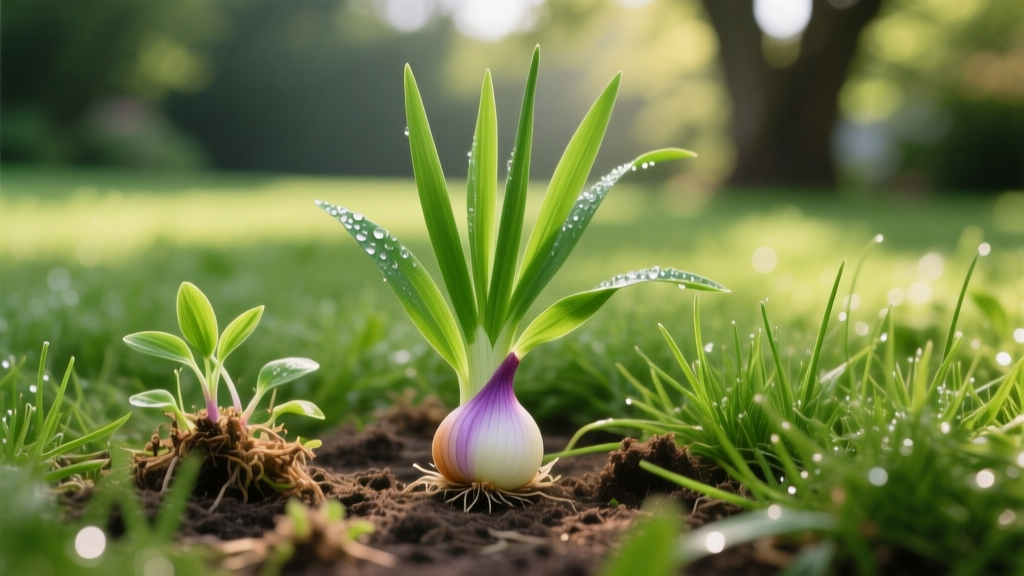
Best Herbicide for Onion Grass: Eradicate Wild Garlic & Onion Weeds
Wild onion (Allium canadense) and wild garlic (Allium vineale) are among the most frustrating perennial weeds to invade residential lawns. Often collectively referred to by homeowners as 'onion grass,' these invasive alliums feature a distinct, pungent odor when mowed and possess a complex underground bulb system that makes manual removal nearly impossible. Selecting the right herbicide for onion grass requires more than just grabbing a generic broadleaf weed killer from the garden center; it demands a targeted chemical approach combined with strategic soil nutrition management.
Current 2026 turf management protocols emphasize that allium invasions are rarely just a surface-level pest issue. They are primary indicator weeds for specific soil deficiencies. This guide details the exact active ingredients required to kill onion grass, the precise mixing ratios for safe application, and the soil rehabilitation steps necessary to prevent their return.
The Soil Nutrition Connection: Why Alliums Invade
Before applying any chemical treatment, it is critical to understand why onion grass is thriving in your specific yard. Wild onion and wild garlic are highly adaptable, but they aggressively exploit turf environments where desirable grasses are weakened by poor soil nutrition and structural imbalances.
Soil pH and Calcium Deficiencies
Alliums thrive in acidic soils with a pH between 5.0 and 6.0. In these conditions, essential macronutrients like phosphorus and potassium become locked up and unavailable to your turfgrass, while calcium and magnesium levels plummet. Wild onion, however, is highly tolerant of low-pH, low-calcium environments. If your soil test reveals a pH below 6.2, your turf is starving, but the onion grass is feasting.
Compaction and Anaerobic Conditions
Wild garlic, in particular, flourishes in heavily compacted soils with poor drainage. Compaction limits oxygen flow to turfgrass roots, stunting their growth. The bulb structure of onion grass allows it to store energy and survive in anaerobic soil layers where fibrous turf roots suffocate.
Expert Warning: Never attempt to pull wild onion or garlic by hand. The plant produces underground offset bulblets and aerial bulbils. Pulling the main stem usually snaps the plant off at the soil line, leaving the bulblets intact to regenerate multiple new shoots the following season.
Selecting the Right Herbicide for Onion Grass
Standard 2,4-D formulations often fail against onion grass due to the plant's thick, waxy leaf cuticle, which causes the herbicide to bead up and roll off. To achieve systemic kill down to the bulb, you must use herbicides containing specific active ingredients that translocate effectively through the allium's vascular system.
| Active Ingredient | Brand Example | Safe Grass Types | Mix Rate (per 1,000 sq ft) | Efficacy on Alliums |
|---|---|---|---|---|
| Sulfentrazone | Dismiss NXT, Blindside | Bermuda, Zoysia, Fescue, Kentucky Bluegrass | 0.18 - 0.25 fl oz | Excellent (Fast burn-down & root kill) |
| Imazaquin | Image Kills Nutsedge | St. Augustine, Centipede, Bermuda (Dormant) | 3.5 fl oz | Good (Slow acting, requires 2 apps) |
| Carfentrazone + 2,4-D + MCPP + Dicamba | SpeedZone Southern | Bermuda, Zoysia, Fescue | 1.0 - 1.5 fl oz | Very Good (Broadleaf combo) |
| Thiencarbazone + Iodosulfuron + Dicamba | Celsius WG | Bermuda, Zoysia, St. Augustine, Centipede | 0.085 oz (dry weight) | Excellent (Premium warm-season control) |
Step-by-Step Application Protocol for Maximum Kill
Applying the correct herbicide for onion grass is only half the battle. The application technique dictates whether the chemical reaches the underground bulb or merely burns the top growth. Follow this precise protocol for optimal results.
Step 1: The Pre-Spray Mow
Mow your lawn one day before application, dropping the cutting height slightly lower than normal. This removes the older, highly waxy upper portions of the wild onion leaves and exposes the fresh, tender, hollow stems. Fresh tissue absorbs systemic herbicides up to 40% more efficiently than mature, hardened cuticles.
Step 2: Mandatory Surfactant Integration
Because allium leaves are cylindrical and coated in a hydrophobic wax layer, a surfactant is non-negotiable. Add a Non-Ionic Surfactant (NIS) at a rate of 0.25% v/v (approximately 1/2 teaspoon per gallon of water) or a Methylated Seed Oil (MSO) at 1% v/v. The surfactant breaks the surface tension, allowing the herbicide to spread evenly across the narrow leaf surface and penetrate the stomata.
Step 3: Targeted Spot Spraying and Timing
Use a 1-gallon or 2-gallon pump sprayer for precise spot treatment rather than a hose-end sprayer. The ideal application windows are late fall (October to November) and early spring (February to March). During these periods, soil temperatures hover between 50°F and 60°F, and the plant is actively translocating carbohydrates—and the systemic herbicide—down into the bulb for winter storage or spring emergence.
'Patience is required with Imazaquin-based products. While Sulfentrazone will show visible leaf necrosis within 48 hours, Imazaquin works slowly, taking 3 to 4 weeks to show complete yellowing and collapse of the wild garlic foliage.' — University Turfgrass Extension Guidelines
Post-Eradication Soil Rehabilitation & Fertilization
Once the herbicide has eradicated the visible onion grass, you must alter the soil environment to favor your turfgrass and deter future allium germination. According to the Clemson Home & Garden Information Center, modifying soil structure is the ultimate long-term defense.
Correcting Soil pH with Lime
If your soil test indicates a pH below 6.2, apply pelletized calcitic or dolomitic lime. Dolomitic lime is preferred if your soil is also deficient in magnesium. Apply at a rate of 25 to 50 lbs per 1,000 square feet, depending on the buffer pH index from your soil test. Raising the pH to 6.5 unlocks bound phosphorus and creates an environment where turfgrass outcompetes weeds.
Core Aeration and Topdressing
To alleviate the compaction that wild garlic exploits, perform core aeration in the fall for cool-season grasses (Fescue, Bluegrass) and late spring for warm-season grasses (Bermuda, Zoysia). Follow aeration with a topdressing of 1/4 inch of screened compost. The compost introduces beneficial soil microbes that improve soil aggregation, drainage, and nutrient retention, directly countering the anaerobic conditions onion grass prefers.
Strategic Nitrogen Timing
Avoid heavy nitrogen fertilization in early spring when wild onion is actively growing and can absorb the nutrients. Instead, shift your nitrogen applications to late fall for cool-season grasses, promoting deep root growth when the alliums are naturally entering dormancy or dying back. For detailed regional nutrient schedules, consult your local Penn State Extension or equivalent state university turfgrass guidelines.
Frequently Asked Questions
Can I use pre-emergent herbicides to stop onion grass?
Pre-emergents like prodiamine or dithiopyr are largely ineffective against wild onion and wild garlic. These weeds primarily spread through underground offset bulblets and aerial bulbils that drop directly at the base of the mother plant, bypassing the pre-emergent barrier in the top inch of soil. Post-emergent systemic herbicides are required.
Is it safe to apply herbicide for onion grass near vegetable gardens?
No. Systemic herbicides like 2,4-D, Dicamba, and Sulfentrazone can cause severe phytotoxicity to broadleaf vegetables, particularly tomatoes, peppers, and leafy greens. Maintain a minimum 15-foot buffer zone when spraying near garden beds, and avoid spraying on windy days to prevent drift.
Why did the onion grass return the year after I sprayed?
Return occurrences usually stem from two factors: failure to use a surfactant (resulting in top-growth burn but bulb survival), or treating during the summer months when the plant's vascular system is not actively pulling nutrients downward. Always treat in the cool seasons (fall or early spring) and follow up with soil pH correction to prevent seedling establishment.