
Pest Control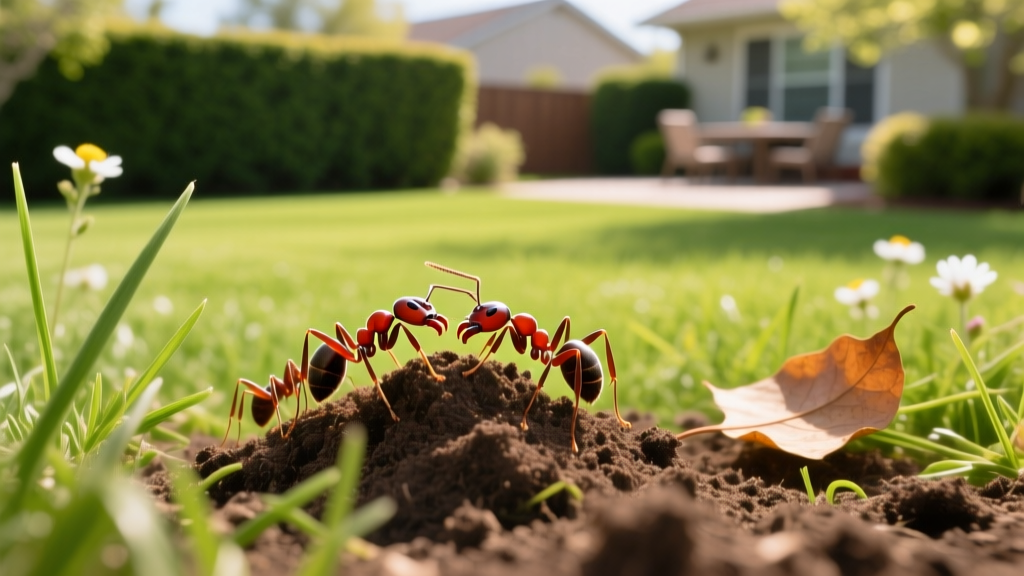
Do Home Remedies for Fire Ants Work? Yard Defense Guide
The Anatomy of a Fire Ant Mound: Why DIY Often Fails
Red imported fire ants (Solenopsis invicta) are among the most aggressive and resilient lawn pests in the southern United States. When homeowners spot a mound, the immediate instinct is often to reach for a quick household fix. However, according to entomologists at the Texas A&M Fire Ant Project, the visible mound is merely the tip of the iceberg. The actual colony consists of a complex network of subterranean galleries that can extend up to 36 inches deep and 25 feet laterally.
The primary reason most home remedies fail is that they only target the surface workers. If the queen—who resides deep within the central shaft—is not killed or removed, the colony will either rebuild the mound or, worse, undergo 'colony budding.' Budding occurs when a stressed colony splits into multiple satellite mounds, effectively multiplying your pest problem. Understanding this biology is critical before applying any DIY treatment to your yard.
Proven Home Remedies for Fire Ants (Backed by Science)
While many internet hacks are ineffective, a few home remedies possess the mechanical or chemical properties necessary to eliminate a mound. Here are the scientifically validated DIY approaches, including exact measurements and application protocols.
1. The Boiling Water Drench
Pouring boiling water into a fire ant mound is one of the most effective non-chemical home remedies, achieving a 60% to 70% success rate when executed correctly. The thermal death point for fire ant queens is approximately 115°F (46°C).
- Volume Required: You must use 2.5 to 3 gallons of rapidly boiling water per mound.
- Application Technique: Pour the water slowly and directly into the center of the mound to penetrate the main vertical shaft. Pouring too quickly will cause the water to run off the surface, only killing the outer workers.
- The Trade-off: Boiling water will instantly kill the grass and beneficial soil microbes in a 12-inch radius. Expect a dead patch of turf that will require reseeding or sodding later in the season.
2. Liquid Dish Soap Solution
Dish soap acts as a powerful surfactant. It breaks down the waxy lipid layer of the ant's exoskeleton, causing rapid dehydration and suffocation. This method is highly effective for mounds located near vegetable gardens where boiling water might damage shallow crop roots.
- Mixing Ratio: Combine 1.5 ounces (about 3 tablespoons) of standard liquid dish soap (such as Dawn) with 1 gallon of water.
- Application: Use a watering can to drench the mound thoroughly. You need enough volume to saturate the soil to a depth of at least 12 inches. This typically requires 2 gallons of the soapy mixture per large mound.
- Success Rate: Approximately 60% to 68%, provided the soil is not heavily compacted or hydrophobic.
3. Food-Grade Diatomaceous Earth (DE)
Diatomaceous earth is a naturally occurring, soft siliceous sedimentary rock crumbled into a fine white powder. Under a microscope, DE particles look like shards of glass. When ants crawl over it, the silica lacerates their exoskeleton, leading to fatal moisture loss.
- Application: Dust a thick ring of food-grade DE around the base of the mound and lightly over the top. Do not disturb the mound, or the ants will simply tunnel under the barrier.
- The Failure Mode: DE is entirely mechanical and loses 100% of its efficacy when wet. In high-humidity environments, or after morning dew and rainfall, it becomes useless until it completely dries out. It is best used as a supplementary barrier rather than a primary mound killer.
The Myth List: Home Remedies That Do Not Work
The EPA's Safe Pest Control guidelines and university extension offices frequently debunk viral yard care myths. Avoid these common mistakes, as they waste time and can trigger colony budding:
- Cornmeal and Grits: The myth claims ants eat cornmeal, which then expands in their stomachs and causes them to explode. Fact: Adult fire ants cannot digest solid food. They only consume liquids regurgitated by the colony's larvae. Cornmeal does nothing to the colony.
- Club Soda: The theory is that the carbon dioxide suffocates the ants. Fact: The volume of CO2 in a standard bottle of club soda is vastly insufficient to displace oxygen in a deep subterranean gallery system.
- Gasoline, Bleach, and Motor Oil: These are not only ineffective at reaching the deep queen, but they are highly illegal to dump in residential soil. They cause severe groundwater contamination and create long-term toxic dead zones in your lawn.
- Vinegar: While acetic acid can kill individual ants on contact, pouring it on a mound acts as a severe repellent. The colony will detect the chemical threat, move the queen, and bud into three or four new mounds across your yard.
Comparative Analysis: Cost, Efficacy, and Soil Impact
| Remedy | Efficacy Rate | Cost Per Mound | Turf Damage Risk | Time to Results |
|---|---|---|---|---|
| Boiling Water | 60% - 70% | $0.05 (Utility cost) | High (Kills grass) | Immediate |
| Soapy Water Drench | 60% - 68% | $0.15 | Low | 1 - 2 Hours |
| Diatomaceous Earth | 30% - 40% | $0.50 | None | 2 - 4 Days |
| Commercial Mound Drench | 90% - 99% | $1.50 - $3.00 | Low | 1 - 3 Hours |
The Two-Step Method: When Home Remedies Fall Short
If your yard has more than 5 active mounds per acre, treating individual mounds with home remedies becomes a game of whack-a-mole. Entomologists universally recommend the 'Two-Step Method' for heavy infestations.
The Two-Step Protocol:
Step 1: Broadcast a fire ant bait over the entire lawn in early spring or late fall. For organic yard defense, use a Spinosad-based bait (e.g., Monterey Garden Insect Spray or Fertilome Come & Get It). For conventional control, use Hydramethylnon (e.g., Amdro Fire Ant Bait, approx. $12 for 18 oz). The worker ants carry the bait deep into the mound and feed it to the queen.
Step 2: Wait 7 to 10 days. Then, treat any remaining active mounds with a targeted liquid drench (like the soapy water method above) to eliminate the surviving satellite colonies.
Step 1: Broadcast a fire ant bait over the entire lawn in early spring or late fall. For organic yard defense, use a Spinosad-based bait (e.g., Monterey Garden Insect Spray or Fertilome Come & Get It). For conventional control, use Hydramethylnon (e.g., Amdro Fire Ant Bait, approx. $12 for 18 oz). The worker ants carry the bait deep into the mound and feed it to the queen.
Step 2: Wait 7 to 10 days. Then, treat any remaining active mounds with a targeted liquid drench (like the soapy water method above) to eliminate the surviving satellite colonies.
Frequently Asked Questions
What should I do if a treated mound reappears a week later?
If a mound reappears near the original site, the colony likely budded before the queen was killed. Do not use a repellent spray (like standard Raid or vinegar), as this will force them to bud again. Instead, use a slow-acting toxic bait directly on the new mound, allowing the foragers to carry it back to the new queen.
Are fire ant stings dangerous to pets?
Yes. Fire ant venom contains piperidines, which cause intense burning and sterile pustules. Small dogs and outdoor cats are particularly vulnerable to anaphylaxis if stung multiple times on the nose or paws. If you notice your pet aggressively pawing at the ground and yelping, wash the area with cool soapy water and consult a veterinarian immediately if facial swelling occurs.
When is the best time of day to apply a mound drench?
Apply liquid drenches in the late morning or early afternoon when the sun is hitting the mound. Fire ants move their brood and queen closer to the surface to absorb solar heat during these hours, making them much more susceptible to surface-level drenches than they are in the early morning or evening when they retreat deep underground.

