
Pest Control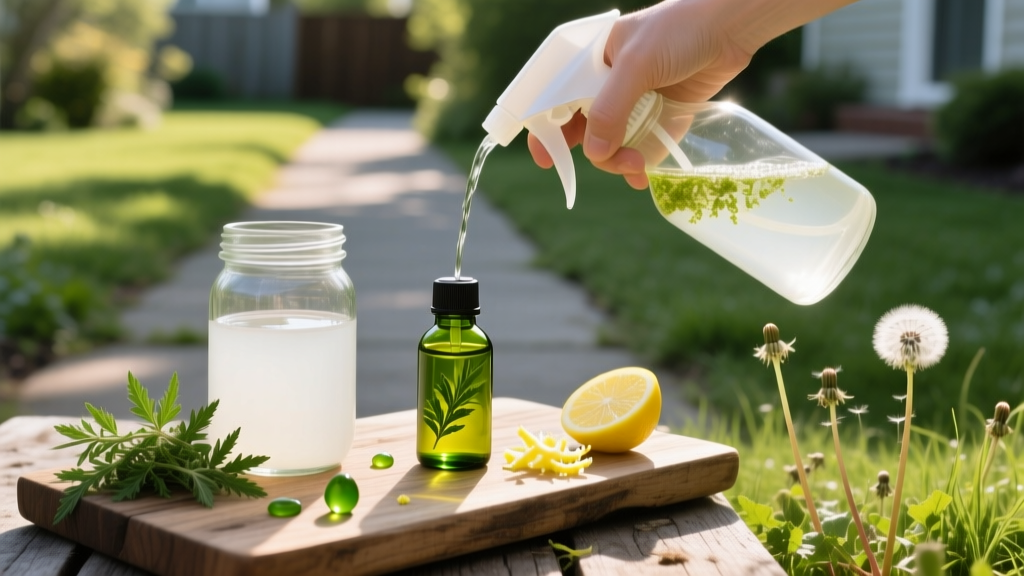
How to Mix a Homemade Natural Weed Killer That Actually Works
The Science of Acetic Acid and Desiccation
Transitioning away from synthetic herbicides like glyphosate requires understanding the mechanical limitations of organic alternatives. A homemade natural weed killer functions primarily as a contact herbicide. Unlike systemic chemicals that translocate down to the root system, organic acids and essential oils destroy the plant's cellular structure on contact.
Acetic acid (vinegar) works by rapidly breaking down plant cell membranes, causing immediate desiccation and tissue death. According to Penn State Extension, the efficacy of acetic acid is entirely dependent on its concentration. Standard kitchen vinegar contains 5% acetic acid, which will burn the foliage of young annual weeds but rarely kills established perennials. To achieve reliable kill rates on mature broadleaf weeds, you need horticultural vinegar, which contains 20% to 30% acetic acid.
However, acetic acid alone beads up and rolls off waxy leaves (like those on plantain or dandelion). This is where a surfactant and a desiccant oil become mandatory. By reducing the surface tension of the water, the solution spreads evenly across the leaf cuticle, ensuring maximum acid contact.
Two Proven Homemade Natural Weed Killer Recipes
Not all DIY recipes are created equal. Many internet tutorials suggest dumping table salt into vinegar, which leads to severe soil degradation. Below are two engineered recipes: one for long-term soil health, and one for emergency hardscape use.
Recipe 1: The Soil-Safe Pro Mix (Highly Recommended)
This formulation uses d-limonene (orange oil) to strip the waxy cuticle off stubborn weeds without leaving toxic residual salts in your soil microbiome. As of 2026, 20% horticultural vinegar costs approximately $35 to $45 per gallon, making this mix roughly $0.15 per ounce to produce.
- 1 Gallon 20% Horticultural Vinegar (Acetic Acid)
- 2 oz Pure d-Limonene (Cold-pressed orange oil, 90%+ concentration)
- 1 tsp Non-ionic surfactant (Alkyl polyglucoside or liquid Castile soap)
Mixing Protocol: Pour the vinegar into a polyethylene pump sprayer first. Add the d-limonene, followed by the surfactant. Seal and agitate gently for 30 seconds. The surfactant will emulsify the oil into the water-based vinegar, creating a milky-white suspension.
Recipe 2: The Hardscape Emergency Mix (Driveways & Pavers Only)
If you are treating weeds growing through cracks in a concrete driveway where soil health is irrelevant, sodium chloride (salt) acts as a powerful secondary desiccant and prevents immediate regrowth.
- 1 Gallon 5% Standard White Vinegar
- 1 Cup Sodium Chloride (Table salt or rock salt)
- 1 tbsp Liquid dish soap (Acts as a temporary anionic surfactant)
⚠️ Critical Soil Warning: Never use the salt-based recipe in garden beds, lawns, or near the drip line of trees. The EPA notes that while salt is a minimum risk pesticide ingredient, sodium accumulation causes soil salinization, permanently destroying soil structure and preventing future plant growth by blocking water uptake in roots.
Application Tactics: Maximizing Contact Herbicide Efficacy
The failure rate of homemade natural weed killers is overwhelmingly tied to poor application timing. Because these solutions lack systemic root-killing action, environmental conditions dictate success.
The Temperature and Sunlight Threshold
Acetic acid requires heat to accelerate cellular collapse. Spraying on a cloudy, 60°F morning will yield poor results. The optimal application window is between 10:00 AM and 2:00 PM when ambient temperatures exceed 80°F and direct sunlight is hitting the target weeds. The UV radiation and heat work synergistically with the acid to flash-fry the foliage.
Spray Nozzle Selection
Do not use a misting nozzle. Fine mist increases the risk of spray drift, which can damage adjacent desirable plants and exposes your lungs to atomized 20% acetic acid. Adjust your pump sprayer to a solid stream or coarse flat-fan pattern. You want to drench the leaves until they are dripping, ensuring the solution penetrates the crown of the weed.
Why Your DIY Weed Killer Might Fail (And How to Fix It)
Even with the perfect recipe, homeowners frequently encounter edge cases. Here is a troubleshooting framework for common failure modes:
| Failure Symptom | Root Cause | Corrective Action |
|---|---|---|
| Weeds turn brown but regrow in 14 days | Perennial taproots (e.g., Dandelion, Bindweed) survived. Contact herbicides do not kill deep roots. | Reapply the Pro Mix every 7 days to exhaust the root's carbohydrate reserves, or manually extract the taproot. |
| Solution beads up and rolls off leaves | Insufficient surfactant or spraying on waxy-leafed weeds without d-limonene. | Increase Castile soap by 0.5 tsp per gallon, or switch to the d-limonene formulation to strip the cuticle. |
| Nearby grass turns yellow and dies | Spray drift or accidental overspray. Organic herbicides are non-selective. | Use a cardboard shield when spraying near turf. If overspray occurs, immediately flush the area with 2 gallons of water. |
Efficacy Matrix: Homemade vs. Commercial Organic Options
Understanding where your homemade natural weed killer sits in the broader market helps set realistic expectations. The University of California IPM program emphasizes that organic weed management requires an integrated approach, combining chemical-free sprays with mechanical and cultural controls.
| Herbicide Type | Active Ingredient | Cost per Gallon (Ready-to-Use) | Perennial Root Kill? |
|---|---|---|---|
| Homemade Pro Mix | 20% Acetic Acid + d-Limonene | ~$0.15 / oz | No (Requires repeat apps) |
| Commercial Organic Spray | Caprylic/Capric Acid | ~$0.25 / oz | No |
| Chelated Iron Herbicide | FeHEDTA (Iron HEDTA) | ~$0.40 / oz | Partial (Selective broadleaf) |
| Synthetic Systemic | Glyphosate | ~$0.10 / oz | Yes |
Frequently Asked Questions
Can I use apple cider vinegar instead of white vinegar?
You can, but it is economically inefficient. Apple cider vinegar typically maxes out at 5% acetic acid and costs three to four times more per gallon than distilled white vinegar. The trace minerals and 'mother' in apple cider vinegar provide zero additional herbicidal benefit. Stick to distilled white or horticultural vinegar for maximum acidity per dollar.
Is 20% horticultural vinegar safe for pets?
Once the liquid has completely dried on the foliage and soil surface (usually within 2 to 4 hours), the area is safe for pets and children. However, in its liquid state, 20% acetic acid is a severe eye and skin irritant. Always wear nitrile gloves and ANSI-approved safety goggles when mixing and spraying concentrated horticultural vinegar.
Will this homemade mixture lower my soil pH permanently?
No. Acetic acid is highly volatile and breaks down rapidly in the soil microbiome. While a heavy application might cause a temporary, localized drop in soil pH, the soil's natural buffering capacity will neutralize it within a few days to a week. It does not cause the long-term acidification associated with elemental sulfur applications.

