
Pest Control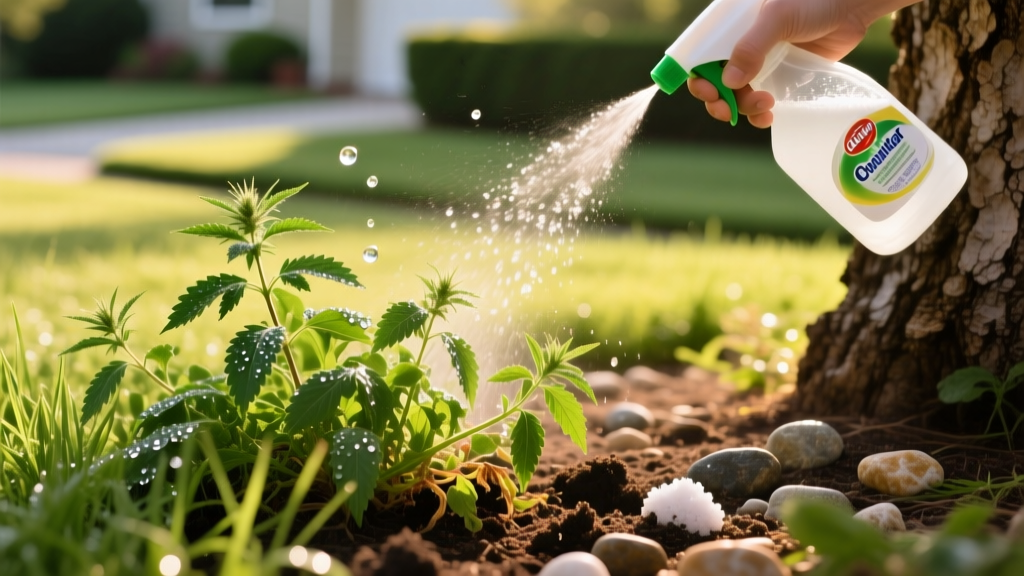
Proven Homemade Weed Killer Recipe: Vinegar, Salt, and Soap
The Chemistry of Acetic Acid Desiccation
When searching for an effective homemade weed killer recipe, vinegar is the undisputed cornerstone of organic lawn care. However, treating acetic acid as a simple kitchen remedy ignores the underlying plant biology. Vinegar functions as a contact desiccant. The acetic acid (CH3COOH) rapidly dissolves the waxy cuticle of plant leaves, causing the cell membranes to rupture and leak their contents. Within hours, the exposed foliage desiccates and dies.
The efficacy of this process is entirely dependent on concentration and pH. Standard household white vinegar contains 5% acetic acid, yielding a pH of approximately 2.4. This concentration is sufficient to burn down young, tender annual weeds with thin cuticles. However, mature perennials and broadleaf weeds with thick, waxy leaves will simply shrug off a 5% solution, suffering only minor cosmetic leaf burn before recovering within a week. For stubborn weeds, horticultural vinegar (20% to 30% acetic acid, pH 1.5) is required, though it introduces significant handling hazards that demand strict personal protective equipment (PPE).
The Classic Homemade Weed Killer Recipe: Vinegar, Salt, and Soap
The most widely circulated homemade weed killer recipe relies on a three-ingredient synergy designed to maximize tissue destruction and adherence. Here is the exact formulation for spot-treating driveway cracks and patio pavers:
- 1 Gallon (128 oz) of 5% White Distilled Vinegar: The primary desiccant. Do not use apple cider vinegar or cleaning vinegars with added dyes or fragrances, as these leave residue.
- 1 Cup (approx. 288g) of Table Salt (Sodium Chloride): Acts as a secondary osmotic desiccant, drawing moisture out of the plant cells and providing a residual soil-sterilizing effect.
- 1 Tablespoon (15ml) of Liquid Dish Soap: Acts as a non-ionic surfactant. Water and vinegar naturally possess a high surface tension (~72 mN/m). The soap reduces this to roughly 30 mN/m, preventing the solution from beading up and rolling off hydrophobic leaf surfaces.
Warning: The Soil Sterilization Risk of Salt
While salt ensures a total kill, sodium chloride is highly destructive to soil ecology. Sodium ions displace calcium and magnesium in the soil clay matrix, causing soil particles to disperse rather than aggregate. This process, known as deflocculation, permanently destroys soil structure, creating an impermeable hardpan. Never use the salt-based recipe in garden beds, near tree drip lines, or adjacent to your lawn. Restrict this specific mixture strictly to inorganic areas like concrete driveways and gravel paths.
The Salt-Free Alternative for Lawn-Adjacent Weeds
If you are treating dandelions, clover, or crabgrass creeping into your turfgrass or flower beds, you must eliminate the salt to protect your soil structure. Instead, we leverage a higher acetic acid concentration combined with a botanical solvent to penetrate thick cuticles.
The Lawn-Safe Formulation:
- 1 Gallon of 20% Horticultural Vinegar (Available at agricultural supply stores for roughly $25-$35 per gallon in 2026).
- 2 Tablespoons (30ml) of Liquid Castile Soap (A gentler, biodegradable surfactant).
- 1 Ounce (30ml) of d-Limonene (Citrus Oil Extract). D-limonene acts as a powerful botanical solvent that strips the protective waxes off mature broadleaf weeds, allowing the 20% acetic acid to penetrate rapidly.
Safety Note: 20% acetic acid is highly corrosive and can cause severe eye damage and skin burns. You must wear chemical splash goggles, nitrile gloves, and long sleeves when mixing and applying this solution. According to the National Pesticide Information Center (NPIC), acetic acid concentrations above 11% require strict handling precautions.
Household vs. Horticultural Vinegar: Efficacy Matrix
| Feature | 5% Household Vinegar | 20% Horticultural Vinegar |
|---|---|---|
| Acetic Acid Concentration | 5% | 20% - 30% |
| Approximate pH Level | 2.4 | 1.5 |
| Target Weeds | Young annuals, seedling grasses | Mature broadleaves, perennials, tough grasses |
| PPE Required | None (avoid eye contact) | Goggles, nitrile gloves, long sleeves |
| Average Cost (2026) | $3 - $5 per gallon | $25 - $35 per gallon |
Step-by-Step Application Protocol for Maximum Efficacy
Even the best homemade weed killer recipe will fail if applied under the wrong environmental conditions. Acetic acid relies on rapid evaporation and heat to accelerate cell destruction. Follow this protocol to ensure a total burn-down:
1. Time the Microclimate
Apply the solution only when ambient temperatures are above 75°F (24°C) and the sun is at its peak (between 11:00 AM and 3:00 PM). Heat accelerates the chemical breakdown of the leaf cuticle. Never apply in the early morning; residual dew will dilute the acetic acid concentration on the leaf surface, rendering it ineffective.
2. Calibrate for Coarse Droplets
Adjust your pump sprayer nozzle to produce a coarse, heavy spray pattern rather than a fine mist. A fine mist is highly susceptible to wind drift, which can severely damage the foliage of desirable ornamental plants and turfgrass. Furthermore, because acetic acid is a non-selective contact herbicide, any drift onto your lawn will kill the grass.
3. Saturate the Foliage, Not the Soil
Unlike systemic herbicides (such as glyphosate or 2,4-D), vinegar is not translocated through the plant's vascular system. It only kills the tissue it directly touches. Spray until the weed leaves are thoroughly wet and dripping, but avoid drenching the surrounding soil, which unnecessarily lowers the soil pH and harms local microbial life. The EPA classifies acetic acid as a minimum-risk pesticide when used correctly, but localized soil acidification should still be minimized.
When to Abandon Vinegar for Mechanical Control
It is critical to understand the limitations of contact desiccants. Vinegar destroys top growth, but it does not travel down to the root system. If you are dealing with deep-rooted perennials like field bindweed, Canada thistle, or mature dandelions with taproots exceeding 8 inches in depth, the weed will resprout from the surviving root crown within 10 to 14 days.
Repeated applications of vinegar to control taproot weeds is an inefficient use of time and money, and it risks cumulative soil acidification. For these specific pests, pivot to mechanical extraction using a stand-up weeder with a deep V-notch blade to physically remove the taproot, or utilize a targeted organic systemic alternative like ammonium nonanoate (a fatty acid salt that offers slightly better translocation than acetic acid).
Frequently Asked Questions
Will vinegar permanently change my soil pH?
A single application of a homemade weed killer recipe will cause a temporary, highly localized drop in soil pH. However, acetic acid breaks down rapidly in the soil (often within 48 to 72 hours) as soil microbes metabolize it into water and carbon dioxide. Unless you are drenching the same square foot of soil with high-concentration vinegar weekly, it will not permanently alter your garden's overall pH baseline.
Can I use Epsom salt instead of table salt in the recipe?
No. Epsom salt is magnesium sulfate. While it provides osmotic stress to the weed, it also acts as a fertilizer, adding magnesium and sulfur to the soil. This can inadvertently feed surrounding desirable plants and does not provide the same aggressive desiccating profile as sodium chloride. If you want to protect your soil, omit salt entirely and rely on the 20% horticultural vinegar and d-limonene recipe outlined above.
Is this recipe safe for use around pets and wildlife?
Once the vinegar solution has dried on the foliage (usually within 1 to 2 hours), the area is safe for pets and wildlife. The acetic acid rapidly degrades in the environment. However, during the liquid application phase, keep dogs and cats away, as the wet, highly acidic solution can cause irritation to their paw pads and mucous membranes if ingested or stepped in. For comprehensive lawn safety guidelines, consult the University of California Integrated Pest Management (UC IPM) program resources on organic weed management.

