
Pest Control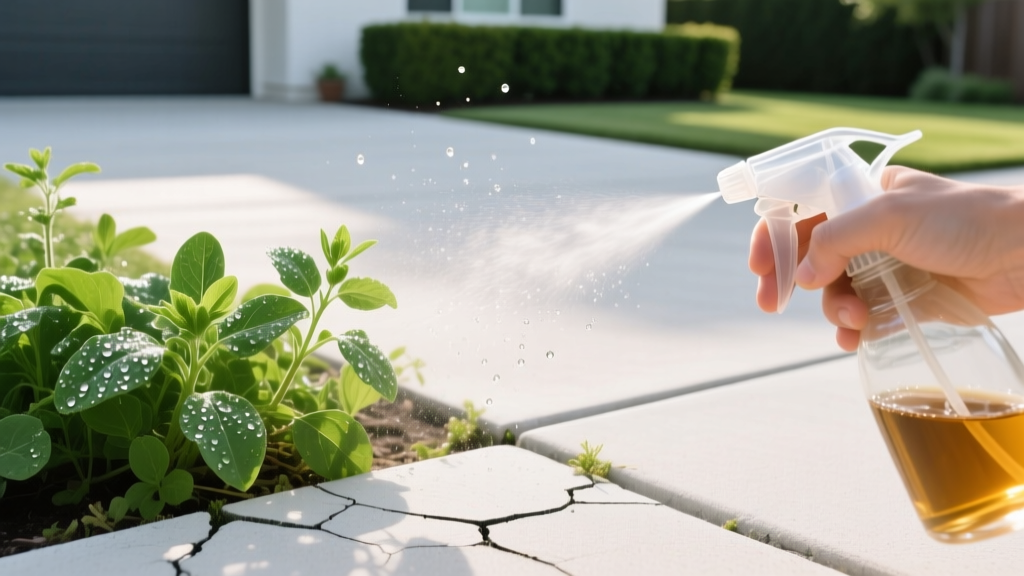
Effective Vinegar Herbicide Recipe for Tough Driveway Weeds
The Myth of Kitchen Vinegar for Weed Control
If you have searched for a vinegar herbicide recipe, you have likely encountered dozens of blogs suggesting a mixture of standard 5% kitchen white vinegar, table salt, and dish soap. As a turf and weed management professional, I need to be direct: this kitchen concoction is largely ineffective on mature weeds and the addition of table salt is actively destructive to your soil ecosystem.
Standard culinary vinegar contains only 5% acetic acid. While it may burn the delicate cotyledons of newly germinated seedlings, it lacks the chemical concentration to strip the waxy cuticle of mature broadleaf weeds or grasses. Furthermore, adding sodium chloride (table salt) to your spray mix leads to soil salinization. Salt causes soil flocculation, destroying soil structure, killing beneficial mycorrhizal fungi, and creating a toxic environment where neither weeds nor desirable plants will grow for years.
To actually kill stubborn weeds growing in driveway cracks, patio pavers, and gravel paths using organic methods, you must formulate a recipe using horticultural-grade acetic acid (20% to 30%), combined with a botanical adjuvant and a non-ionic surfactant.
⚠️ Critical Safety Warning: Acetic Acid is Corrosive
Horticultural vinegar at 20% to 30% concentration is not a food product; it is a potent, corrosive acid. It can cause severe, irreversible corneal damage and chemical burns to the skin. You must wear ANSI Z87.1-rated splash goggles (standard safety glasses are insufficient), chemical-resistant nitrile gloves, long sleeves, and closed-toe shoes when mixing and applying this solution.
The Master Horticultural Vinegar Herbicide Recipe
This formulation relies on a three-part mechanism: the acetic acid desiccates the plant tissue, the d-limonene (orange oil) acts as a botanical solvent to dissolve the leaf's protective waxy cuticle, and the non-ionic surfactant reduces the surface tension of the water, allowing the acidic solution to spread evenly and stick to the foliage rather than beading up and rolling off.
Ingredients & Exact Measurements
- 1 Gallon 30% Horticultural Vinegar: The active desiccant. (Do not dilute with water; water reduces the pH and lowers efficacy).
- 2 oz D-Limonene (Cold-Pressed Orange Oil): Acts as a powerful organic solvent to strip leaf cuticles.
- 1 oz Non-Ionic Surfactant: Use a commercial agricultural wetting agent or methylated seed oil. Do not use dish soap, as the ionic charge can react poorly with highly acidic solutions, causing the mixture to separate.
Mixing Protocol
- Put on your PPE (splash goggles and nitrile gloves).
- Pour the 1 gallon of 30% horticultural vinegar into a dedicated, chemical-resistant pump sprayer. (Do not use a sprayer previously used for systemic herbicides to avoid cross-contamination).
- Add the 2 oz of d-limonene to the tank.
- Add the 1 oz of non-ionic surfactant last to prevent excessive foaming.
- Seal the sprayer and shake gently for 30 seconds to emulsify the oils into the acid base.
Application Strategy: Timing and Technique
Because acetic acid is a contact herbicide and not a systemic one, it does not translocate down to the root system. It only kills the plant tissue it directly touches. Therefore, application timing and coverage are the primary determinants of success.
Optimal Environmental Conditions
Acetic acid relies on rapid desiccation (water loss) to kill the plant. This process is heavily dependent on temperature and solar radiation. According to research from Penn State Extension, acetic acid applications are significantly more effective when applied on hot, sunny days.
- Temperature: Apply when ambient temperatures are above 75°F. Efficacy peaks between 85°F and 95°F.
- Sunlight: Spray between 10:00 AM and 2:00 PM when UV index and solar radiation are highest.
- Moisture: Ensure no rain is forecasted for at least 12 hours. Dew or recent rainfall will dilute the acid on the leaf surface.
- Wind: Apply only when winds are below 5 mph. Drift from 30% vinegar will instantly burn the foliage of nearby desirable ornamental plants and turfgrass.
Spraying Technique
Adjust your pump sprayer nozzle to a medium-fan pattern. You want to thoroughly coat the leaves until they are wet, but avoid spraying to the point of heavy runoff into the soil. Because this mixture has no soil residual activity, soaking the soil wastes the product. Focus entirely on complete foliar coverage.
Efficacy Comparison: Acid Concentrations
Understanding the difference between retail vinegar products is crucial for setting realistic expectations. The EPA classifies acetic acid as a minimum-risk pesticide active ingredient, but the concentration dictates its utility in the landscape.
| Vinegar Type | Acetic Acid % | Target Weeds | Cost per Gallon (2026) |
|---|---|---|---|
| Kitchen White Vinegar | 5% | Very young seedlings only | $4.00 - $6.00 |
| Cleaning Vinegar | 6% - 10% | Small annuals, moss | $8.00 - $12.00 |
| Horticultural Vinegar | 20% | Mature annuals, young perennials | $25.00 - $30.00 |
| Industrial/Ag Vinegar | 30% | Tough broadleaf, mature grasses | $38.00 - $45.00 |
Limitations and Failure Modes
Organic weed control requires honest expectations. While this horticultural vinegar herbicide recipe is highly effective at burning down top growth, it has distinct limitations that you must plan for.
The Taproot Problem
Perennial weeds with deep taproots or extensive rhizome networks—such as dandelions, Canada thistle, bindweed, and bermudagrass—will experience severe foliar burn within 2 hours of application. However, because the acid does not travel to the roots, these weeds will inevitably resprout from their root reserves within 10 to 14 days.
The Solution: You must adopt a 'starvation protocol.' Spray the initial growth, wait for the weeds to resprout and expend their root energy to push new leaves, and spray them again immediately. Repeating this process 3 to 4 times over a single growing season will eventually exhaust the root system and kill the perennial weed.
Cost vs. Conventional Herbicides
From a purely economic standpoint, organic desiccants are more expensive per square foot than synthetic systemics. A $40 gallon of 30% vinegar treats roughly 1,000 square feet of hardscape cracks. In contrast, a $50 bottle of concentrated glyphosate or glufosinate can be diluted to treat over 10,000 square feet. You are paying a premium for the privilege of keeping synthetic chemicals out of your soil and watershed. For large gravel driveways, spot-treating with a wand rather than broadcast spraying is necessary to keep costs manageable.
Frequently Asked Questions
Will this vinegar recipe lower my soil pH?
Surprisingly, no. While acetic acid is highly acidic in the bottle, it rapidly breaks down in the soil environment. Soil microbes metabolize the acetate ions, and the acid neutralizes within a few days. According to UC IPM guidelines on landscape weed management, acetic acid has no lasting residual effect on soil pH or soil chemistry, making it safe for use near the drip lines of established trees and shrubs, provided you avoid direct contact with their foliage or surface roots.
Can I use this recipe on my lawn to spot-treat weeds?
No. This mixture is non-selective. It will aggressively burn and kill your desirable turfgrass just as easily as it kills the weeds. This recipe is strictly formulated for hardscapes, driveway cracks, patio pavers, fence lines, and gravel paths where you want total vegetation control.
How should I store leftover 30% vinegar?
Store it in its original, UV-resistant HDPE plastic container in a cool, dry, and well-ventilated area away from direct sunlight and freezing temperatures. Never store it in metal containers, as the high acetic acid concentration will rapidly corrode steel and aluminum, leading to dangerous leaks and container failure.

