
Pest Control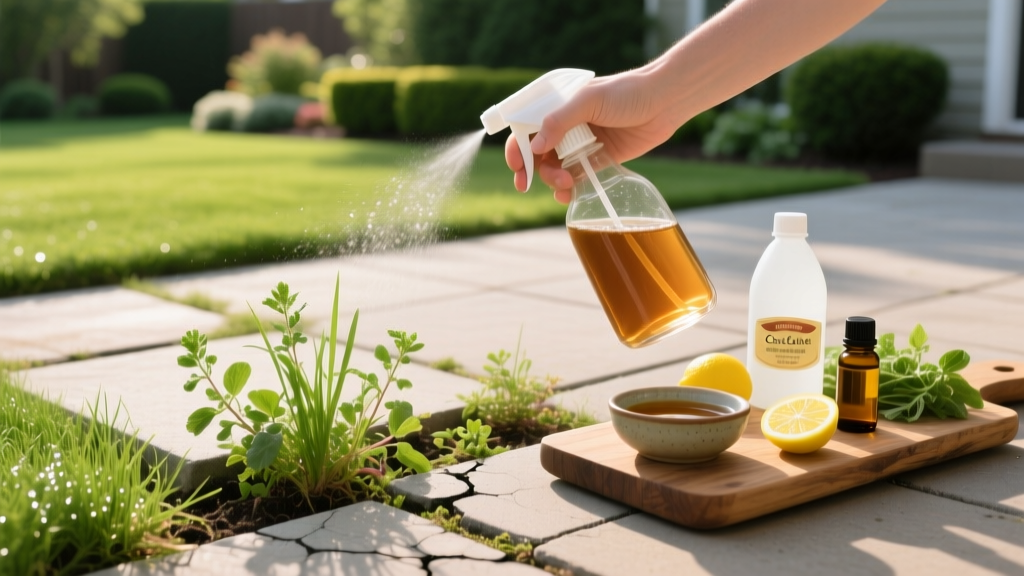
DIY Natural Weed Killer Recipes for Lawns and Hardscapes
The Mechanics of Organic Contact Herbicides
When formulating a natural weed killer, it is critical to understand that organic herbicides operate strictly as contact agents, not systemic ones. Unlike synthetic glyphosate, which translocates through the phloem to destroy the root system, organic compounds destroy plant tissue on contact. They achieve this through rapid cell membrane rupture and desiccation.
The two most effective active ingredients in organic weed control are acetic acid and d-limonene (citrus oil). Acetic acid works by drastically lowering the pH of the plant tissue upon contact. When the pH drops below 3.0, the structural integrity of the leaf cuticle and cell membranes collapses, causing the cytoplasm to leak out and the plant to rapidly dehydrate. D-limonene, extracted from citrus peels, acts as a powerful solvent that strips the protective waxy cuticle off broadleaf weeds, accelerating moisture loss.
Because these compounds do not travel to the roots, they are highly effective on young, annual weeds and seedlings. However, mature perennial weeds with deep taproots (such as dandelions or curly dock) will experience top-kill and likely resprout from the root crown within 14 to 21 days, necessitating follow-up applications.
⚠️ Critical Soil Health Warning: Many internet recipes suggest adding Epsom salt or table salt (sodium chloride) to natural weed killers to 'burn' the roots. Never use salt-based mixtures on lawns, garden beds, or near desirable trees. Sodium accumulates in the soil profile, destroying soil structure, preventing water uptake, and creating sterile dead zones where nothing will grow for years. Stick to acid and oil-based formulations.
High-Efficacy DIY Natural Weed Killer Recipes
Household 5% white vinegar is largely ineffective against mature weeds. To achieve commercial-grade burn-down, you must source 20% to 30% horticultural-grade acetic acid. Below are the precise formulations used by organic land care professionals.
| Recipe Profile | Active Ingredients | Best Use Case | Est. Cost per Gallon |
|---|---|---|---|
| The Hardscape Blaster | 30% Acetic Acid + Surfactant | Driveways, patios, fence lines | $12.50 |
| The Citrus Emulsion | 20% Acetic Acid + d-limonene + Soap | Lawn edges, broadleaf spot-treatment | $18.00 |
| The Fatty Acid Soap | Potassium salts of fatty acids | Delicate garden beds, moss control | $22.00 |
Recipe 1: The Hardscape Blaster (Maximum Burn-Down)
- 1 Gallon 30% Horticultural Vinegar
- 1 Tablespoon Non-Ionic Surfactant (or liquid Castile soap)
This high-acidity mixture is strictly for non-porous surfaces and areas where no desirable plants exist. The 30% concentration drops the pH to approximately 2.4, causing visible wilting in susceptible weeds within 45 minutes of application on a sunny day.
Recipe 2: The Citrus Emulsion (Broadleaf Specialist)
- 1 Gallon 20% Horticultural Vinegar
- 4 oz d-limonene (Orange Oil)
- 2 Tablespoons Liquid Castile Soap (acts as an emulsifier)
d-limonene is highly effective at dissolving the thick, waxy cuticles found on stubborn broadleaf weeds like plantain and thistle. According to the National Pesticide Information Center, d-limonene disrupts the respiratory system of insects and strips plant cuticles, making it a dual-action organic control agent. The Castile soap is mandatory here; without it, the citrus oil will separate from the water-based vinegar and fail to coat the leaves evenly.
Application Protocol: Timing and Technique
The efficacy of a natural weed killer is entirely dependent on environmental conditions and application mechanics. Follow this strict protocol to maximize the kill rate:
- Timing: Apply only between 10:00 AM and 2:00 PM when UV radiation and ambient temperatures are at their peak. Heat accelerates the desiccation process. Never apply in the evening or on overcast days.
- Weather Check: Ensure zero precipitation is forecasted for at least 12 hours post-application. Contact herbicides require 4 to 6 hours to fully penetrate the leaf tissue; rain will wash the active ingredients off the foliage before they can act.
- Nozzle Selection: Use a fan-pattern nozzle rather than a cone or jet stream. You need to achieve complete, uniform coverage of the leaf surface. The leaves should be visibly wet, but not dripping.
- Safety Gear: 20% to 30% acetic acid is highly corrosive and can cause severe corneal damage and skin burns. You must wear ANSI Z87.1-rated splash goggles, long sleeves, and chemical-resistant nitrile gloves. The Environmental Protection Agency (EPA) classifies these high-concentration acids as requiring strict handling protocols despite being 'minimum risk' at lower dilutions.
Efficacy Matrix: Natural vs. Systemic Synthetics
Homeowners must weigh the environmental benefits of organic controls against the labor and cost requirements. Use this matrix to decide which approach fits your specific weed pressure.
| Metric | DIY Natural Weed Killer | Synthetic Glyphosate |
|---|---|---|
| Speed of Visible Results | 2 to 6 hours | 5 to 7 days |
| Root Kill (Perennials) | Poor (Top-kill only) | Excellent (Systemic) |
| Soil Residual Activity | None (Breaks down in 48 hrs) | Low (Binds tightly to soil) |
| Applications Needed (Mature Weeds) | 2 to 4 treatments | 1 treatment |
| Safety for Nearby Desirable Plants | Low (Drift causes immediate burn) | Low (Drift causes systemic death) |
Troubleshooting: Why Your Organic Spray Failed
If your natural weed killer application resulted in minimal damage, one of the following failure modes likely occurred:
1. The Weed Has a Waxy Cuticle
Weeds like purslane, puncturevine, and mature plantain have evolved thick, waxy leaf surfaces that repel water-based sprays. If your spray is beading up and rolling off the leaf, your surfactant ratio is too low. Increase the liquid Castile soap or non-ionic surfactant by 50% to reduce the surface tension of the liquid, allowing it to spread flat across the waxy cuticle.
2. Application During Drought Stress
When weeds are drought-stressed, they close their stomata and thicken their cuticles to conserve moisture. Spraying natural weed killers during a severe summer drought will yield poor results. Water the area lightly 24 hours before application to encourage the weeds to open their stomata and actively grow, making them far more susceptible to acid burn.
3. Using the Wrong Vinegar
Standard 5% culinary vinegar from the grocery store lacks the acidic concentration required to break down the cellular structure of anything beyond newly germinated seedlings. Sourcing 20% or 30% horticultural vinegar from agricultural supply stores or specialized online vendors is non-negotiable for mature weed control.
Frequently Asked Questions
Will horticultural vinegar change my soil pH?
No. Acetic acid breaks down rapidly in the soil microbiome, typically within 48 to 72 hours. It does not accumulate or permanently alter the soil pH of your lawn or garden beds, making it safe for use around established trees and shrubs, provided you avoid direct contact with their foliage and shallow surface roots.
Can I use a natural weed killer on my Bermuda grass lawn?
Contact herbicides are non-selective, meaning they will burn any green tissue they touch, including your Bermuda grass. If you are spot-treating weeds in a warm-season lawn, use a cardboard shield to block overspray, or switch to a selective organic post-emergent like iron-based HEDTA (FeHEDTA), which targets broadleaf weeds without harming monocot grasses.

