
Pest Control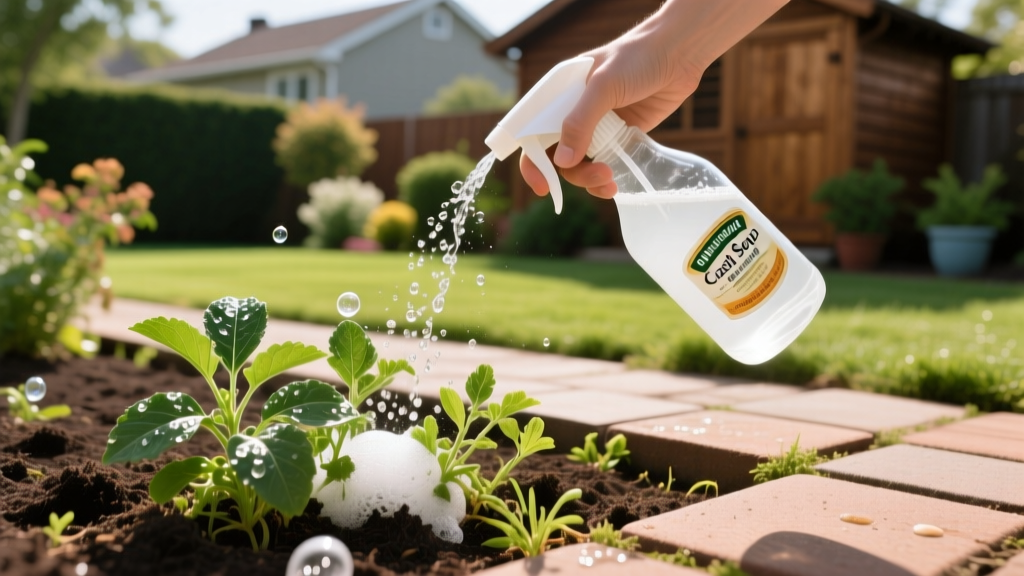
DIY Vinegar Soap Weed Killer Recipe: Exact Ratios and Soil Risks
Why Standard Kitchen Vinegar Fails
Most DIY weed control guides recommend pouring standard 5% distilled white vinegar directly onto weeds. This approach is fundamentally flawed for mature lawn pests. At 5% concentration, acetic acid merely singes the delicate leaf tissue of young seedlings but fails to penetrate the waxy cuticle of established broadleaf weeds like dandelions, plantain, or thistle. To achieve reliable desiccation, you must elevate the acetic acid concentration to horticultural levels (20% to 30%) and introduce a surfactant to break the plant's natural defenses.
This guide provides a scientifically backed vinegar soap weed killer recipe designed for organic lawn care, detailing exact measurements, mandatory safety protocols, and the specific environmental conditions required for maximum efficacy.
The Science of Acetic Acid and Surfactants
Acetic acid functions as a contact herbicide. Upon contact, it rapidly draws moisture out of plant cells, causing immediate desiccation and cell membrane rupture. However, broadleaf weeds possess a hydrophobic (water-repelling) waxy cuticle that causes aqueous solutions to bead up and roll off the leaf surface.
Adding a pure soap surfactant lowers the surface tension of the liquid, allowing the acid to spread evenly across the leaf and penetrate the stomata. According to research from the USDA Agricultural Research Service, concentrations of 20% acetic acid combined with a surfactant can achieve 85% to 100% kill rates on annual weeds, though perennial weeds with deep taproots often require repeated applications.
⚠️ CRITICAL SAFETY WARNING: Horticultural vinegar (20%-30% acetic acid) is a corrosive chemical, not a food product. It can cause irreversible corneal damage and severe chemical burns on the skin. Never handle 20%+ acetic acid without ANSI Z87.1 splash goggles and 5-mil nitrile gloves.
The Master Vinegar Soap Weed Killer Recipe
This formulation balances aggressive foliar burn-down with organic-compliant ingredients. We use pure castile soap rather than synthetic dish detergents, which contain sodium salts that can accumulate in and degrade your soil structure over time.
| Ingredient | Volume | Function | Est. Cost (2026) |
|---|---|---|---|
| 20% Horticultural Vinegar | 1 Gallon | Active desiccant (Acetic Acid) | $24.00 - $28.00 |
| Pure Liquid Castile Soap | 2 fl oz (4 tbsp) | Non-ionic surfactant | $1.50 |
| d-Limonene (Orange Oil) | 4 fl oz | Organic solvent for waxy cuticles | $6.00 - $8.00 |
Mixing Protocol
- Prep the Sprayer: Use a dedicated 1-gallon or 2-gallon polyethylene pump sprayer. Do not use a sprayer previously used for synthetic herbicides.
- Add Acid First: Pour the 1 gallon of 20% horticultural vinegar into the tank.
- Incorporate Solvent: Add the 4 fl oz of d-Limonene (orange oil). This aggressively strips the waxy coating off mature thistle and plantain leaves.
- Add Surfactant Last: Pour in the 2 fl oz of castile soap. Adding soap last prevents excessive foaming while you mix.
- Agitate: Seal the tank and shake vigorously for 30 seconds. Pump to 40 PSI.
Application Rules for Maximum Efficacy
Contact herbicides are highly dependent on environmental variables. Spraying under the wrong conditions will result in wasted product and surviving weeds.
- Temperature Threshold: Apply only when ambient temperatures are between 70°F and 85°F. Acetic acid volatilizes too quickly in extreme heat (causing drift) and works too slowly below 65°F.
- UV Activation: Spray between 10:00 AM and 2:00 PM. Direct sunlight accelerates the cellular collapse and desiccation process.
- Nozzle Selection: Swap the standard cone nozzle for a flat fan nozzle (e.g., TeeJet 8002VS). This creates a targeted sheet of spray, minimizing soil drenching and protecting nearby grass roots.
- Wind Restrictions: Never spray if wind speeds exceed 5 MPH. Acetic acid drift will instantly burn the foliage of your desired turfgrass and ornamental plants.
The Burn-Down Timeline: What to Expect
Unlike systemic herbicides that take weeks to translocate to the roots, this vinegar soap weed killer recipe acts rapidly on the foliage.
- 2 Hours: Leaves will begin to droop and show signs of water-soaking at the edges.
- 24 Hours: Complete foliar desiccation. Annual weeds will be entirely brown and brittle.
- 7 Days: Treated foliage crumbles into the soil. Perennial weeds may begin pushing new, pale growth from the surviving taproot (requiring a second spot treatment).
Soil Microbiome and Grass Kill-Zones
A common misconception is that vinegar permanently sterilizes soil. According to the National Pesticide Information Center (NPIC), acetic acid breaks down rapidly in the soil, typically within 2 to 3 days, as soil microbes metabolize it. It does not leave a toxic residual barrier.
However, a heavy drench will temporarily acidify the top inch of the soil and can harm shallow-rooted mycorrhizal fungi. To protect your lawn:
Pro-Tip for Lawn Protection: Place a piece of corrugated cardboard behind the weed while spraying to act as a physical drift shield. If you accidentally overspray your turfgrass, immediately flush the area with 1 gallon of plain water to dilute the acid before it penetrates the grass crown.
Troubleshooting Common Failures
The weed turned brown, but grew back two weeks later.
The Cause: You treated a perennial weed with a deep taproot (like a dandelion, dock, or bindweed). Acetic acid is strictly a contact herbicide; it does not translocate down into the root system.
The Fix: Wait for the new foliage to emerge and expand (usually 10-14 days), then hit it with a second application. Repeated defoliation will eventually starve the taproot of carbohydrates. Alternatively, use a manual weed puller to extract the root after the initial vinegar treatment softens the surrounding soil.
The mixture beaded up and rolled off the leaves.
The Cause: Insufficient surfactant, or the weed has an exceptionally thick cuticle (common in mature plantain or purslane).
The Fix: Increase the castile soap to 3 fl oz per gallon, or lightly scuff the weed leaves with a boot before spraying to break the physical wax barrier.
When to Abandon the DIY Route
While this vinegar soap weed killer recipe is highly effective for driveway cracks, patio pavers, and isolated lawn weeds, it is not a viable solution for massive lawn infestations. If your turf is overwhelmed by creeping charlie or wild violet, spot-spraying with acetic acid will cause more collateral damage to your grass than the weeds themselves. In those scenarios, pivot to organic systemic alternatives like iron-based herbicides (FeHEDTA), which selectively target broadleaf weeds without harming monocot grasses.
For more localized organic strategies and safety data regarding household weed control, consult your local university cooperative extension, such as the guidelines provided by Penn State Extension.

