
Pest Control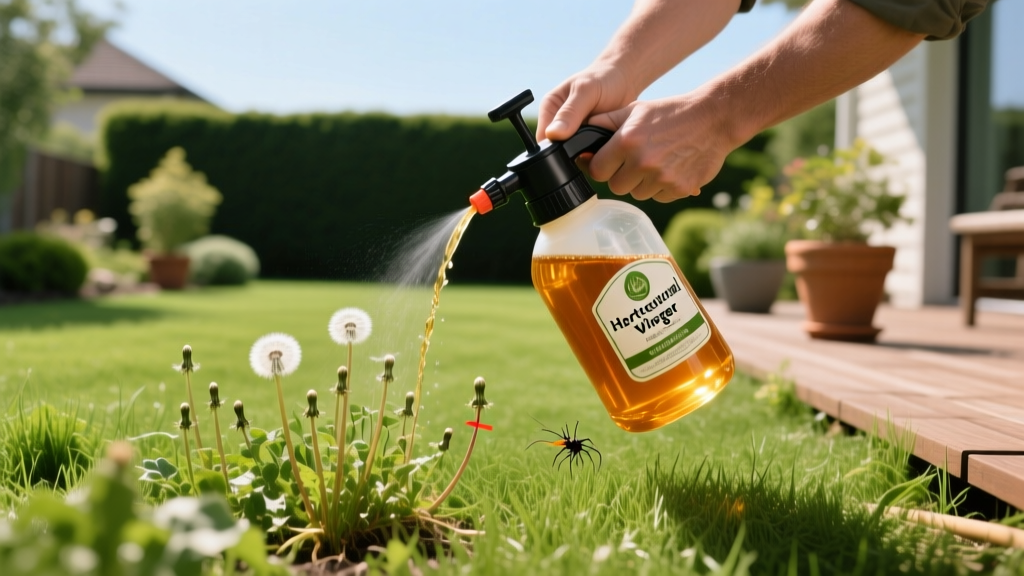
Horticultural Vinegar Weed Killer: Mixing Rates and Application Guide
The Chemistry: Why 20% Acetic Acid Works (and Where It Fails)
When transitioning to organic lawn care, homeowners frequently confuse standard culinary vinegar (5% acetic acid) with true horticultural vinegar weed killer. Horticultural-grade formulations contain between 20% and 30% acetic acid. At this concentration, acetic acid acts as a rapid-contact desiccant. It penetrates the leaf cuticle, disrupts cell membranes, and causes the plant tissue to leak its cellular contents, resulting in visible wilting and browning within hours.
However, understanding its limitations is critical for success. Acetic acid is strictly a contact herbicide; it is not systemic. It does not translocate down into the root system. This means it excels at killing annual weeds with shallow fibrous roots (like chickweed, crabgrass, and spurge) but often fails to kill mature perennial weeds with deep taproots (like dandelions, bindweed, and Canada thistle). For taproot weeds, the top growth will burn off, but the root will regenerate new leaves within 10 to 14 days, requiring repeated applications to exhaust the root's energy reserves.
Information Gain: The Environmental Protection Agency (EPA) classifies acetic acid herbicides under minimum-risk or biopesticide categories depending on the exact formulation and inert ingredients. While safer for the broader environment than synthetic alternatives, the high concentration required for efficacy demands strict handling protocols.
Target Weed Profile: Efficacy Breakdown
To avoid wasting product and time, match the weed type to the herbicide's strengths. Here is what you can expect when applying a 20% acetic acid solution:
- High Efficacy (1 Application): Annual bluegrass, common chickweed, prostrate spurge, young crabgrass, and moss on hardscapes.
- Moderate Efficacy (2-3 Applications): Young dandelions, broadleaf plantain, and creeping Charlie (ground ivy).
- Low Efficacy (Not Recommended): Mature bindweed, established Bermuda grass in flower beds, and woody-stemmed invasive vines.
The Exact Mixing Protocol
Spraying 20% acetic acid straight from the jug is a common mistake. Without a surfactant, the liquid beads up and rolls off the waxy cuticles of mature weeds, wasting the product and increasing the risk of soil overspray. You must break the surface tension.
Step-by-Step Mixing Guide
As of 2026, a 2.5-gallon jug of 20% horticultural vinegar typically costs between $35 and $45. To maximize this investment, follow this precise ratio:
- Base: 1 Gallon of 20% Acetic Acid (Horticultural Vinegar).
- Surfactant: Add 1 fluid ounce of a non-ionic agricultural surfactant OR 1 fluid ounce of d-limonene (orange oil). D-limonene acts as both a surfactant and a secondary botanical desiccant, increasing the burn speed.
- Agitation: Seal the pump sprayer and shake vigorously for 30 seconds to ensure the surfactant is fully emulsified into the acid.
Note: Never mix horticultural vinegar with bleach, ammonia, or synthetic herbicides. This can create toxic chlorine gas or neutralize the active ingredients entirely.
Application Strategy: Timing and Environmental Factors
Because organic contact herbicides rely on rapid cellular destruction, environmental conditions dictate your success rate.
Critical Timing Rule: Apply only between 10:00 AM and 3:00 PM on clear, sunny days when temperatures exceed 80°F (26°C). The UV radiation and heat accelerate the desiccation process. Spraying on a cloudy day or in the evening reduces efficacy by up to 60%, giving the weed time to repair cellular damage overnight.
Use a pump sprayer with a pinpoint nozzle or a shielded wand to prevent drift. Wind speeds must be below 5 mph. Acetic acid spray drift will instantly brown the edges of your desirable turfgrass and ornamental plants.
Comparison Matrix: Organic vs. Conventional Herbicides
How does horticultural vinegar stack up against other common weed control methods? Review the data below to make an informed purchasing decision.
| Herbicide Type | Speed of Visible Results | Root Kill (Systemic) | Average Cost per Gallon | OMRI Listed Organic? |
|---|---|---|---|---|
| 20% Acetic Acid (Vinegar) | 2 to 4 Hours | No (Contact Only) | $14.00 - $18.00 | Yes (Check specific brand) |
| Glyphosate (Conventional) | 3 to 7 Days | Yes (Systemic) | $25.00 - $35.00 | No |
| Pelargonic Acid (Nonanoic) | 1 to 2 Hours | No (Contact Only) | $40.00 - $60.00 | Yes |
| Corn Gluten Meal (Pre-emergent) | N/A (Prevents germination) | N/A | $30.00 - $45.00 | Yes |
For verified organic status, always cross-reference your specific product brand with the Organic Materials Review Institute (OMRI) database, as inert ingredients (like certain synthetic dyes or stabilizers) can disqualify an otherwise natural active ingredient.
Soil Health Impact: The pH Buffering Reality
A persistent myth in organic gardening is that spraying horticultural vinegar will permanently acidify your soil and kill beneficial microbes. While 20% acetic acid is highly acidic (pH of roughly 2.0), soil possesses a natural property called buffering capacity.
When acetic acid hits the soil, it rapidly breaks down into water and carbon dioxide through microbial action and chemical neutralization. In soils with moderate to high clay content or organic matter, the pH will rebound to its baseline within 48 to 72 hours. However, in highly sandy, nutrient-poor soils with low buffering capacity, heavy, repeated applications in the exact same spot can temporarily suppress local microbial activity and lower pH. To mitigate this, avoid soaking the soil; focus the spray strictly on the weed foliage.
Mandatory Safety and PPE Requirements
Do not treat 20% acetic acid like kitchen vinegar. At this concentration, it is a severe corrosive that can cause irreversible corneal damage and deep chemical burns on the skin. The National Pesticide Information Center mandates strict handling protocols for high-concentration organic acids.
Required Gear Checklist
- Eye Protection: ANSI Z87.1-rated splash-proof safety goggles. Standard prescription glasses or open-frame safety glasses are insufficient.
- Hand Protection: Thick, chemical-resistant nitrile or neoprene gloves (minimum 8 mil thickness). Latex gloves will degrade rapidly.
- Respiratory: If spraying in an enclosed area or on a breezy day, wear an N95 or P100 respirator to avoid inhaling atomized acid mist, which can severely irritate the respiratory tract.
- Clothing: Long sleeves, long pants, and closed-toe shoes. Wash clothing separately from your standard laundry after application.
Keep a neutralizing agent nearby. If skin contact occurs, wash immediately with copious amounts of water. If splashed in the eyes, flush with water for a full 15 minutes and seek emergency medical attention immediately. Store the concentrate in its original, UV-resistant jug in a cool, locked shed away from children and pets.

