
Pest Control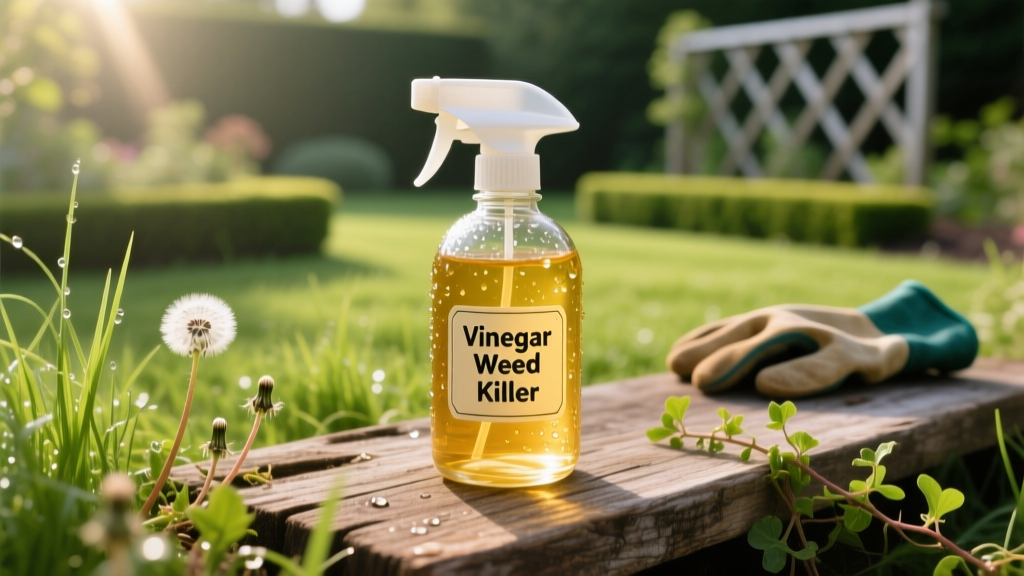
The Ultimate Vinegar Weed Killer Mix: Recipes, Ratios, and Real Results
The Reality of Acetic Acid in Organic Weed Control
When homeowners seek chemical-free alternatives to glyphosate or synthetic auxins, the vinegar weed killer mix is often the first remedy suggested on gardening forums. However, widespread misinformation regarding acetic acid concentrations, surfactant requirements, and soil impacts leads to poor results and damaged landscapes. Acetic acid functions strictly as a contact desiccant. It strips the waxy cuticle from leaf tissue, causing rapid moisture loss and cellular collapse. Because it is not systemic, it does not travel to the root zone. Understanding this biological mechanism is the prerequisite for formulating a mix that actually works on mature broadleaf weeds and resilient grasses.
Why Your Pantry Vinegar is Failing
Standard culinary white vinegar contains 5% acetic acid. At this concentration, it will burn the foliage of young, tender seedlings but will merely stunt mature weeds with established taproots, such as dandelions or plantain. The plant will shed the burned leaves and push new growth from the crown within 48 hours. To achieve genuine burndown, organic land managers rely on horticultural vinegar, which is commercially available in 20% and 30% acetic acid concentrations. According to research published by Penn State Extension, concentrations of 20% or higher are required to achieve 85% to 100% burn-down of annual weeds, though perennial weeds with deep root systems will require multiple targeted applications.
⚠️ Safety Warning: 30% Acetic Acid is Corrosive
While 20% horticultural vinegar is a standard organic input, 30% concentrations are classified as corrosive and can cause irreversible eye damage and severe skin burns. If you choose to mix a 30% solution, OSHA-compliant splash goggles, neoprene gloves, and long sleeves are mandatory. Always add acid to water, never water to acid, to prevent exothermic splashing.
Formulating the Ideal Vinegar Weed Killer Mix
A successful organic herbicide relies on three components: the active desiccant (acetic acid), a surfactant to break surface tension, and an optional adhesion booster. Many DIY recipes incorrectly suggest adding table salt (sodium chloride). While salt does desiccate tissue, it permanently ruins soil structure, creates toxic salinity levels for future plantings, and leaches into groundwater. Skip the salt entirely unless you are treating deep gravel driveway cracks where no future plant growth is desired.
| Ingredient | Volume (Per Gallon) | Function & Expert Notes |
|---|---|---|
| 20% Horticultural Vinegar | 128 oz (1 Gallon) | Active ingredient. Brands like Harris or Green Gobbler cost $35-$45 per gallon. |
| Non-Ionic Surfactant | 1 oz (2 Tablespoons) | Breaks water surface tension. Use a dedicated agricultural surfactant rather than dish soap, which can leave phytotoxic residues on soil. |
| Orange Oil (d-Limonene) | 2 oz (Optional) | Acts as a secondary solvent to dissolve the waxy leaf cuticle faster, accelerating the burn-down process on thick-leaved weeds. |
Step-by-Step Application Protocol for Maximum Desiccation
Because acetic acid relies on rapid moisture evaporation to kill tissue, environmental conditions dictate your success rate. Spraying on a cool, overcast, or humid day will yield marginal results. Follow this protocol for optimal efficacy:
- Check the Forecast: Ensure no rain is expected for at least 12 hours post-application. Acetic acid washes off foliage easily before it can fully penetrate the cuticle.
- Time the Temperature: Apply only when ambient temperatures are above 65°F (18°C). The thermal energy accelerates the chemical reaction and the subsequent desiccation of the leaf tissue.
- Target the Stomata: Spray during mid-morning (between 9:00 AM and 11:00 AM). Plant stomata are open, and the rising sun will quickly bake the treated foliage.
- Calibrate the Nozzle: Adjust your pump sprayer to a fine mist rather than a heavy stream. You want to coat the surface area of the leaves evenly without drenching the underlying soil, which minimizes root-zone pH disruption.
- Execute the Spray: Apply until the leaves are visibly wet but not dripping. Over-spraying wastes expensive horticultural vinegar and unnecessarily acidifies the soil.
The Soil pH Problem: Long-Term Risks of Repeated Applications
Every application of a vinegar weed killer mix introduces hydrogen ions into the soil profile. While a single application will only temporarily depress the soil pH, repeated treatments in the same area (such as along fence lines or in garden bed pathways) can cause long-term acidification. Most turfgrasses and ornamental plants thrive in a pH range of 6.0 to 7.0. If soil pH drops below 5.5, essential macronutrients like phosphorus and potassium become chemically locked and unavailable to plant roots.
If you are using horticultural vinegar heavily in specific zones, test your soil pH every six months using a digital meter or a lab-based soil analysis. To counteract acidification, apply pelletized calcitic lime at a rate of 25 to 50 lbs per 1,000 square feet in the fall, allowing winter moisture to buffer the soil chemistry back to neutral.
DIY Vinegar Mix vs. Commercial Organic Herbicides
While mixing your own solution provides cost savings on large properties, commercial organic herbicides offer formulation stability and broader-spectrum efficacy. Below is a cost and performance matrix comparing the DIY approach to leading commercial organic alternatives available in 2026.
| Product Type | Active Ingredient | Cost Per Ready Gallon | Efficacy on Mature Weeds | Soil Residual Impact |
|---|---|---|---|---|
| DIY 20% Vinegar Mix | Acetic Acid (20%) | $2.50 - $3.00 | Moderate (Requires 2-3 passes) | High (Lowers pH rapidly) |
| Avenger Weed Killer | d-Limonene (Citrus Oil) | $6.00 - $8.00 | High (Excellent cuticle stripping) | Low (Biodegrades quickly) |
| BurnOut RTU | Clove Oil & Acetic Acid | $10.00 - $12.00 | Very High (Dual-action burn) | Moderate |
Frequently Asked Questions
Does adding Epsom salt improve the vinegar weed killer mix?
No. Epsom salt is magnesium sulfate. Unlike sodium chloride (table salt), it does not possess strong desiccant properties for weed control. Adding it to your mix merely introduces magnesium and sulfur to the soil, which acts as a mild fertilizer rather than a herbicide booster. Save your Epsom salt for treating magnesium-deficient tomatoes or peppers.
Will this mix kill my Bermuda or Kentucky Bluegrass lawn?
Yes, acetic acid is non-selective. It will burn the foliage of any green plant it touches, including desirable turfgrasses. The vinegar weed killer mix is strictly intended for spot-treatment of weeds in hardscape cracks, mulch beds, and driveway edges. If you need to kill broadleaf weeds inside a living lawn without harming the grass, you must use a selective organic herbicide containing chelated iron (FeHEDTA), which targets broadleaf metabolism while leaving monocot grasses unharmed.
How long does it take to see results after spraying?
Under optimal conditions (direct sunlight and temperatures above 70°F), you will observe visible wilting and tissue browning within 2 to 4 hours. Complete desiccation of the treated foliage typically occurs within 24 hours. However, because the roots are unaffected, monitor the weed crown for regrowth over the next 7 to 10 days and apply a second treatment if new shoots emerge.

