
Pest Control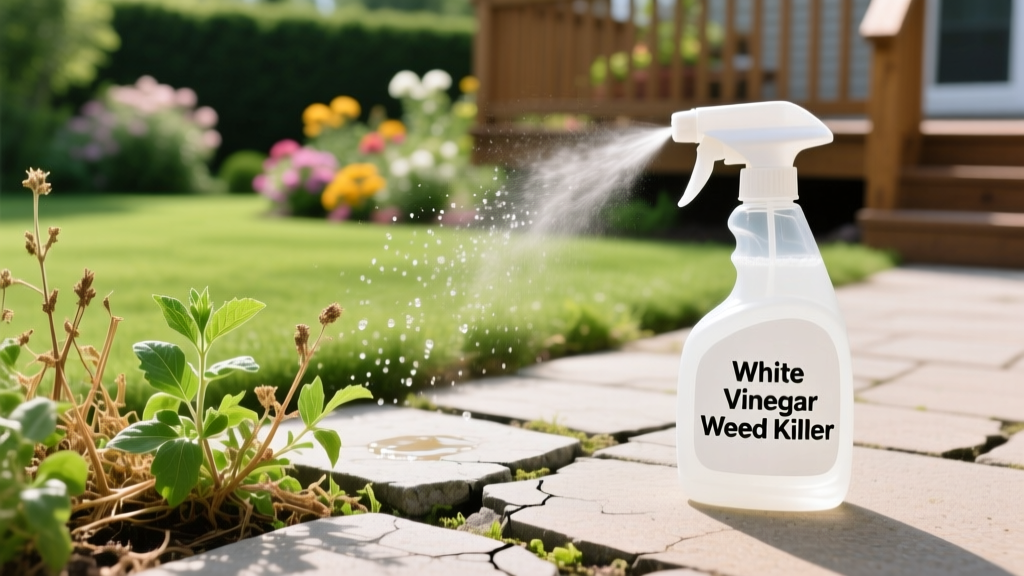
How to Make a White Vinegar Weed Killer That Actually Works
The shift toward organic lawn care has made the white vinegar weed killer a staple for homeowners looking to avoid synthetic herbicides like glyphosate. However, the internet is flooded with ineffective recipes using standard kitchen vinegar, leading to widespread frustration when stubborn weeds recover within days. To achieve genuine, chemical-free weed control, you must understand the chemistry of acetic acid, select the correct concentration, and utilize natural surfactants to breach the plant's defensive cuticle.
The Science of Acetic Acid as a Contact Herbicide
White vinegar functions as a non-selective, contact herbicide. The active ingredient, acetic acid (CH3COOH), destroys plant tissue by rapidly breaking down cell membranes, causing the foliage to desiccate and die. Because it is a contact agent, it does not translocate through the plant's vascular system to the roots. This makes it highly effective for top-killing annual weeds and young seedlings, but challenging for deep-rooted perennials.
⚠️ Critical Safety Warning: Horticultural vinegar (20% to 30% acetic acid) is a severe irritant. Unlike 5% kitchen vinegar, concentrations above 11% can cause irreversible corneal damage and severe skin burns. Always wear ANSI-approved splash goggles, nitrile gloves, and long sleeves when mixing and applying high-concentration acetic acid.
Household vs. Horticultural Vinegar: What You Actually Need
The most common failure mode in organic weed control is using the wrong concentration. The EPA's guidelines on safe pest control note that while low-risk botanical pesticides are safer for the environment, they still require precise application to be effective. Below is a breakdown of vinegar concentrations and their actual efficacy in the field.
| Vinegar Type | Acetic Acid % | Target Weeds | Cost per Gallon | PPE Required |
|---|---|---|---|---|
| Kitchen / Culinary | 4% - 5% | Very young seedlings (under 2 inches) | $3 - $5 | None |
| Cleaning Vinegar | 6% - 10% | Small annual broadleaves | $8 - $12 | Gloves |
| Horticultural | 20% - 30% | Mature annuals, top-killing perennials | $30 - $45 | Goggles, Nitrile Gloves, Mask |
The Ultimate White Vinegar Weed Killer Recipe
To make a 20% horticultural vinegar solution stick to and penetrate the waxy cuticle of mature weeds, you must add a surfactant. While many DIY guides suggest dish soap, professional organic land managers use d-limonene (orange oil). D-limonene is a natural botanical solvent that strips the protective wax off leaves, allowing the acetic acid to rapidly enter the plant tissue.
High-Efficacy Organic Mix (Yields 1 Gallon)
- Base: 1 Gallon of 20% Horticultural White Vinegar.
- Solvent/Surfactant: 2 fluid ounces of pure d-limonene (cold-pressed orange oil).
- Sticking Agent: 1 teaspoon of liquid castile soap (helps emulsify the oil and vinegar).
Mixing Protocol: Always add the castile soap to the vinegar first and stir gently. Then, slowly add the d-limonene. Shake the pump sprayer vigorously before every few sprays, as the oil will naturally separate from the water-based vinegar over time.
Application Protocol: Timing and Technique
Even the best white vinegar weed killer recipe will fail if applied under poor environmental conditions. Acetic acid relies on rapid desiccation; if the plant can repair its cell membranes faster than the acid destroys them, the weed will survive.
- Temperature Threshold: Apply only when ambient temperatures are between 75°F and 90°F. Heat accelerates the chemical burn and prevents the plant from recovering.
- Time of Day: Spray between 10:00 AM and 2:00 PM when the sun is at its peak. UV radiation and heat work synergistically with the acid to scorch the foliage.
- Wind Speed: Do not spray if winds exceed 5 mph. Acetic acid drift will instantly burn the foliage of your desirable turfgrass and ornamental plants.
- Rainfastness: The solution needs 2 to 3 hours of dry weather to fully penetrate the leaf. Check your local forecast; do not apply if rain is imminent.
Limitations and Troubleshooting Perennial Weeds
According to weed management frameworks outlined by University of Minnesota Extension, contact herbicides struggle with established perennial root systems. Understanding these failure modes is critical for setting realistic expectations.
Why Did My Dandelion Come Back?
Dandelions, bindweed, and bermudagrass store massive energy reserves in deep taproots or rhizomes. The white vinegar weed killer will successfully burn the top growth to a crisp within 24 hours. However, because the acid does not travel down the phloem to the root, the weed will push up new shoots in 7 to 14 days. The Fix: You must commit to a "spray-and-starve" regimen. Re-spray the new shoots the moment they unfold. After 3 or 4 defoliations, the root system will exhaust its carbohydrate reserves and die.
Why Did the Leaves Turn Brown but the Stem Stay Green?
This happens when you use a weak surfactant or spray too lightly. The acid burned the outer leaf layer, but the droplets beaded up and rolled off before reaching the stem. Ensure your sprayer nozzle is set to a fine mist, and spray until the foliage is uniformly wet, but not dripping.
Post-Treatment Soil Recovery
A common myth is that vinegar permanently sterilizes the soil. While a heavy application of 20% acetic acid will temporarily lower the soil pH and harm surface-level beneficial microbes, the effect is short-lived. Soil buffering capacity typically neutralizes the acid within 14 to 21 days. To accelerate recovery and prepare the area for reseeding:
- Wait 48 hours after the final spray.
- Water the area deeply to flush residual acid past the root zone.
- Apply a 1/2-inch layer of finished compost to reintroduce beneficial bacteria and buffer the soil pH.
- Apply pelletized lime only if a soil test confirms the pH has dropped below 6.0.
Frequently Asked Questions
Can I mix salt into my white vinegar weed killer?
Avoid adding sodium chloride (table salt) or Epsom salt. While salt will kill weeds, it does not break down in the soil. It accumulates, causing long-term soil toxicity, preventing future grass or plants from absorbing water, and effectively creating a dead zone in your yard.
Is horticultural vinegar safe for pets?
Once the liquid has completely dried (usually 1 to 2 hours), the treated area is safe for pets. However, the wet solution is highly acidic and can cause severe irritation to a dog or cat's paws, eyes, and respiratory tract. Keep animals indoors during application and until the foliage is dry.
Will this kill moss in my lawn?
Yes, acetic acid is highly effective at burning moss. However, moss is a symptom of compacted, acidic, or poorly drained soil. Killing the moss with vinegar without aerating and correcting the underlying soil conditions will result in the moss returning within a single season.

