
Pest Control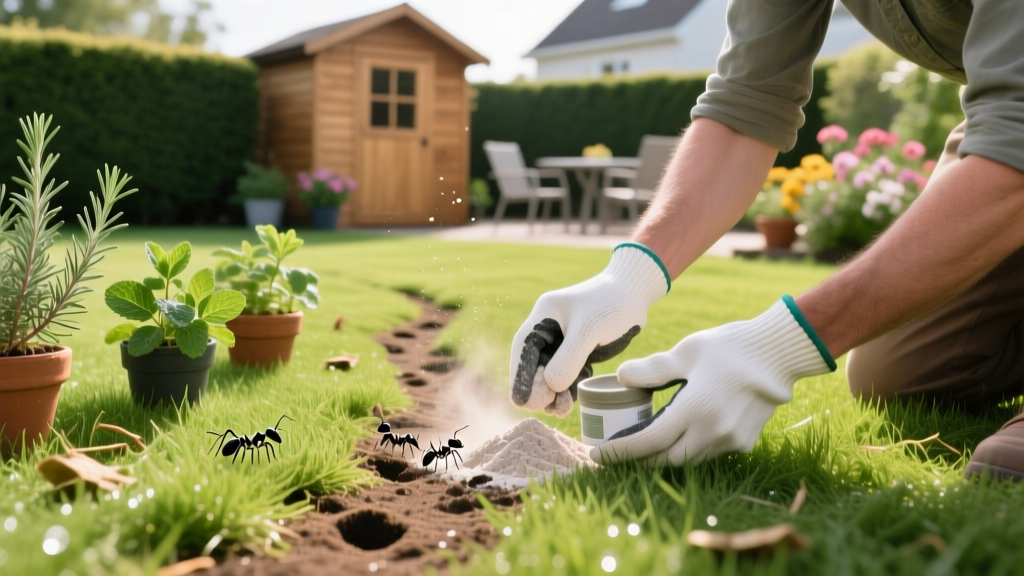
7 Safe Household Products to Kill Ants in Your Yard
Fire ants, carpenter ants, and pavement ants destroy turf root systems, build unsightly mounds that damage mower blades, and invade patio spaces. While ants play a role in soil aeration, an uncontrolled colony in a residential lawn requires immediate intervention. Before reaching for synthetic pyrethroids or neurotoxic baits, many homeowners can effectively manage localized infestations using common household products. These low-toxicity alternatives disrupt the colony's biology without leaving persistent chemical residues in your soil or groundwater.
According to the UC Statewide IPM Program, successful ant management requires targeting the queen and the brood, not just the foraging workers you see on the surface. Household products generally fall into two categories: contact killers that destroy the exoskeleton, and ingestion/desiccation agents that eliminate the colony from the inside out.
Quick Reference: Household Ant Killers Matrix
| Household Product | Mechanism of Action | Best Target Ant Type | Turf Grass Safety | Est. Cost Per Treatment |
|---|---|---|---|---|
| Liquid Dish Soap | Dissolves exoskeleton lipids | Fire ants, Pavement ants | Safe (if diluted) | $0.15 |
| White Vinegar | Acetic acid burn / scent disruption | Sugar ants, Odorous house ants | Moderate (can burn grass) | $0.50 |
| Boiling Water | Thermal shock | Fire ants (surface mounds) | Poor (kills grass roots) | $0.05 |
| Diatomaceous Earth | Physical desiccation (cuts wax layer) | Carpenter ants, Field ants | Excellent | $2.00 |
| Baking Soda + Sugar | Internal gas buildup / crop rupture | Grease ants, Sugar ants | Excellent | $0.30 |
Contact Killers for Immediate Mound Drenching
Contact killers are most effective when you can locate the primary mound and flood the colony's subterranean tunnels. This method, known as a 'mound drench,' forces the liquid deep into the nest to reach the queen.
1. Liquid Dish Soap (Surfactant Drench)
Dish soap is arguably the most effective household contact killer for yard ants. Ants breathe through spiracles along their abdomens and rely on a waxy lipid layer on their exoskeleton to retain moisture. The surfactants in dish soap (specifically sodium lauryl sulfate) strip this wax layer and clog the spiracles, causing rapid dehydration and asphyxiation.
- Exact Ratio: Mix 2 tablespoons of concentrated liquid dish soap (Dawn Ultra or equivalent) per 1 quart of warm water.
- Application: Use a pump sprayer or a watering can to apply 1 to 2 gallons of the solution directly over and around the ant mound. Do not just spray the surface; you must saturate the soil to a depth of at least 6 inches.
- Failure Mode: Using antibacterial soaps or heavily fragranced detergents. Stick to standard, high-surfactant dish liquids. Over-application can strip the waxy cuticle off your grass blades, causing temporary phytotoxicity (browning), but the turf will recover.
2. White Vinegar (Acetic Acid Disruption)
White vinegar contains 5% acetic acid, which kills ants on contact by burning through their cellular membranes. More importantly for yard defense, vinegar obliterates the pheromone trails ants use to navigate between the nest and food sources.
- Exact Ratio: Mix equal parts (1:1) standard 5% white vinegar and water.
- Application: Spray directly onto ant trails along sidewalks, patio edges, and foundation perimeters. For mound drenching, use undiluted vinegar, but limit the volume to 1 quart per mound to prevent severe soil acidification.
- Failure Mode: Applying vinegar to dormant or stressed cool-season grasses (like Kentucky Bluegrass or Fescue) during high heat. The acetic acid will desiccate the grass blades, leaving dead brown patches that require overseeding.
3. Boiling Water (Thermal Shock)
Pouring boiling water into an ant mound is a brutal, highly localized thermal shock that cooks the colony. Research indicates this method successfully eliminates the queen about 60% of the time, provided the water reaches the deepest chambers.
- Application: Boil 2 to 3 gallons of water. Slowly pour it directly into the center of the mound, then use a shovel to pierce the crust and pour the remainder into the exposed tunnels.
- Trade-off: This method will 100% kill the grass and soil microbiome in a 2-foot radius of the pour site. Only use this in gravel driveways, mulch beds, or areas where you plan to re-sod.
Ingestion and Desiccation: Slow-Kill Methods
When drenching is impossible—such as with carpenter ants nesting inside wooden fence posts or colonies sprawling across a large paver patio—desiccants and baits provide a delayed but thorough eradication.
4. Food-Grade Diatomaceous Earth (DE)
Diatomaceous earth consists of fossilized diatoms (microscopic algae) with razor-sharp silica edges. When ants crawl through DE, the particles lacerate their joint membranes and waxy exoskeleton, leading to fatal dehydration within 24 to 48 hours. The EPA classifies certain DE formulations as minimum-risk pesticides due to their mechanical, rather than chemical, mode of action.
- Specification: You must use Food-Grade DE (usually under $18 for a 4 lb bag). Never use pool-grade DE, which is heat-treated, contains high levels of crystalline silica, and is a severe respiratory hazard.
- Application: Use a bulb duster to apply a barely visible, micro-fine layer of DE into cracks in pavement, around the base of trees, and along foundation walls. Ants will avoid thick piles of white powder; the dusting must be light enough that they walk through it unknowingly.
- Failure Mode: Moisture. DE is entirely ineffective when wet. If it rains, or if your sprinkler system hits the treated zone, the silica particles clump and lose their abrasive properties. Reapply immediately after the surface dries.
5. Baking Soda and Powdered Sugar Bait
This DIY bait exploits the ant's digestive biology. The powdered sugar acts as a carbohydrate attractant, drawing foragers to the mixture. Once ingested, the baking soda (sodium bicarbonate) reacts with the natural acids in the ant's digestive tract. This reaction produces carbon dioxide gas. Because ants lack the physiological mechanism to expel gas, the buildup causes internal rupture and death.
- Exact Ratio: Mix 1 part baking soda with 1 part powdered sugar. (Do not use granulated sugar; ants can easily separate the large crystals from the baking soda).
- Application: Place the mixture in shallow, weather-proof bait stations (like a plastic bottle cap placed under a propped-up stone to keep rain out) near high-traffic zones.
- Timeline: Expect to see a reduction in foraging activity within 3 to 5 days as the poisoned workers die and the colony's food supply chain collapses.
⚠️ Dangerous Yard Myths: What NOT to Use
Gasoline and Motor Oil: Pouring petroleum products into ant mounds is illegal in most municipalities, highly flammable, and will permanently poison your soil and local groundwater. It violates EPA clean water regulations and will result in massive fines.
Bleach: While bleach kills ants on contact, it destroys the beneficial soil microbiome, alters the soil pH drastically, and creates toxic chloramine gases if it mixes with ammonia-rich fertilizers in your lawn.
Repellents vs. Killers: Managing Expectations
Many online guides recommend coffee grounds, cinnamon powder, or citrus peels for ant control. It is critical to understand the difference between a repellent and a killer.
Coffee grounds and cinnamon do not kill ant colonies. They merely mask pheromone trails and irritate the workers, causing the colony to relocate its foraging paths—often to a worse part of your yard or directly into your home's foundation cracks.
If your goal is total colony elimination in the yard, rely on the contact killers and baits listed above. Use repellents like citrus oil (d-limonene) sprays only as a secondary barrier on the exterior walls of your house to prevent yard ants from migrating indoors.
Step-by-Step Yard Treatment Protocol
- Map the Infestation: Walk the yard at dusk when foraging activity peaks. Mark active mounds and primary trails with landscaping flags.
- Pre-Treat the Perimeter: Apply a light dusting of Food-Grade DE along the home's foundation and around wooden fence posts to create a dry, abrasive barrier.
- Drench Active Mounds: Mix the Dawn dish soap solution (2 tbsp per quart). Apply 2 gallons per mound during the hottest part of the day when ants are closer to the surface, or early morning before they retreat deep underground.
- Deploy Baits for Satellite Colonies: Place baking soda/powdered sugar baits near paved areas where drenching is impossible.
- Monitor and Reapply: Check the flagged mounds 48 hours later. If activity persists, perform a secondary drench or switch to a commercial hydramethylnon-based bait if the household methods fail.
When to Escalate to Professional Pest Control
Household products are highly effective for localized pavement ant, standard fire ant, and nuisance sugar ant colonies. However, you must abandon DIY methods and hire a licensed exterminator if you identify structural carpenter ants (indicated by sawdust-like frass near wooden structures) or if you are dealing with a supercolony of imported fire ants spanning multiple acres. In these scenarios, the colony's depth and satellite nesting structures render surface-level household treatments ineffective, requiring professional injection tools and regulated insect growth regulators (IGRs) to prevent structural damage and severe allergic reactions.

