
Pest Control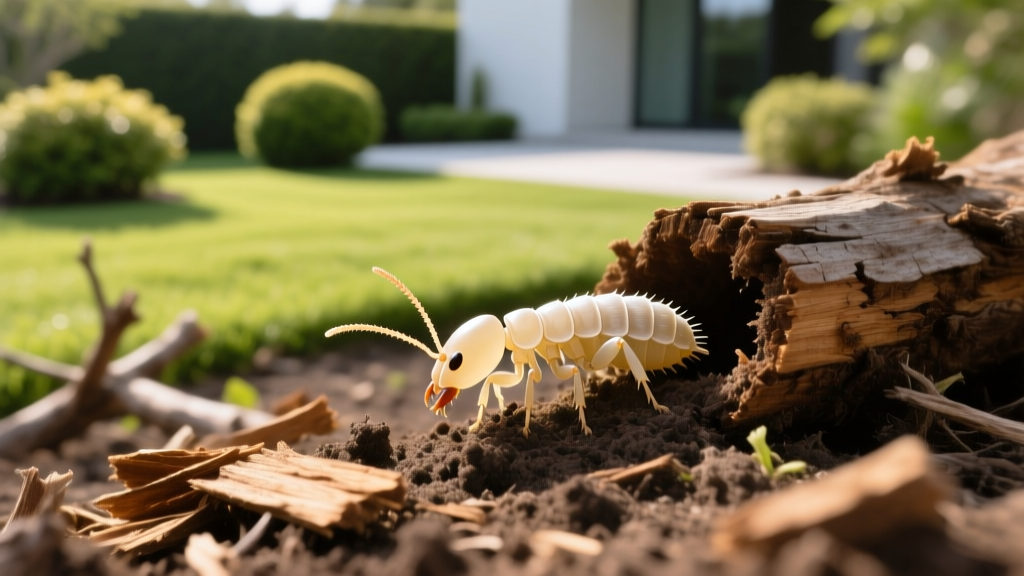
How Do Termites Look? Yard and Garden Identification Guide
Decoding the Castes: How Termites Look by Role
When homeowners ask, "how do termites look," the answer is rarely straightforward because termites exhibit distinct physical variations based on their caste. A colony in your yard consists of three primary castes, each with a unique morphological profile adapted to its specific function. Identifying which caste you are observing in your mulch beds or near tree stumps is the first step in assessing the severity of a landscape infestation.
| Caste | Size & Color | Key Visual Features | Yard Behavior |
|---|---|---|---|
| Alates (Swarmers) | 1/4 to 3/8 inch; dark brown to black | Two pairs of equal-length, translucent wings; straight, beaded antennae; thick, uniform waist. | Emerge from soil or wood in spring/summer to mate and establish new colonies near landscape timber. |
| Workers | 1/8 to 1/4 inch; creamy white to translucent | Wingless; blind; soft-bodied; lack distinct head pigmentation. | Rarely seen above ground unless mulch or dead roots are disturbed. They forage for cellulose in yard debris. |
| Soldiers | 1/4 to 1/2 inch; pale body with dark yellow/brown head | Wingless; blind; possess massively enlarged, heavily sclerotized mandibles (pincers) for defense. | Guard mud tubes and carton nests. Visible if a subterranean tunnel network in the garden is broken open. |
The Ant vs. Termite Field Test
The most common misidentification in yard pest control is confusing termite swarmers with carpenter or pavement ants. Both emerge in large numbers during warm, humid spring afternoons, but their anatomical differences dictate entirely different treatment protocols. Use this rapid visual checklist when examining specimens on your patio or driveway:
Wing Structure: Termite wings are identical in size and stack neatly over the abdomen, extending slightly past the body. Ant wings are unequal; the front wings are noticeably larger than the hind wings.
Antennae Shape: Termite antennae are straight and resemble a string of tiny beads. Ant antennae feature a distinct, sharp 90-degree "elbow" or bend.
Waist Proportions: Termites have a broad, continuous thorax and abdomen (no waist). Ants possess a heavily pinched, narrow pedicel connecting the thorax and abdomen.
Antennae Shape: Termite antennae are straight and resemble a string of tiny beads. Ant antennae feature a distinct, sharp 90-degree "elbow" or bend.
Waist Proportions: Termites have a broad, continuous thorax and abdomen (no waist). Ants possess a heavily pinched, narrow pedicel connecting the thorax and abdomen.
Species-Specific Visual Cues in the Landscape
Beyond the insects themselves, how termites look in your yard is often defined by the architectural evidence they leave behind. Different species construct distinct foraging galleries and waste deposits that serve as primary diagnostic markers for pest management professionals.
Eastern Subterranean Termites (*Reticulitermes flavipes*)
According to North Carolina State Extension entomologists, Eastern subterranean termites require constant contact with soil moisture. To travel from the soil to above-ground yard structures like fence posts or retaining walls, they build shelter tubes. These mud tubes are typically 1/4 to 1 inch in diameter, composed of soil, wood particles, and termite saliva. They look like dried, pencil-thick veins of brown clay running vertically up foundation walls, tree trunks, or wooden landscape edging.
Formosan Subterranean Termites (*Coptotermes formosanus*)
Formosan termites are highly aggressive and can sustain colonies entirely above ground if a sufficient moisture source exists. The University of Florida IFAS notes that this species builds massive "carton nests" in the yard. These structures look like hardened, spongy masses of chewed wood and soil, often wedged in the hollow cavities of live oak trees or beneath dense, moisture-trapping ivy. Formosan swarmers are also distinctly larger and pale yellow-brown compared to the darker Eastern subterranean alates.
Drywood Termites (*Incisitermes* spp.)
Drywood termites do not build mud tubes and do not require soil contact. They infest dry landscape timbers, pergolas, and dead tree branches. Their primary visual signature is "frass" (fecal pellets). Drywood termite frass looks like coarse sand or coffee grounds accumulating in small piles beneath infested wood. Under a 10x hand lens, these pellets reveal a distinct hexagonal, barrel-like shape with rounded ends, measuring roughly 1 millimeter in length.
Landscape Vulnerabilities: Where to Look
Termites do not attack the yard randomly; they target specific micro-environments that offer cellulose and moisture retention. When conducting a yard defense inspection, focus your visual search on these high-risk zones:
- Cellulose Mulch Beds: Wood chip and bark mulch retain moisture and provide a secondary food source. Termites often build subterranean galleries directly beneath 2-to-3-inch layers of organic mulch.
- Soil-to-Wood Contacts: Fence posts, deck supports, and trellis bases buried directly in the soil without concrete footings or metal post anchors act as direct highways into the wood.
- Dead Tree Stumps and Roots: Leftover root systems from removed trees remain prime foraging grounds for subterranean colonies for years after the tree is cut down.
- Irrigation Leaks: Drip lines and sprinkler heads that oversaturate the soil near wooden structures create the exact high-moisture environment termites require to establish satellite foraging sites.
Critical Mistake: Never spray visible termite swarmers with over-the-counter aerosol insecticides (like Raid or Ortho Home Defense). Killing a few hundred alates does nothing to eliminate the subterranean colony of 50,000+ workers beneath your lawn, and the repellent chemicals can disrupt professional baiting strategies later.
Actionable Yard Defense: Treatment Protocols and Costs
Once you have identified how termites look and confirmed an active presence in your yard, immediate intervention is required to prevent the colony from migrating toward your home's foundation. The Environmental Protection Agency (EPA) recommends relying on proven soil-applied termiticides or monitored bait systems rather than localized spot treatments.
Liquid Soil Barriers (Non-Repellent Termiticides)
Products containing Fipronil (9.1% concentration), such as Termidor SC or Taurus SC, are the industry standard for yard perimeter defense. These are non-repellent, meaning termites cannot detect the chemical, allowing them to tunnel through the treated soil and transfer the toxin to the colony via grooming (the Transfer Effect).
- Application Specs: Requires digging a continuous trench 6 inches wide and 6 inches deep around the perimeter of the yard structures or home foundation.
- Mixing Rate: 0.8 fluid ounces of Termidor SC per gallon of water.
- Volume: Apply 4 gallons of finished solution per 10 linear feet of trench.
- Cost: Professional application typically ranges from $8 to $12 per linear foot. DIY material costs average $70 to $90 per 20 oz bottle (treating roughly 60 linear feet).
In-Ground Bait Stations
For yards with extensive hardscaping, patios, or high water tables where trenching is impossible, bait systems like Sentricon Always Active (utilizing the active ingredient Noviflumuron) are highly effective. Stations are installed flush with the soil surface every 10 feet around the property, positioned 2 to 4 feet away from the foundation. The termites consume the cellulose bait matrix laced with a chitin synthesis inhibitor, which prevents them from molting and ultimately collapses the colony. Initial professional installation ranges from $1,200 to $2,500, with annual monitoring and bait replenishment fees between $300 and $500.
Accurately identifying termite castes, species-specific mud tubes, and frass in your landscape is the cornerstone of effective yard defense. By distinguishing these pests from harmless ants and targeting their subterranean foraging networks with non-repellent termiticides or monitored bait matrices, you can protect both your garden structures and your home's structural integrity from catastrophic cellulose loss.

