
Pest Control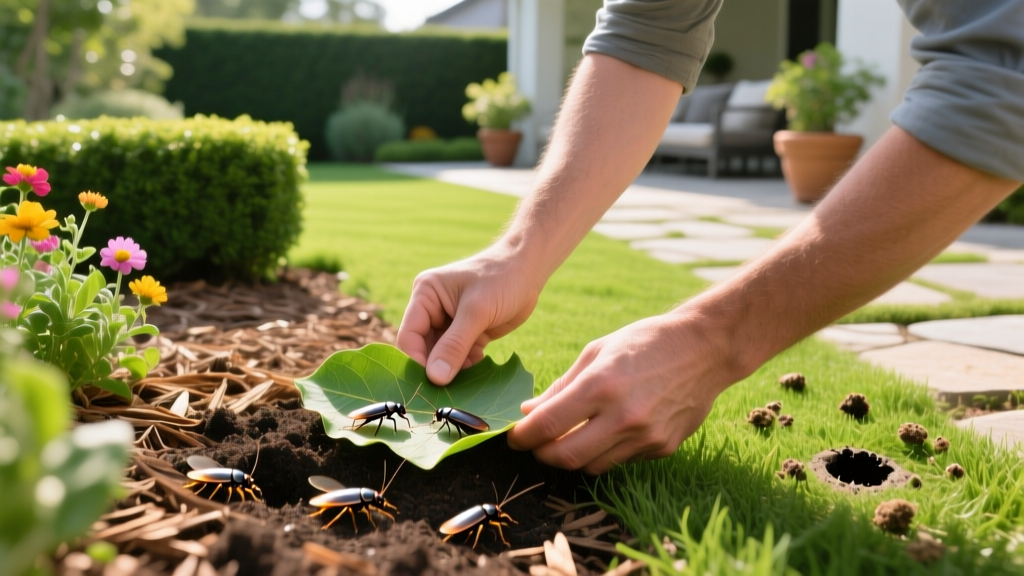
How to Get Rid of Roaches in Your Yard and Garden Beds
The Yard is the Staging Ground: Rethinking Outdoor Roach Control
When homeowners discover cockroaches in their kitchen or bathroom, the immediate instinct is to treat the interior. However, the most common and largest species invading homes—American, Smokybrown, and Oriental cockroaches—are primarily outdoor pests. They breed in damp soil, mulch beds, and leaf litter, using your yard as a staging ground before migrating indoors seeking water and shelter. According to the Environmental Protection Agency (EPA), effective pest management requires eliminating outdoor harborage and food sources before relying on indoor chemical treatments.
Learning how to get rid of roaches in your yard requires establishing a "10-Foot Perimeter Defense Zone." This strategy shifts the battleground from your baseboards to your landscape beds, utilizing targeted moisture control, physical barriers, and non-repellent exterior treatments.
Identifying the Outdoor Culprits
Not all roaches in the yard are structural threats. Wood roaches (Parcoblatta species) are harmless outdoor insects that occasionally wander inside but cannot survive or breed indoors. The true threats are peridomestic cockroaches. Use this matrix to identify what is breeding in your landscape.
| Species | Size / Color | Preferred Yard Habitat | Key Identifier |
|---|---|---|---|
| American Cockroach | 1.5 - 2 inches / Reddish-brown | Sewer access, palm trees, damp mulch, irrigation valve boxes | Yellowish figure-8 pattern on the back of the head |
| Smokybrown Cockroach | 1.25 - 1.5 inches / Dark mahogany | Tree holes, roof gutters, dense ivy, stacked firewood | Uniform dark color; long wings extending past the abdomen |
| Oriental Cockroach | 1 - 1.25 inches / Glossy black | Crawlspaces, under concrete patios, damp leaf litter | Short, non-functional wing pads; emits a strong, musty odor |
The 10-Foot Perimeter Defense Strategy
Executing a proper exterior defense requires modifying the microclimate of your foundation. Roaches require high humidity and organic debris to thrive. Follow this sequential protocol to make your yard inhospitable.
Step 1: Moisture and Grading Corrections
Peridomestic roaches cannot survive long without a water source. Inspect your foundation for moisture traps. Extend all downspouts a minimum of 4 feet away from the house using corrugated PVC diverters. Regrade soil immediately adjacent to the foundation to ensure a 5% slope away from the concrete. If you have leaky hose bibs or weeping irrigation valves, repair them immediately; a single dripping spigot can sustain a colony of hundreds of Smokybrown roaches.
Step 2: The 12-Inch Gravel Barrier
Organic mulches like pine bark, shredded hardwood, and cypress are essentially roach condominiums. They retain moisture and provide a food source (decaying wood). To break this cycle, rake back all mulch and create a 12 to 18-inch wide barrier directly against your home's foundation. Fill this trench with 3/4-inch crushed gravel or river rock. This inorganic material drains rapidly, dries in the sun, and offers zero nutritional value or harborage for roaches.
Step 3: Targeted Exterior Baiting and IGRs
Once the physical environment is modified, apply targeted chemistry. Avoid broad-spectrum liquid repellents on the exterior, which can actually push foraging roaches deeper into your home's wall voids. Instead, use a combination of non-repellent transfer effects and Insect Growth Regulators (IGRs).
- Alpine WSG (Dinotefuran): A non-repellent water-soluble granule. Mix one 10-gram packet per gallon of water. Spray a 3-foot band up the foundation and a 3-foot band out onto the soil/gravel. Roaches walk through the treated zone, pick up the active ingredient, and transfer it to the colony. Cost: ~$45 for a box of five packets.
- NyGuard IGR (Pyriproxyfen): Mix 4 to 8 ml per gallon of water and tank-mix with the Alpine WSG. This mimics juvenile hormones, preventing nymphs from molting into reproductive adults, effectively breaking the breeding cycle in your yard beds.
Chemical vs. Organic Yard Treatments
Homeowners seeking organic or low-toxicity alternatives for yard defense have viable options, though they require more frequent maintenance and precise placement compared to synthetic chemistries.
Organic & Low-Tox Options
Niban FG (Orthoboric Acid 5%): A weather-resistant, food-grade boric acid granular bait. Broadcast at 1-2 lbs per 100 sq ft in attics, crawlspaces, and deep mulch beds. Unlike standard boric acid powders, Niban resists moisture breakdown, making it ideal for damp yard perimeters. Cost: ~$40 for a 4lb shaker.
Diatomaceous Earth (DE): While popular online, DE is largely ineffective in outdoor yard beds. It requires a completely dry environment to abrade the insect's exoskeleton. Once it gets wet from dew or irrigation, it clumps and loses efficacy until it dries back into a fine powder—a rarity in damp mulch beds.
Critical Mistakes to Avoid in Yard Defense
Warning: The Repellent Trap
Never use over-the-counter pyrethroid repellent sprays (like standard bifenthrin or cypermethrin liquid concentrates) on your exterior foundation if you currently have roaches inside the home. Repellents create a chemical "fence" that roaches detect and avoid. This traps the existing indoor population inside your walls and forces outdoor foragers to find alternative entry points higher up on the structure, such as soffit vents or weep holes, making the infestation significantly harder to eradicate.
Expert FAQ: Yard Roach Management
Do roaches in the yard mean my house is infested?
Not necessarily. Seeing American or Smokybrown roaches in your garden beds at night indicates a favorable outdoor habitat, not an indoor nest. However, populations exceeding 10-15 visible adults per night on exterior walls suggest high breeding pressure that will inevitably lead to indoor migration during extreme heat, heavy rain, or winter freezes.
How often should I reapply perimeter granules?
Granular insecticides like Talstar PL (Bifenthrin 0.2%) degrade under UV exposure and microbial activity. For sustained yard defense, apply 2.3 to 5 lbs per 1,000 sq ft every 60 to 90 days during the active spring and summer seasons. Always water granules in with 0.25 inches of irrigation immediately after application to activate the active ingredient into the top layer of soil and thatch. The University of California IPM program emphasizes that monitoring and reapplication timing based on local weather patterns is critical for long-term suppression.
Final Perimeter Checklist
Before purchasing chemicals, walk your property and verify these physical defenses: downspouts extended 4+ feet, mulch pulled 12 inches from the foundation, firewood stacked at least 20 feet from the home, and tree branches trimmed 3 feet away from the roofline to eliminate aerial bridges for Smokybrown roaches.

