
Pest Control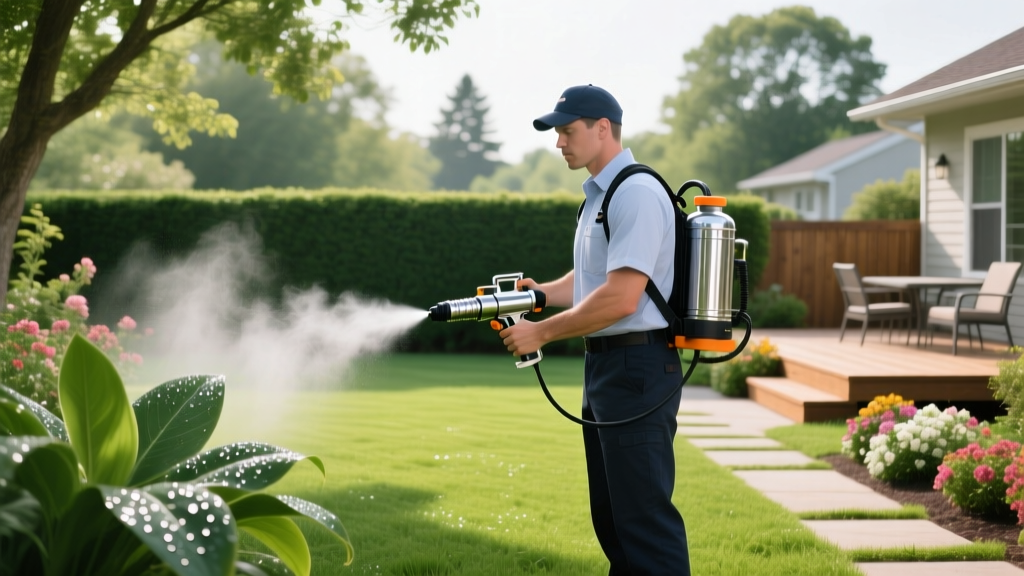
How Much Does Mosquito Spraying Cost? 2026 Pricing Guide
When budgeting for summer pest control, homeowners frequently ask: how much does mosquito spraying cost? As of 2026, the national average for a professional mosquito barrier treatment ranges from $350 to $550 per visit for a standard half-acre lot. However, the true cost depends heavily on your chosen application method, the active ingredients used, and the exact square footage of treatable foliage on your property.
This guide breaks down the exact dosage, coverage metrics, and out-of-pocket costs for professional services, DIY chemical applications, and automated misting systems, giving you the data needed to choose the most cost-effective route for your yard.
Professional Barrier Sprays: Pricing by Property Size
Professional pest control companies typically price mosquito barrier sprays based on the total lot size, though the actual chemical is only applied to the perimeter foliage, shrubs, and shaded resting areas. Most companies utilize synthetic pyrethroids (like bifenthrin or permethrin) which provide a residual barrier lasting 21 to 30 days.
| Lot Size | Treatable Foliage Area (Est.) | Per-Spray Cost (2026) | Season Package (12-14 Sprays) |
|---|---|---|---|
| 1/4 Acre (~10,800 sq ft) | 4,000 - 6,000 sq ft | $250 - $350 | $2,800 - $3,600 |
| 1/2 Acre (~21,700 sq ft) | 8,000 - 12,000 sq ft | $350 - $500 | $3,900 - $5,200 |
| 1 Acre (~43,500 sq ft) | 15,000 - 20,000 sq ft | $550 - $800 | $6,000 - $8,500 |
💡 Pro-Tip on Contracts: Many companies push season-long contracts paid upfront. In 2026, market competition has driven per-spray on-demand pricing down. Unless you are locking in a promotional rate (usually 10-15% off), avoid paying for the full season in March. Pay-per-spray allows you to halt treatments if environmental conditions (like severe drought) naturally suppress mosquito populations.
DIY Mosquito Spraying: Equipment, Dosage & Coverage Costs
For homeowners willing to invest in the right equipment, DIY mosquito control yields massive long-term savings. The critical failure point for most DIYers is not the chemical, but the application equipment. To achieve professional-grade coverage, you must target the underside of leaves where mosquitoes rest during peak heat.
The Equipment Gap: Hose-End vs. Backpack Mist Blowers
A standard garden hose-end sprayer produces water droplets larger than 200 microns. These heavy droplets bounce off the waxy cuticle of leaves and fail to penetrate dense shrubbery. Professional technicians use motorized backpack mist blowers (such as the Stihl SR 450 or Solo 451, retailing between $650 and $900) which atomize the solution into 50 to 100-micron droplets. This fine mist wraps around foliage and sticks to the leaf undersides, effectively doubling your chemical coverage and extending the residual lifespan of the barrier.
Chemical Concentrates: Synthetic vs. Organic Cost Per 1,000 Sq Ft
Understanding label dosages is mandatory for calculating true DIY costs. Below is a comparison of the two most common professional-grade concentrates available to consumers in 2026.
1. Synthetic Pyrethroids (e.g., Bifenthrin 7.9% SC)
- Product Example: Talstar P Professional or Bifen IT
- Cost: ~$55.00 for a 3/4 gallon (96 oz) jug
- Label Dosage: 1.0 fl oz per gallon of water per 1,000 sq ft
- Coverage Math: 96 oz treats 96,000 sq ft (roughly 2.2 acres of treatable foliage)
- Cost per 1,000 sq ft: $0.57
- Residual Lifespan: 21 to 30 days
2. Organic Essential Oil Blends (e.g., Rosemary, Peppermint, Geraniol)
- Product Example: Essentria IC3 Insecticide Concentrate
- Cost: ~$48.00 for a 16 oz bottle
- Label Dosage: 2.0 to 4.0 fl oz per gallon per 1,000 sq ft
- Coverage Math: 16 oz treats roughly 5,000 sq ft (using the 3 oz/gal average)
- Cost per 1,000 sq ft: $9.60
- Residual Lifespan: 3 to 7 days (UV light rapidly degrades botanical terpenes)
While organic options are safer for pollinators, they cost nearly 1,600% more per square foot and require reapplication after every major rain event or weekly during peak summer UV exposure. According to guidelines published by the Environmental Protection Agency (EPA), minimum-risk botanical pesticides are exempt from federal registration but require significantly higher application frequencies to maintain efficacy.
Automated Misting Systems: The Premium Investment
For properties bordering wetlands or dense woods where daily mosquito pressure is overwhelming, automated high-pressure misting systems represent the highest tier of pest control. These systems utilize a central drum, a high-pressure pump (minimum 1000 PSI), and a network of 1/4-inch nylon tubing with atomizing nozzles spaced every 8 to 10 feet along the property perimeter.
Automated System Cost Breakdown (2026 Estimates)
- Hardware & Installation (30-40 nozzles): $2,800 – $4,500
- Concentrate Refills (Pyrethrin/Rosin blend): $140 – $180 per 1-gallon refill (lasts 45-60 days)
- Annual Winterization & Calibration: $150 – $250
- Cost Per Application: Roughly $1.20 per automated 60-second cycle
The primary advantage of an automated system is the ability to schedule micro-doses. Instead of a heavy chemical load every 21 days, the system sprays a fine mist for 45 seconds at dawn and dusk—the exact circadian windows when mosquitoes are most active. The Centers for Disease Control and Prevention (CDC) notes that targeting peak biting hours is highly effective for reducing the transmission risk of mosquito-borne pathogens like West Nile Virus.
Hidden Variables That Spike Your Mosquito Control Bill
When requesting quotes or calculating DIY coverage, homeowners often overlook site-specific variables that mandate additional products or labor:
- Dense Canopy & Ivy Overgrowth: English ivy and thick hosta beds harbor immense mosquito populations. Technicians must use higher volumes of carrier liquid (water) to penetrate these dense micro-climates, increasing the chemical cost per visit by 15-20%.
- Standing Water & Aquatic Features: Pyrethroids are highly toxic to fish and aquatic invertebrates. If your property includes koi ponds, creeks, or drainage ditches, the perimeter buffer zone must be expanded. Standing water requires the separate purchase and deployment of Bti (Bacillus thuringiensis israelensis) dunks or bits, which cost roughly $15-$20 per season but are entirely safe for aquatic life.
- Tree Canopy Injections: For properties with massive oak or maple trees where the lower branches are out of reach of a backpack blower, professionals may charge an additional $75-$125 per visit to use a motorized high-volume sprayer to reach the lower canopy foliage.
⚠️ Ecological Warning: Never apply synthetic pyrethroids near blooming flowers, pollinator gardens, or water features. To protect local bee populations, the American Mosquito Control Association (AMCA) strongly recommends applying barrier treatments in the late evening when foraging bees have returned to their hives and wind speeds are below 5 MPH to prevent chemical drift.
Decision Framework: Which Treatment Fits Your Budget?
Use this matrix to determine the most financially sound mosquito control strategy for your specific property profile in 2026.
| Property Profile | Budget Preference | Recommended Strategy | Estimated Annual Cost |
|---|---|---|---|
| Suburban Lot (< 1/2 acre), standard landscaping | Low Upfront, Moderate Ongoing | DIY Backpack Mist Blower + Bifenthrin. Buy equipment once, spend pennies per application. | $750 (Year 1) / $120 (Year 2+) |
| Wooded Lot (1+ acre), high shade, wet soil | High Upfront, Low Maintenance | Automated Misting System. Necessary for daily suppression in high-pressure environments. | $3,500 (Year 1) / $450 (Year 2+) |
| Urban Townhome, small patio, pollinator garden | Moderate, Eco-Conscious | Professional Organic (Essential Oil) Sprays. Avoids synthetic toxicity near confined spaces and bees. | $1,800 - $2,500 (Season) |
| Large Estate (2+ acres) with ponds | Targeted, Hybrid Approach | DIY Synthetic Perimeter + Bti Dunks. Treat the house perimeter with pyrethroids; use Bti in all water features. | $200 - $300 (Season) |
Ultimately, understanding how much mosquito spraying costs requires looking past the sticker price of a single service call. By calculating your exact treatable foliage square footage and matching it with the correct micron-producing equipment and chemical residual, you can reclaim your outdoor spaces without overspending on seasonal pest control contracts.

