
Pest Control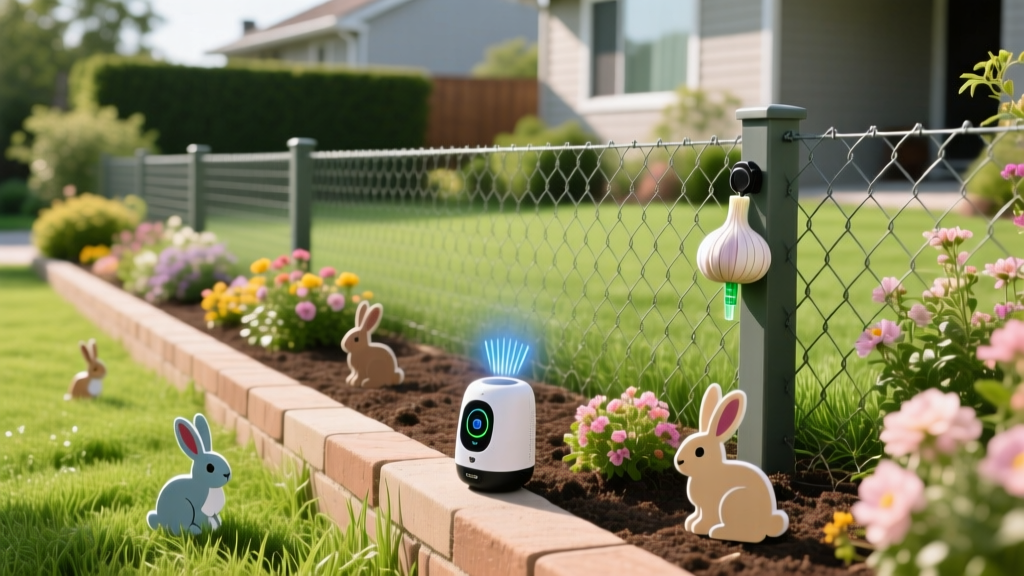
How to Deter Rabbits: Proven Garden Fencing and Repellent Tactics
Eastern cottontails and jackrabbits can decimate a newly planted garden in a single night. A single female rabbit can produce up to six litters a year, meaning local populations can explode rapidly during the spring and summer growing seasons. If you are researching how to deter rabbits effectively, you must move beyond generic advice and implement targeted physical and chemical barriers based on rabbit biology and foraging behavior.
Identifying Rabbit Damage Before It Spreads
Before investing in exclusion materials, confirm that rabbits are the actual culprits. Homeowners frequently confuse rabbit damage with deer or vole damage, leading to the wrong mitigation strategy.
Diagnostic Rule of Thumb: Rabbits have sharp incisors that clip stems cleanly at a precise 45-degree angle. Deer lack upper front teeth and will leave torn, jagged edges on stems. Voles, conversely, gnaw on bark at the soil line and leave parallel tooth marks, rarely clipping entire herbaceous stems.
Rabbits typically feed close to the ground, rarely reaching higher than 2.5 feet unless there is snowpack elevating their standing height. If your hostas, snapdragons, or bean seedlings are sheared off cleanly near the base, you are dealing with a rabbit incursion.
The Physics of Exclusion: Fencing Specifications
According to the Humane Society of the United States, physical exclusion is the only 100% reliable method for protecting high-value vegetable crops. However, simply stapling chicken wire to posts will fail. Rabbits are adept diggers and can compress their bodies to slip through surprisingly small gaps.
Exact Material Requirements
- Mesh Type: 16-gauge galvanized wire with a 1-inch hexagonal mesh. Standard 2-inch poultry netting allows juvenile rabbits to pass through.
- Height: Minimum 2 feet above ground level (3 feet if you experience heavy winter snowdrifts).
- Support: Metal T-posts or sturdy wooden stakes driven every 6 to 8 feet to prevent the wire from bowing under animal pressure.
The L-Flare Burial Technique
Rabbits will instinctively dig at the base of a fence when they smell crops on the other side. To counter this, you must install an outward-facing L-flare.
- Dig a shallow trench 6 inches deep along the entire perimeter of your garden bed.
- Bend the bottom 6 to 12 inches of your wire mesh outward at a 90-degree angle, pointing away from the garden.
- Lay this flared section flat in the trench and cover it with soil.
- When a rabbit digs at the fence line, they will hit the buried wire mesh and lack the cognitive ability to back up and dig behind the barrier.
Cost Estimate: Expect to pay between $1.50 and $2.50 per linear foot for 16-gauge 1-inch mesh wire, plus $8 to $12 per metal T-post. For a 40x40 foot garden, material costs will range from $240 to $320, providing a permanent solution that lasts 10 to 15 years.
Chemical and Organic Repellents: A Comparative Matrix
When fencing is impractical—such as protecting scattered ornamental shrubs or expansive perennial borders—repellents are your secondary line of defense. The Internet Center for Wildlife Damage Management notes that repellents work best when applied proactively before feeding habits are established, and they must be rotated to prevent rabbits from habituating to a single scent or taste.
| Active Ingredient | Brand Example | Mechanism of Action | Rainfastness & Reapplication |
|---|---|---|---|
| Putrescent Whole Egg Solids | Liquid Fence | Olfactory (predator/decay scent) | High; reapply every 3-4 weeks or after heavy rain |
| Capsaicin (Hot Pepper) | Bonide Hot Pepper Wax | Gustatory (irritates mucous membranes) | Low; requires reapplication after any rainfall |
| Thiram (Fungicide) | Bonide Rabbit Scat | Gustatory (bitter taste/chemical aversion) | Moderate; do not use on edible food crops |
| Blood Meal / Garlic Oil | Plantskydd | Olfactory (emulates predator presence) | High; binds well to plant cuticles |
Crucial Application Rule: Never apply putrescent egg or capsaicin repellents to the edible portions of vegetables or herbs intended for immediate harvest. Restrict these treatments to ornamental foliage, or use them strictly on the perimeter of the garden to create a scent barrier.
Motion-Activated Deterrents: The Orbit Yard Enforcer
Ultrasonic sound emitters and plastic predator decoys (like fake owls or rubber snakes) are largely ineffective. Rabbits quickly realize these static objects pose no physical threat and will forage right next to them within 48 hours.
For active deterrence in open lawn areas, the Orbit 62100 Yard Enforcer Motion-Activated Sprinkler remains the industry standard for mammal deterrence. Priced around $75, this device utilizes an infrared sensor that detects animal body heat and movement up to 35 feet away.
Optimizing the Yard Enforcer
- Placement: Mount the sensor 24 inches above the ground to specifically target the heat signature of cottontails, rather than triggering on wind-blown grass or distant passing cars.
- Water Usage: The device releases a sharp, 5-second burst of water using only 2 to 3 cups per activation. This conditions the rabbits to associate your lawn with sudden, startling physical consequences without waterlogging your soil.
- Mode Selection: Set the dial to 'Day and Night'. Rabbits are crepuscular, meaning they are most active at dawn and dusk, but they will readily forage at midnight in suburban areas with low predator presence.
Habitat Modification and the 'Rabbit-Proof' Plant Myth
Landscaping choices play a pivotal role in how attractive your property is to foraging mammals. However, the horticultural industry is rife with misinformation regarding rabbit-resistant plants.
Myth: Planting marigolds around your garden border will deter rabbits.
Fact: Rabbits readily eat marigolds. While the strong scent of French marigolds deters certain nematodes and aphids, it does absolutely nothing to stop a hungry cottontail.
Truly Resistant Plant Selections
Rabbits avoid plants that contain toxic alkaloids, thick fibrous leaves, or potent essential oils that interfere with their sensitive olfactory receptors. If you are dealing with chronic rabbit pressure, integrate these highly resistant species into your landscape:
- Daffodils (Narcissus): Contain lycorine, a toxic alkaloid that causes severe gastrointestinal distress in mammals.
- Alliums (Ornamental Onions): The high sulfur compound content makes these highly unpalatable.
- Lavender and Russian Sage: The dense, volatile essential oils overwhelm rabbit scent receptors, causing them to bypass the plants entirely.
- Foxglove (Digitalis): Contains cardiac glycosides; rabbits instinctively avoid this highly toxic biennial.
Integrated Management Checklist
Successfully answering the question of how to deter rabbits requires a layered approach. Relying on a single method will eventually result in garden damage as local populations adapt. Follow this hierarchy for long-term success:
- Perimeter Defense: Install 1-inch mesh galvanized fencing with an L-flare around all primary vegetable beds.
- Chemical Rotation: Spray ornamental beds with putrescent egg solids in early spring, then switch to a capsaicin-based wax in mid-summer to prevent habituation.
- Active Deterrence: Deploy motion-activated sprinklers in open lawn zones where fencing is visually undesirable.
- Cleanup: Remove brush piles, tall grass borders, and abandoned sheds within 50 feet of your garden to eliminate daytime harborage sites.
By combining physical exclusion with strategic chemical repellents and smart landscaping, you can protect your investment and maintain a pristine lawn and garden throughout the growing season.

