
Pest Control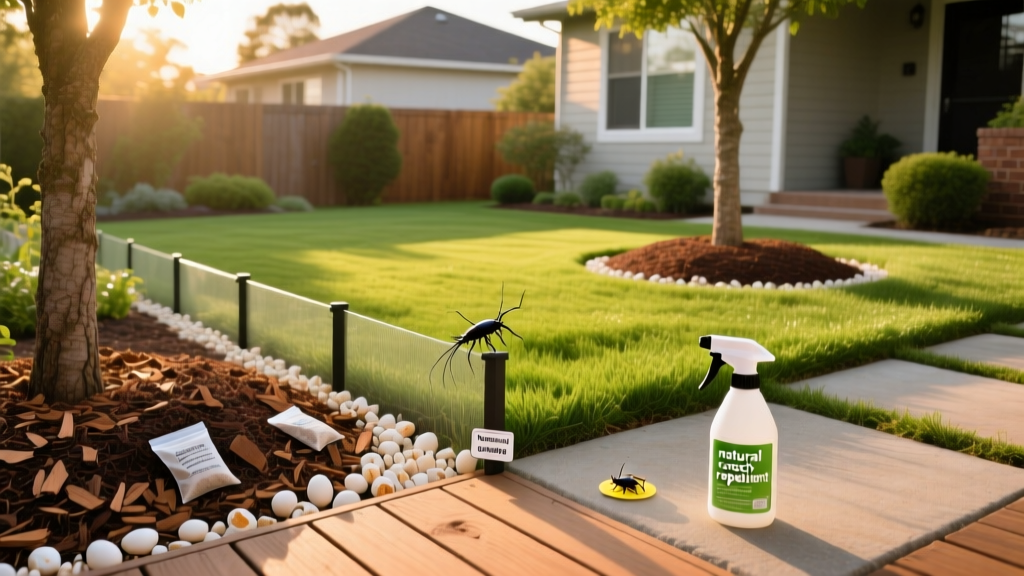
How to Deter Roaches in the Yard: Perimeter Defense Guide
The Outdoor Origin of Indoor Infestations
When homeowners ask how to deter roaches, they often focus entirely on indoor baseboards and kitchen cabinets. However, the most common and largest species invading homes—such as the American cockroach (Periplaneta americana), Smokybrown cockroach (Periplaneta fuliginosa), and Oriental cockroach (Blatta orientalis)—are primarily outdoor pests. They breed in mulch beds, sewer access points, and damp soil, only migrating indoors when outdoor populations surge or weather conditions force them to seek shelter. According to University of Kentucky Entomology, establishing a robust outdoor perimeter defense is the most effective way to reduce indoor migration. This guide details the exact habitat modifications, chemical barriers, and moisture control tactics required to secure your yard in 2026.
The 3-Foot Foundation Buffer Zone
Roaches thrive in the humid, protected microclimate created by landscaping mulch pressed against a home's foundation. To break this cycle, you must implement a strict 3-foot buffer zone.
- Mulch Pull-Back: Rake all organic mulch (pine bark, cedar, wood chips) at least 3 feet away from the foundation. Replace this inner zone with inorganic materials like crushed gravel, river rock, or bare compacted soil. Gravel drains rapidly and does not retain the moisture roaches require for survival.
- Vegetation Pruning: Trim shrubs, ivy, and groundcover so they do not touch the siding. Dense foliage against a house creates a 'highway' for Smokybrown roaches, which are strong fliers and climbers, to bypass ground-level chemical barriers and enter through soffit vents or second-story windows.
- Debris Clearance: Remove leaf litter, compost piles, and stacked firewood from the immediate perimeter. Firewood should be stored at least 20 feet from the home and elevated on metal racks to prevent Wood roaches from colonizing the logs.
Chemical and Organic Perimeter Barriers
Once the physical habitat is modified, applying a targeted chemical or organic barrier stops roaches from crossing onto your property. The Environmental Protection Agency (EPA) emphasizes using pesticides strictly according to label directions, prioritizing targeted applications over broadcast spraying. Below is a comparison of the most effective active ingredients for yard perimeter defense available to consumers and professionals in 2026.
| Active Ingredient | Product Example | Approx. Cost (2026) | Mode of Action | Best Application Scenario |
|---|---|---|---|---|
| Bifenthrin (7.9%) | Talstar P Professional | $55 / 3/4 Gal | Repellent / Contact | Creating an invisible, long-lasting (up to 90 days) repellent barrier on exterior walls and soil. |
| Indoxacarb (0.22%) | Advion Insect Granule Bait | $68 / 20 lbs | Non-Repellent / Ingestion | Scattering in mulch beds and garden edges where roaches forage; triggers a delayed domino kill effect. |
| Orthoboric Acid (5%) | Niban FG Granular Bait | $45 / 4 lbs | Stomach Poison | Targeting damp, hard-to-reach yard crevices and utility entry points; highly moisture resistant. |
| Diatomaceous Earth | Harris Food Grade DE | $15 / 4 lbs | Desiccant / Mechanical | Dry, covered areas like under porches or inside crawl space vents; loses efficacy when wet. |
Application Rates and Techniques
For liquid concentrates like Bifenthrin, mix 1 ounce of product per gallon of water. Apply using a pump sprayer to create a 3-foot wide band on the soil and a 3-foot high band on the foundation wall. For granular baits like Advion, apply at a rate of 200 lbs per acre (roughly 4.5 lbs per 1,000 square feet), scattering lightly in areas where mulch remains, such as around distant tree bases or garden borders.
⚠️ Critical Warning: The Repellent vs. Bait Conflict
A common failure mode in DIY yard defense is mixing repellent liquid sprays (like Bifenthrin or Cypermethrin) with non-repellent granular baits (like Indoxacarb) in the exact same zone. If you spray a repellent over a bait, the roaches will detect the repellent and avoid the area entirely, rendering the expensive bait useless. Rule of thumb: Use repellent liquids strictly on the vertical foundation walls and immediate 1-foot soil border. Use granular baits further out in the mulch beds and garden perimeters where roaches forage.
Moisture Control and Irrigation Audits
Outdoor roaches are highly susceptible to desiccation. If your yard retains excess moisture, no chemical barrier will fully deter them. According to Penn State Extension, moisture management is a cornerstone of integrated pest management (IPM) for cockroaches.
- Sprinkler Head Adjustment: Audit your irrigation system. Ensure no sprinkler heads are misting directly onto the house siding, window wells, or foundation. Over-spraying creates constant moisture pockets that attract Oriental roaches.
- French Drains and Grading: Ensure the soil grades away from the foundation at a minimum slope of 6 inches over the first 10 feet. Install French drains in low-lying yard areas that pool water for more than 24 hours after a heavy rain.
- AC Condensate Lines: Reroute HVAC condensate drain lines so they discharge into a proper drainage bed or rain garden, rather than pooling directly against the foundation slab.
Lighting Modifications to Reduce Attraction
While roaches are not strictly phototactic (attracted to light) like moths, they are drawn to the insects that gather around bright exterior lights. Furthermore, Smokybrown roaches are known to fly toward illuminated windows and doors at night.
- Color Temperature Shift: Replace standard white LED exterior bulbs (4000K-5000K) with warm, yellow-toned LEDs (2000K-2700K) or specialized sodium vapor bulbs. Insects cannot see yellow light wavelengths as easily, drastically reducing the prey population that draws roaches to your doors.
- Motion Activation: Switch porch and garage floodlights to motion-sensor triggers. Keeping the yard dark when not in use disrupts the nocturnal foraging patterns of flying roach species.
Seasonal Perimeter Treatment Calendar
Consistent timing is critical for maintaining an unbroken defensive perimeter. Use this schedule to stay ahead of population booms.
- Early Spring (March-April): Perform the 3-foot mulch pull-back. Apply a liquid residual barrier (Bifenthrin) to the foundation and soil edge before the first major spring rains wash away winter debris.
- Early Summer (June): As temperatures rise and breeding accelerates, broadcast granular bait (Advion or Niban) into the remaining mulch beds and garden borders. Check and clear all AC condensate lines.
- Late Summer (August): Reapply liquid barrier to the foundation walls, as UV degradation and summer heat reduce the efficacy of spring applications. Prune back any summer vegetation overgrowth touching the house.
- Late Autumn (October-November): Clear all fallen leaves from the yard and gutters. Apply a final granular bait treatment to target overwintering populations seeking shelter in yard debris before the first freeze.
Effective roach deterrence is not a one-time spray; it is the continuous management of the exterior microclimate. By combining physical habitat disruption with targeted, non-conflicting chemical barriers, you eliminate the resources roaches need to colonize your yard.

