
Pest Control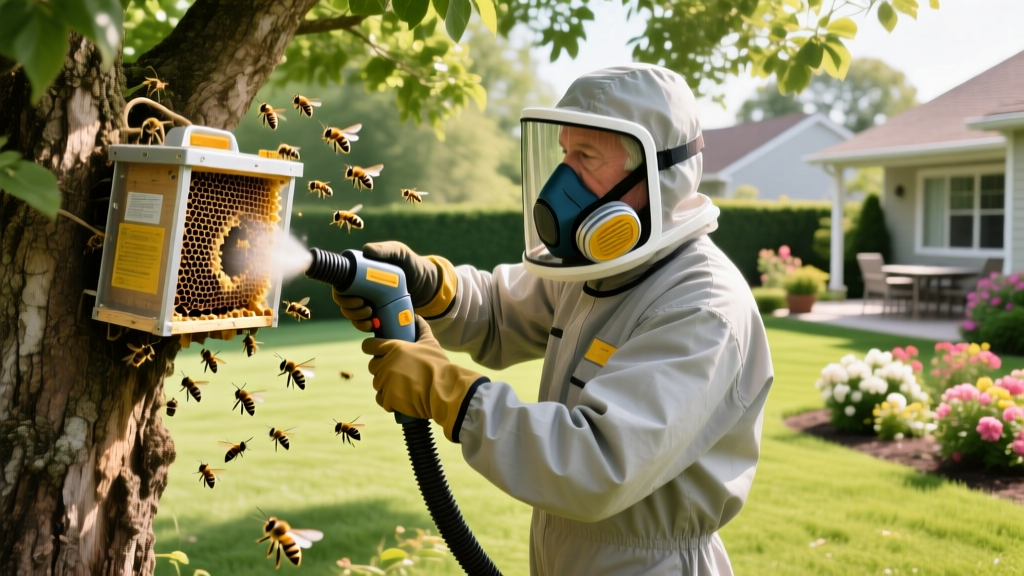
How to Exterminate a Beehive: Step-by-Step Guide for Aggressive Nests
The Critical First Step: Honeybee vs. Aggressive Nest Identification
Before purchasing any chemicals, you must accurately identify the stinging insect. Homeowners frequently use the term "beehive" to describe any stinging insect nest, but true honeybees (Apis mellifera) are legally protected in most states due to their critical role as agricultural pollinators. Exterminating a native honeybee colony can result in severe fines from the state department of agriculture. Conversely, aggressive species like yellowjackets, bald-faced hornets, and paper wasps pose immediate physical threats and require swift extermination.
According to EPA pollinator protection guidelines, if the nest is composed of wax comb and houses fuzzy, golden-brown bees, you must contact a local beekeeper for live relocation. If the nest is papery, muddy, or located in a ground burrow, you are likely dealing with an aggressive pest that can be legally exterminated.
| Species | Nest Appearance & Location | Aggression Level | Required Action |
|---|---|---|---|
| Honeybee | Wax comb; tree hollows, structural voids | Low (unless provoked) | Relocate via Beekeeper |
| Yellowjacket | Papery, gray; ground burrows, wall voids | Extreme (swarms aggressively) | Exterminate (Dust/Aerosol) |
| Bald-Faced Hornet | Large, football-shaped paper; trees, eaves | High (defends nest fiercely) | Exterminate (Aerosol) |
| Paper Wasp | Open, umbrella-shaped; eaves, railings | Moderate | Exterminate (Aerosol) |
| Carpenter Bee | Perfect half-inch holes in bare wood | Low (males lack stingers) | Exterminate (Dust) |
⚠️ Regional Warning: Africanized Honeybees
If you reside in the Southwest or Southern United States (Texas, Arizona, California, Nevada, Florida), feral "beehives" may be Africanized honeybees. These insects are hyper-aggressive and will pursue threats for up to a quarter-mile. DIY extermination of Africanized swarms is exceptionally dangerous and frequently fatal. Always hire a licensed pest control professional equipped with commercial-grade protective gear for these specific regional threats.
Essential Safety Gear and Preparation
Exterminating an aggressive nest requires a physical barrier between you and the colony. Stinging insects can deploy venom through standard clothing. Do not attempt this process in standard workwear.
- Protective Suit: Invest in a full-body beekeeping suit with an attached fencing veil. The Harvest Lane Honey Pro Bee Suit (approx. $75) offers adequate protection for DIY applications. Ensure all zippers are fully closed and cuffs are taped to your gloves with duct tape.
- Gloves: Wear thick leather gauntlet gloves, layered over nitrile gloves. Yellowjacket stingers can penetrate thin leather, but the nitrile layer prevents venom from seeping through needle punctures.
- Illumination (The Red-Light Trick): Stinging insects cannot perceive the red light spectrum. Equip your headlamp with a red lens filter or buy a dedicated red-LED headlamp (e.g., Coast HL7R with red mode). This allows you to illuminate the nest at night without triggering a defensive swarm response, a critical advantage over standard white flashlights.
- Escape Route: Clear all tripping hazards, hoses, and tools from your retreat path before approaching the nest.
Step-by-Step Extermination Protocols
The treatment method depends entirely on the nest's architecture and location. Using the wrong chemical formulation is the primary cause of DIY failure and subsequent stinging incidents.
Scenario A: Aerial and Exposed Nests (Hornets and Paper Wasps)
For nests hanging from eaves, tree branches, or porch ceilings, you need an immediate knockdown agent that shoots a concentrated stream from a safe distance.
- Timing: Approach the nest 45 minutes after sunset. The colony is entirely dormant, and all foraging workers have returned to the nest.
- Product Selection: Use a jet-stream aerosol like Spectracide Wasp & Hornet Killer or Raid Wasp & Hornet (active ingredients: Prallethrin and Tetramethrin). These formulations shoot a stream up to 22 feet.
- Application: Stand 12 to 15 feet away. Aim directly at the nest entrance (usually at the bottom of the papery envelope). Spray continuously for 5 to 8 seconds, thoroughly soaking the entry point and the outer shell.
- Retreat: Leave the area immediately. Do not stand beneath the nest to watch the insects fall.
Scenario B: Ground Burrows and Wall Voids (Yellowjackets)
Liquid aerosols are virtually useless for ground nests or wall voids. The liquid will not penetrate the deep subterranean chambers, and spraying a wall void will damage your drywall while failing to reach the queen. You must use an insecticidal dust.
- Product Selection: DeltaDust (active ingredient: Deltamethrin) or Drione Dust (Silica aerogel + Pyrethrins). These cost between $25 and $40 for a 1 lb shaker bottle. Dust clings to the insects' bodies and is carried deep into the nest, killing the colony from the inside out.
- Application Tool: Use a handheld bellows duster (like the JT Eaton Duster, approx. $15) to inject the powder precisely into the hole.
- Execution: Approach at night using your red-light headlamp. Insert the duster nozzle 1 to 2 inches into the ground hole or wall weep-hole. Puff 3 to 4 heavy clouds of dust directly into the entrance. The foraging wasps will track the dust into the central comb.
🛑 Critical Failure Mode: Sealing the Hole
Never immediately seal a ground hole or wall void after dusting. Yellowjackets will take 48 to 72 hours to die. If you plug the entrance with caulk or expanding foam on day one, the surviving, agitated insects will simply chew through your interior drywall and emerge into your living room or bedroom. Leave the hole open, allow the dust to work, and seal it only after you observe zero activity for three consecutive days.
Post-Treatment Cleanup and Hive Removal
Once 72 hours have passed and no insect activity is observed, the physical nest must be removed. Leaving an old nest in place invites secondary pests, such as carpet beetles and wax moths, which feed on the abandoned larvae and wax.
- Aerial Nests: Use a long-handled scraper or broom to knock the nest into a heavy-duty contractor trash bag. Seal the bag immediately and dispose of it in your outdoor municipal bin.
- Ground Nests: Fill the empty burrow with topsoil and tamp it down to prevent rodents from moving into the vacant tunnel.
- Wall Voids: If the nest is inside a wall, it is often best to leave the dead comb in place if it cannot be accessed without tearing out drywall. However, if the nest was massive, the decaying larvae can produce a foul odor. In this case, a professional must open the wall, vacuum out the debris with a HEPA shop-vac, and treat the void with an odor-neutralizing enzyme cleaner before patching.
When to Call a Professional (Cost vs. Risk Analysis)
While DIY extermination is highly effective for accessible nests, certain scenarios demand professional intervention. According to Penn State Extension entomologists, nests located higher than 12 feet, or those deeply embedded in structural soffits, present unacceptable risks for homeowners.
| Scenario | DIY Cost & Feasibility | Professional Cost (2026 Rates) | Recommendation |
|---|---|---|---|
| Exposed Eave Nest (Under 10 ft) | $10 (Aerosol) - High Success | $150 - $225 | DIY |
| Ground Burrow in Lawn | $35 (Dust + Duster) - High Success | $175 - $250 | DIY |
| Nest Inside Structural Wall Void | $35 (Dust) - Moderate Success | $250 - $400 | Pro (if drywall removal is needed) |
| Second-Story Soffit / Roof Peak | $15 - High Risk of Falls/Stings | $200 - $350 | Professional (Strictly) |
| Suspected Africanized Swarm | N/A (Lethal Risk) | $300 - $600+ | Professional (Immediate Emergency) |
By correctly identifying the species, utilizing the red-light tactical advantage, and selecting the proper chemical formulation (aerosol for exposed nests, dust for voids), you can safely and permanently exterminate aggressive stinging nests without sustaining a single sting.

