
Pest Control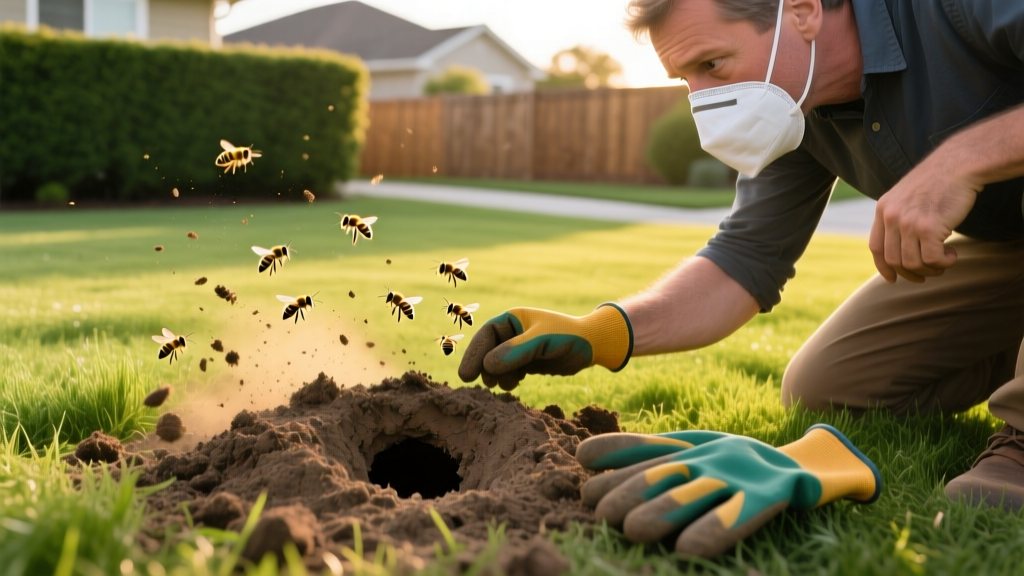
How to Get Rid of Bees in Your Yard: Ground and Eave Nest Guide
The Crucial First Step: Identify Before You Eradicate
When homeowners search for how to get rid of bees, the first mistake is treating the wrong insect. True bees (honeybees, bumblebees, carpenter bees, and solitary miner bees) are vital pollinators and generally non-aggressive unless provoked. However, over 70% of yard stinging complaints are actually caused by yellowjackets and hornets, which are aggressive wasps that require entirely different eradication protocols. Before purchasing any chemical treatment, you must accurately identify the insect and its nesting location to ensure both your safety and ecological compliance.
⚠ Critical Safety Warning: If you reside in the southern or southwestern United States and encounter a highly aggressive swarm of honeybees defending a ground or structural nest, do not attempt DIY treatment. These may be Africanized honeybees. Evacuate the area immediately and contact a licensed pest control professional or local apiary inspector.
The Stinging Insect Decision Matrix
- Honeybees: Fuzzy, golden-brown bodies. Nest in hollow trees, wall voids, or man-made hives. Action: Never kill. Call a local beekeeper for live relocation.
- Bumblebees: Large, very fuzzy, black and yellow. Nest in abandoned rodent burrows underground. Action: Tolerate if possible; they are endangered and docile.
- Carpenter Bees: Large, shiny black abdomen, metallic green/blue thorax. Bore perfect 1/2-inch circular holes into unpainted wood eaves and fascia. Action: Treat and repair to prevent structural degradation.
- Ground-Nesting (Miner) Bees: Small, solitary, gentle. Create small, volcano-like dirt mounds in sparse, dry lawn areas. Action: Cultural lawn care modifications.
- Yellowjackets (The Imposters): Hairless, bright yellow and black, highly aggressive. Build paper nests in ground holes, wall voids, or eaves. Action: Aggressive chemical eradication at night.
How to Get Rid of Ground-Nesting Bees in Lawns
Ground-nesting bees, such as Andrenid miner bees, are solitary and highly beneficial. They do not form aggressive swarms and rarely sting. They choose to nest in your yard for one specific reason: your soil is dry, compacted, and lacks dense turfgrass coverage. Female miner bees cannot excavate thick root systems or wet mud. Therefore, the most effective, non-toxic way to get rid of ground bees is to make your lawn inhospitable to their nesting requirements.
Cultural Control Protocol (The Permanent Fix)
- Deep Irrigation: Apply at least 1 to 1.5 inches of water per week. Miner bees will abandon overly saturated soil and seek drier pastures. Use a rain gauge to measure output accurately.
- Core Aeration: Rent a walk-behind core aerator in early spring or fall to pull 3-inch soil plugs. This relieves compaction and prepares the seedbed for thicker grass.
- Overseeding: Apply a dense, aggressive turfgrass seed blend appropriate for your zone (e.g., Tall Fescue or Kentucky Bluegrass) at a rate of 5 to 8 pounds per 1,000 square feet. A thick root mat physically blocks female bees from burrowing.
If a family member has severe anaphylactic allergies and immediate eradication is required, apply a residual insecticidal dust like Delta Dust (Deltamethrin 0.06%) directly into the entrance holes at dusk. The waterproof formulation ensures efficacy even if you irrigate the lawn the following morning. A 1-pound shaker canister costs approximately $18 to $22 and treats dozens of individual burrows.
Eradicating Carpenter Bees from Eaves and Wood Trim
Carpenter bees (Xylocopa virginica) do not eat wood; they excavate it to create galleries for their larvae. According to Penn State Extension, untreated, unpainted softwoods like cedar, pine, and redwood are their primary targets. While the initial structural damage is minimal, the real threat is secondary damage: woodpeckers hear the carpenter bee larvae moving inside the wood and will tear apart your fascia boards and eaves to eat them.
The 4-Step Carpenter Bee Treatment Sequence
To successfully eliminate an active carpenter bee gallery, you must time your application correctly and use a product that expands or clings to the tunnel walls.
- Timing is Everything: Wait until dusk or after dark. Carpenter bees are diurnal. Treating at night ensures the foraging adults are inside the gallery and guard bees are lethargic, minimizing your risk of being stung.
- Apply a Foaming Aerosol or Residual Dust: Insert the straw of a foaming aerosol (such as Spectracide Termite & Carpenter Bee Killer Foaming Aerosol, ~$8) directly into the 1/2-inch hole. The foam expands deep into the lateral galleries, coating the walls with the active ingredient. Alternatively, puff Tempo 1% Dust (Cyfluthrin) into the hole using a hand duster. Dust is superior for damp, shaded eaves where foam might degrade.
- The 48-Hour Wait: Do not plug the hole immediately. Leave it open for 48 hours. This allows returning foragers to track the residual chemical deep into the nest and share it with the brood.
- Seal and Paint: After 48 hours, plug the hole with a wooden dowel coated in wood glue, or fill it with exterior-grade wood putty. Once dry, sand the area and apply a coat of exterior polyurethane or oil-based paint. Carpenter bees strongly prefer bare, weathered wood and will avoid painted or heavily varnished surfaces.
Treatment Product & Cost Comparison Matrix
| Product / Method | Target Pest | Active Ingredient | Est. Cost (2026) | Best Application |
|---|---|---|---|---|
| Spectracide Foaming Aerosol | Carpenter Bees | Imidacloprid / Lambda-cyhalothrin | $7 - $10 | Wood galleries & eaves |
| Tempo 1% Dust | Carpenter Bees / Wasps | Cyfluthrin | $18 - $24 | Damp wood voids & cracks |
| Delta Dust | Ground Bees / Yellowjackets | Deltamethrin 0.06% | $20 - $25 | Underground burrows |
| Deep Core Aeration + Seed | Miner Bees (Cultural) | N/A (Mechanical) | $80 - $150 (Rental/Seed) | Sparse, dry lawn areas |
| Professional Beekeeper Relocation | Honeybees | N/A | Free - $150 | Swarm or hive removal |
When to Call a Professional Exterminator
While DIY methods are highly effective for solitary carpenter bees and ground-nesting miner bees, structural nests and aggressive wasp colonies require professional intervention. The Environmental Protection Agency (EPA) heavily regulates the broadcast application of certain neonicotinoid pesticides to protect declining pollinator populations, meaning professionals have access to targeted, micro-encapsulated formulations that homeowners cannot purchase.
2026 Professional Service Costs:
- Yellowjacket/Wasp Ground Nest Eradication: $150 to $250 per visit. Professionals use high-pressure dust injectors to treat deep subterranean colonies safely.
- Carpenter Bee Fascia Treatment & Repair: $200 to $400, depending on the height of the eaves and the extent of woodpecker damage requiring carpentry repair.
- Honeybee Hive Relocation: Often free if you contact a local apiary society, as beekeepers want the genetic stock. If the hive is inside a wall void or chimney, a structural bee removal specialist will charge $300 to $800+ to cut open the wall, remove the comb, and seal the entry point.
Frequently Asked Questions
Will vinegar or peppermint oil kill ground bees?
No. While strong essential oils like peppermint can act as mild, temporary repellents for foraging insects, they do not possess the residual toxicity required to eradicate a subterranean nest or kill the brood. Relying on vinegar or DIY soap sprays for ground-nesting colonies often results in agitated insects and failed eradication. Stick to cultural lawn modifications or EPA-registered dusts.
Do carpenter bees reuse the same holes every year?
Yes. Carpenter bees frequently overwinter in their old galleries and will expand the existing tunnels the following spring. Furthermore, female offspring often reuse their mother's nest. This is why sealing the holes with wood putty and painting the fascia board is a mandatory final step; leaving the hole open guarantees a reinfestation the next year.
Are ground bees dangerous to my pets?
Solitary ground-nesting miner bees are incredibly docile. The males lack stingers entirely, and the females will only sting if physically crushed or stepped on barefoot. Dogs and cats sniffing the dirt mounds are at very low risk. However, if the ground hole is actually a yellowjacket nest, pets are at high risk of multiple stings and potential anaphylaxis. Proper identification is critical.

