
Pest Control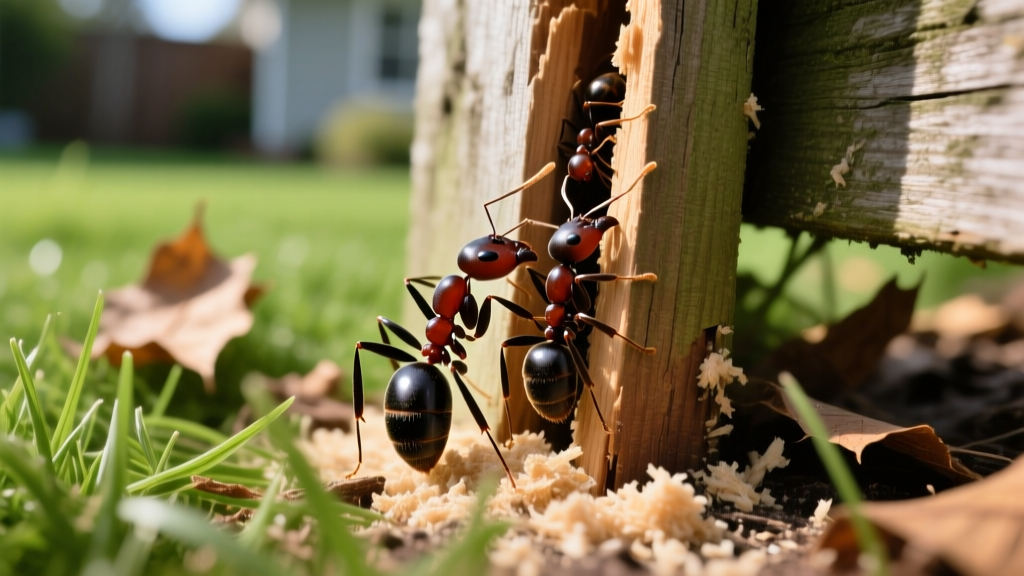
How to Get Rid of Big Ants: Yard Defense & Carpenter Ant Control
Identifying the Invaders: Carpenter vs. Field Ants
When homeowners ask how to get rid of big ants, they are typically dealing with one of two species: Carpenter Ants (Camponotus spp.) or Field Ants (Formica spp.). While both are large (ranging from 1/4 to 1/2 inch), their threat levels and treatment protocols differ drastically.
Diagnostic Callout: Carpenter Ant vs. Termite
Carpenter ants do not eat wood; they excavate it to build galleries. Look for frass—a sawdust-like material mixed with insect parts—pushed out of kick holes in wood. Termites, conversely, consume wood and leave behind mud tubes and uniform fecal pellets. If you see large black ants emerging from a tree stump or wood siding with frass below, you have a carpenter ant colony.
Field ants build large, noticeable soil mounds in the lawn and rarely invade structural wood. They are primarily a nuisance and can damage turfgrass roots. Carpenter ants, however, can cause severe structural damage to your home's foundation, siding, and landscaping timbers if left unchecked.
Step 1: Locate the Colony Using the Twilight Tracking Method
Spraying random ant trails with over-the-counter repellents (like Raid or Ortho Home Defense) is the most common mistake DIYers make. Repellents cause carpenter ants to "bud," splitting the colony into multiple satellite nests and worsening the infestation. To successfully eliminate them, you must find the nest.
The Honey Drop Protocol
Carpenter ants are primarily nocturnal foragers, peaking between 10:00 PM and 2:00 AM. To track them:
- Place small drops of honey or a dab of peanut butter near areas where you spot foraging workers at dusk.
- Wait 30 to 45 minutes. Once the ants take the bait, observe their retreat path.
- Follow the trail using a red-light flashlight (ants are less sensitive to red light). They will lead you directly to the parent nest or a satellite colony hidden in a tree cavity, stump, or structural void.
Step 2: Targeted Eradication Matrix
Once the nest is located or the foraging trails are mapped, you must use slow-acting, non-repellent treatments. This allows the foraging workers to carry the toxicant back to the queen via trophallaxis (food sharing). Below is a professional-grade product matrix for yard defense.
| Product / Brand | Active Ingredient | Target Use Case | Avg. Cost (2026) |
|---|---|---|---|
| Syngenta Advion Ant Gel | Indoxacarb (0.05%) | Satellite nests, indoor/outdoor trails, high-moisture areas | $32 - $38 (4-tube box) |
| Maxforce Fleet Ant Bait Gel | Fipronil (0.001%) | Sugar-feeding carpenter ants, tough outdoor colonies | $35 - $42 (4-tube box) |
| Termidor SC | Fipronil (9.1%) | Exterior perimeter trenching, soil drenching around foundations | $65 - $75 (20 oz bottle) |
| Advance Carpenter Ant Bait | Abamectin B1 (0.011%) | Granular broadcast for lawn mounds and tree bases | $28 - $34 (2 lb jug) |
Application Specifics for Advion & Maxforce
When applying gel baits, do not draw continuous lines. Place 1/8-inch to 1/4-inch dots every 12 inches along the foraging trail and near suspected entry points. Carpenter ants are more likely to pick up discrete droplets than continuous beads. Reapply every 3 days until foraging ceases, as the bait dries out and loses palatability after 72 hours in outdoor conditions.
Step 3: Perimeter Defense & Soil Trenching
If you cannot locate the nest but ants are consistently invading from the yard, a non-repellent liquid barrier is required. According to the Penn State Extension, creating a chemical trench around your home's foundation prevents foraging workers from establishing new satellite colonies inside.
Pro-Tip: The Trench and Rod Method
Mix Termidor SC at a rate of 0.8 fl oz per gallon of water. Dig a small trench 6 inches wide and 6 inches deep directly against the foundation. Apply 1 gallon of the diluted solution per 10 linear feet of trench. Backfill the trench with the treated soil. This creates a continuous, undetectable barrier that ants will walk through, picking up the Fipronil and spreading it through the colony via the "transfer effect."
Step 4: Yard Sanitation and Moisture Control
Carpenter ants require high moisture levels to survive and prefer wood softened by fungal decay. Chemical treatments will fail long-term if the yard's microclimate remains conducive to nesting. Implement these physical barriers:
- The 18-Inch Rule: Maintain an 18-inch gap between mulch beds and your home's foundation. Replace organic mulch near the house with crushed stone or gravel, which drains rapidly and does not harbor nests.
- Stump Grinding: Remove all dead tree stumps within 50 feet of the home. If grinding is not immediately possible, drill 1-inch holes into the stump and drench it with a Bifenthrin-based insecticide to kill the colony before they relocate.
- Spigot & Grading Fixes: Repair leaky outdoor hose bibs. Ensure the yard grading slopes away from the foundation at a minimum drop of 1 inch per foot for the first 6 feet to keep structural wood dry.
Warning: When to Call a Professional
If you hear a faint rustling or "crinkling cellophane" sound coming from your walls at night, or if you find large piles of frass beneath baseboards, the colony is likely deeply embedded in the structural framing. DIY baits may not reach the primary queen in time. Consult a licensed pest control operator for structural foaming treatments (e.g., Alpine WSG foam injection into wall voids).
Frequently Asked Questions
Will boiling water kill a big ant mound in the yard?
Boiling water will kill the workers and larvae near the surface of a field ant mound, but it rarely penetrates deep enough to kill the queen, which can reside 3 to 4 feet underground. The colony will simply rebuild the mound within weeks. Granular baits like Advance Carpenter Ant Bait are significantly more effective for deep-soil eradication.
Are big black ants dangerous to humans or pets?
Carpenter ants possess strong mandibles and can deliver a painful pinch, and some species can spray formic acid into the wound, causing a stinging sensation. However, they do not possess a stinger and are not considered medically dangerous to humans or pets. The primary threat remains structural damage to property.
For further reading on safe pesticide application around your home and garden, always consult the EPA's Safe Pest Control Guidelines and your local university extension office, such as the University of Minnesota Extension, for region-specific ant behavior data.

