
Pest Control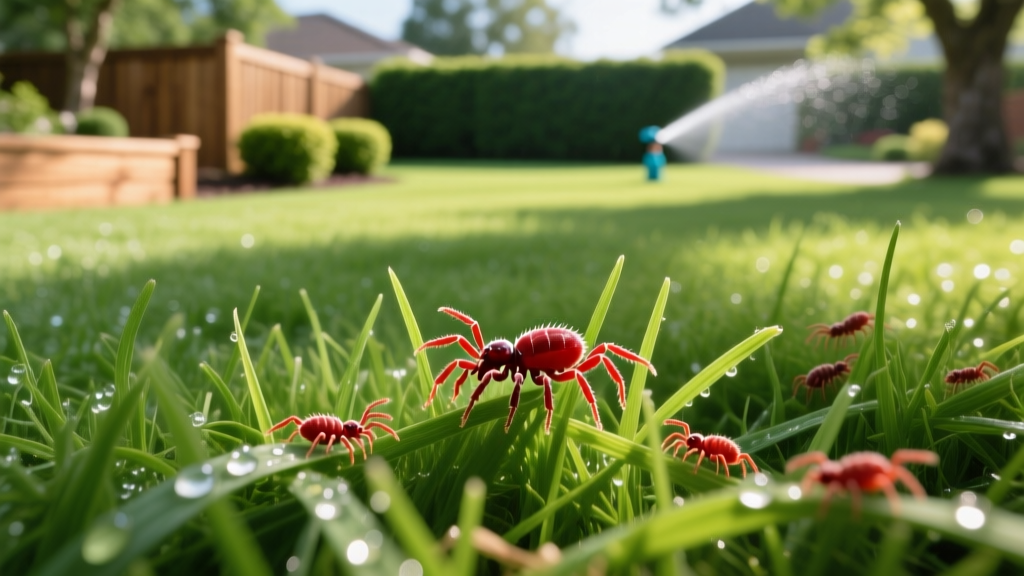
How to Get Rid of Chiggers in Your Yard: Proven Defense Tactics
The Biology of a Backyard Invader
Chiggers (family Trombiculidae) are not insects; they are the microscopic larval stage of harvest mites. Measuring less than 0.3 millimeters, these six-legged larvae are responsible for the intensely itchy, red welts that plague homeowners during late spring and early autumn. Unlike ticks or mosquitoes, chiggers do not suck blood. Instead, they pierce the skin and inject digestive enzymes that liquefy tissue, forming a feeding tube called a stylostome. According to the Centers for Disease Control and Prevention (CDC), the intense itching is an allergic reaction to these enzymes, not the result of the mite burrowing into the skin—a pervasive myth that leads to ineffective treatment strategies.
To successfully eradicate chiggers, you must target their environmental requirements. Chiggers require high humidity, dense shade, and tall, unmaintained vegetation to survive the larval stage. By manipulating your yard's microclimate and deploying targeted acaricides, you can collapse their local population.
Yard Modification: Starving and Exposing the Mites
Chemical treatments will fail if the underlying habitat remains intact. Chiggers desiccate (dry out) rapidly when exposed to direct sunlight and low humidity. Your first line of defense is environmental modification.
Canopy and Thatch Management
- Prune for Sunlight: Trim lower tree branches and shrub canopies to allow at least 30% direct sunlight penetration to the soil surface. Focus heavily on the transition zones where wooded areas meet manicured lawns, as these are primary chigger highways.
- Thatch Reduction: Chiggers thrive in the moist, protective layer of thatch. If your thatch layer exceeds 0.5 inches, perform mechanical dethatching or core aeration. This exposes the soil surface to UV radiation and reduces the ambient humidity at the grass root level.
- Precision Mowing: Maintain your turf at the lower end of its optimal height range. For Tall Fescue, mow to 2.5 inches; for Bermuda grass, maintain 1 to 1.5 inches. Taller grass traps moisture at the soil line, creating an ideal chigger incubator.
Warning: Irrigation Timing
Overwatering is a primary driver of chigger infestations. Switch your irrigation system to early morning (between 4:00 AM and 6:00 AM). Watering in the evening leaves the thatch layer saturated overnight, providing the exact humidity levels chiggers need to quest for hosts.
Chemical and Organic Treatment Matrix
When environmental modifications are insufficient, targeted chemical intervention is required. The Environmental Protection Agency (EPA) regulates various acaricides effective against mites. Below is a comparative analysis of the most effective active ingredients for residential chigger control.
| Active Ingredient | Product Example | Cost per 1,000 sq ft | Residual Life | Best Use Case |
|---|---|---|---|---|
| Bifenthrin (7.9%) | Bifen IT | $0.15 - $0.20 | 30-45 Days | Heavy infestations; perimeter defense |
| Permethrin (10%) | Martins Permethrin 10% | $0.25 - $0.35 | 14-21 Days | Fast knockdown; wooded edge zones |
| Cedarwood Oil | Wondercide Flea & Tick | $1.10 - $1.50 | 7-10 Days | Organic lawns; pet-safe areas |
| Diatomaceous Earth | Food Grade DE | $0.50 - $0.80 | Until wet | Dry, localized hardscape borders |
For severe infestations, synthetic pyrethroids like Bifenthrin offer the highest efficacy and longest residual control. However, they are highly toxic to aquatic life and pollinators during application. Organic alternatives like Cedarwood oil work by disrupting the mite's octopamine receptors but require much more frequent reapplication, especially after rainfall.
Step-by-Step Application Protocol for Maximum Knockdown
Buying the right chemical is only half the battle; application timing and calibration dictate your success rate. Follow this protocol for synthetic pyrethroid applications.
- Calibrate Your Sprayer: Set your pump or hose-end sprayer to deliver exactly 1.5 to 2.0 gallons of finished solution per 1,000 square feet. Chiggers live at the soil-thatch interface; a light mist will not penetrate deep enough to reach them.
- Time the Application: Apply treatments at dusk (between 7:00 PM and 9:00 PM). Pyrethroids degrade rapidly under direct UV sunlight. Evening application allows the chemical to bind to the plant tissue overnight without UV breakdown, while also ensuring foraging pollinators like bees are not actively visiting the turf.
- Target the Perimeter: Do not waste product spraying the dead center of a sun-baked, open lawn. Focus 80% of your spray volume on the shaded perimeters, fence lines, brush piles, and the base of oak or pine trees.
- Post-Application Watering: Unlike pre-emergent herbicides, liquid pyrethroids for chiggers should not be watered in immediately. Allow the spray to dry completely on the grass blades and thatch surface (usually 2-4 hours) to create a lethal contact barrier.
The 14-Day Rebound Strategy
The most common failure point in chigger eradication is the single-application approach. Chigger eggs are highly resistant to chemical sprays and hatch in continuous waves throughout the spring and summer. A single application of Bifenthrin will kill the active larvae but leave the unhatched eggs completely unharmed. You must execute a secondary application exactly 14 to 18 days after the first treatment. This precise window intercepts the newly hatched larvae before they can mature and lay the next generation of eggs, effectively breaking the reproductive cycle.
Personal Defense Perimeter
While treating the yard, you must protect yourself from the existing population. According to the EPA's guidelines on insect repellents, standard DEET formulations are effective, but treating your clothing is vastly superior for yard work. Spray your boots, socks, and the lower legs of your trousers with a 0.5% Permethrin clothing treatment (such as Sawyer Premium Permethrin). This creates a localized kill-zone around your ankles, preventing larvae from reaching your skin while you perform the yard modifications and chemical applications outlined above.
Frequently Asked Chigger Defense Questions
Do chiggers burrow into the skin and stay there?
No. This is a persistent myth. Chiggers attach to the surface of the skin, inject digestive enzymes, and feed on the liquefied tissue for 3 to 4 days before dropping off. The intense, hardened welt that forms is a stylostome (a tube of hardened skin cells) created by your body's immune response, not a burrowed mite. Scratching or applying nail polish to the welt will not suffocate the mite, as the mite is already gone by the time the itching peaks.
Can chiggers infest my house or survive indoors?
Chiggers require high ambient humidity to survive. The climate-controlled environment of a modern home (typically 30-50% relative humidity) is lethal to them. If a chigger hitches a ride indoors on your clothing or a pet, it will desiccate and die within 24 hours. They cannot reproduce in carpets or upholstery, meaning indoor chemical treatments for chiggers are entirely unnecessary.
How long after a rainstorm should I wait to reapply Bifenthrin?
Once Bifenthrin has fully dried and bound to the plant tissue (usually 24 hours post-application), it is relatively rainfast. However, heavy, driving rainfall exceeding 1 inch can physically wash the chemical off the thatch layer and dilute its efficacy. If a severe downpour occurs within 48 hours of your treatment, plan to reapply the acaricide at a half-rate to restore the protective barrier.

