
Pest Control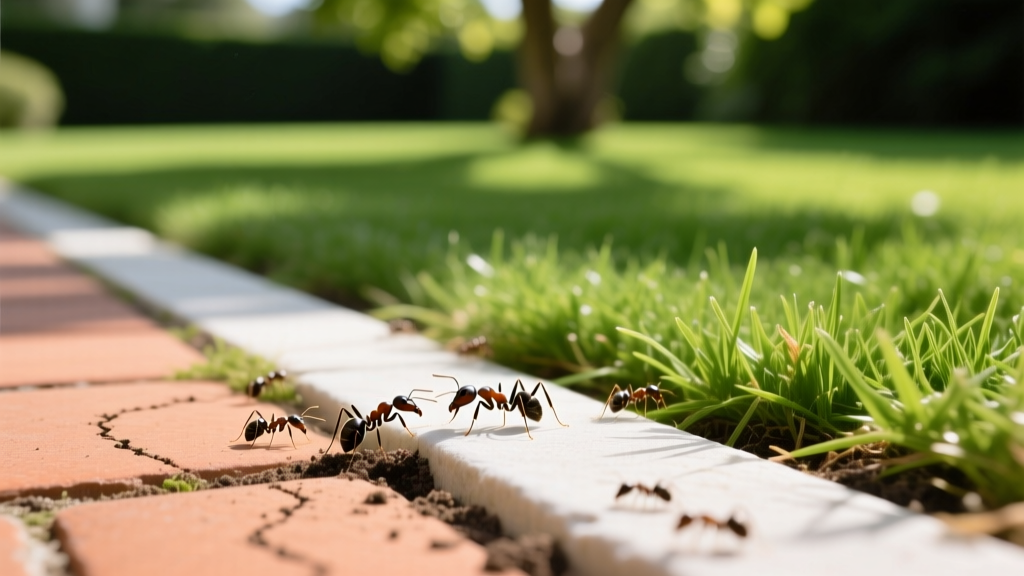
How to Get Rid of Little Ants in Your Yard and Patio Perimeter
When tiny ants invade your patio, foundation, and lawn edges, standard indoor sprays fail. Learning how to get rid of little ants in your yard requires targeting the colony's reproductive cycle and exploiting their foraging behavior. Unlike indoor nuisance ants, outdoor populations of pavement ants, odorous house ants, and little black ants build massive, interconnected supercolonies in the soil and under hardscapes. To achieve permanent eradication, you must abandon fast-acting repellent sprays and adopt a strategic perimeter defense using non-repellent transfer chemicals and slow-acting baits.
Identify the Invader: Which Little Ant is in Your Yard?
Accurate identification dictates your bait selection and chemical strategy. The three most common "little ants" in North American yards require slightly different approaches based on their nesting habits and dietary preferences.
| Species | Size & Color | Nesting Location | Key Identifier & Diet |
|---|---|---|---|
| Pavement Ant (Tetramorium caespitum) |
1/10 to 1/8 inch, dark brown to black | Under sidewalks, driveways, and patio pavers. Creates small soil craters. | Aggressive foragers. Prefer greasy foods, proteins, and sweets. |
| Odorous House Ant (Tapinoma sessile) |
1/16 to 1/8 inch, brown to black | Shallow soil nests, under mulch, stones, and landscape timber. | Crush one: smells like rotten coconut. Prefer honeydew and sweets. |
| Little Black Ant (Monomorium minimum) |
1/16 inch, shiny jet black | Woodpiles, tree stumps, and inside rotting fence posts. | Uneven thorax. Prefer sweets but will scavenge proteins. |
According to the University of California Agriculture and Natural Resources (UC ANR), misidentifying odorous house ants as standard pavement ants often leads to treatment failure, as odorous house ants are highly prone to colony budding when stressed by improper chemical applications.
The Transfer Effect: Why Non-Repellents are Mandatory
The biggest mistake homeowners make is spraying visible ant trails with over-the-counter pyrethroid repellents (like bifenthrin or permethrin). While these kill the ants on contact, the surviving colony detects the chemical barrier, panics, and splits into multiple new colonies—a survival mechanism known as budding. One visible mound suddenly becomes five hidden satellite colonies.
WARNING: The Budding Trap
Never use fast-acting contact killers (e.g., Raid, Ortho Home Defense) on odorous house ants or little black ants. You will exacerbate the infestation. Always use slow-acting, non-repellent active ingredients like Fipronil or Indoxacarb that allow foragers to return to the nest and share the toxin.
Never use fast-acting contact killers (e.g., Raid, Ortho Home Defense) on odorous house ants or little black ants. You will exacerbate the infestation. Always use slow-acting, non-repellent active ingredients like Fipronil or Indoxacarb that allow foragers to return to the nest and share the toxin.
Step 1: Apply a Fipronil Perimeter Barrier
Fipronil (the active ingredient in professional-grade Termidor SC) is the gold standard for outdoor ant defense. It is completely undetectable to ants. When foragers walk through the treated soil, they pick up the microscopic chemical on their exoskeletons and carry it back to the queen.
- Product: Termidor SC (9.1% Fipronil suspension concentrate).
- Cost: Approximately $85 for a 20 oz bottle (treats up to 10,000 sq ft).
- Dilution Rate: Mix 0.8 fluid ounces of Termidor SC per 1 gallon of water.
- Application: Using a 1-gallon or 2-gallon pump sprayer with a fan nozzle, spray a continuous band 3 feet up your home's foundation and 3 feet out into the adjacent soil, mulch, and lawn edge. Apply 1 gallon of finished solution per 1,000 square feet.
- Timing: Apply in the early morning or late evening to prevent UV degradation and avoid spraying when bees are actively foraging. Fipronil is highly toxic to bees until it dries.
Step 2: Deploy Slow-Acting Liquid Baits
While the non-repellent spray handles the perimeter, baits target deep, inaccessible nests under concrete slabs and deep within tree stumps. Maxforce Quantum Ant Bait (Imidacloprid 0.03%) utilizes a proprietary HVL (Hygroscopic Viscous Liquid) formulation that retains moisture outdoors for up to 14 days, unlike standard gels that dry out in the sun within hours.
- Placement: Apply small dime-sized drops directly into the soil craters of pavement ant mounds and along the cracks of patio pavers.
- Cost: Roughly $45 for a 10-gram syringe tube.
Organic and Pet-Safe Yard Alternatives
If you maintain a strict organic yard or have free-roaming pets that dig in the mulch beds, synthetic chemicals may not be viable. According to Penn State Extension, cultural and mechanical controls can suppress pavement ant populations without synthetic toxins, though they require higher frequency.
Organic Protocol:
1. Diatomaceous Earth (DE): Apply food-grade DE directly into dry ant mounds and paver cracks. DE lacerates the ants' exoskeletons, causing fatal dehydration. Note: DE loses efficacy when wet; reapply after rain or irrigation.
2. Beneficial Nematodes: Apply Steinernema feltiae nematodes to your lawn and garden beds via a hose-end sprayer. These microscopic worms seek out and destroy ant larvae in the soil. Cost: ~$35 for 10 million nematodes (treats ~2,000 sq ft).
3. Boiling Water: Pouring 2 to 3 gallons of boiling water directly into an exposed pavement ant crater kills the immediate colony but will also sterilize the soil and kill surrounding grass roots.
1. Diatomaceous Earth (DE): Apply food-grade DE directly into dry ant mounds and paver cracks. DE lacerates the ants' exoskeletons, causing fatal dehydration. Note: DE loses efficacy when wet; reapply after rain or irrigation.
2. Beneficial Nematodes: Apply Steinernema feltiae nematodes to your lawn and garden beds via a hose-end sprayer. These microscopic worms seek out and destroy ant larvae in the soil. Cost: ~$35 for 10 million nematodes (treats ~2,000 sq ft).
3. Boiling Water: Pouring 2 to 3 gallons of boiling water directly into an exposed pavement ant crater kills the immediate colony but will also sterilize the soil and kill surrounding grass roots.
Cost Breakdown: DIY vs. Professional Treatment (2026 Estimates)
Deciding between a DIY approach and hiring a licensed pest control operator depends on the severity of the supercolony and your comfort level handling concentrated chemicals.
| Treatment Method | Estimated Cost | Longevity | Best For |
|---|---|---|---|
| DIY Fipronil Barrier + Bait | $130 - $150 (Initial supply cost) | 3 to 6 months | Homeowners comfortable using pump sprayers and measuring precise dilution rates. |
| Professional Quarterly Service | $125 - $185 per visit | 90 days (renewable) | Severe supercolonies spanning multiple property lines or HOA-maintained common areas. |
| DIY Organic (Nematodes + DE) | $50 - $75 per season | 4 to 6 weeks | Eco-conscious yards with heavy pet traffic and edible garden borders. |
Frequently Asked Questions
Does pouring white vinegar on ant mounds work?
No. While a 50/50 vinegar and water solution will kill ants on direct contact and temporarily erase their pheromone trails, it has zero residual effect. It will not reach the queen deep in the soil, and foragers will establish a new trail within 24 hours.
Why are the little ants ignoring my sweet bait stations?
Ant colonies cycle their dietary needs based on the reproductive season. In early spring, they seek proteins and fats to feed developing larvae. In late summer, they seek carbohydrates (sugars) for energy. If they are ignoring sweet baits like Maxforce Quantum, switch to a protein-based granular bait like Advance 375A Select (Abamectin 0.011%) until their dietary cycle shifts back to sugars.
Can I spray Termidor SC on my vegetable garden beds?
Absolutely not. Fipronil is strictly prohibited for use on edible crops, vegetable gardens, or fruit-bearing trees. Maintain a strict 3-foot buffer zone between your Termidor perimeter treatment and any edible garden beds, utilizing organic nematodes or DE for ant control near food sources.

