
Pest Control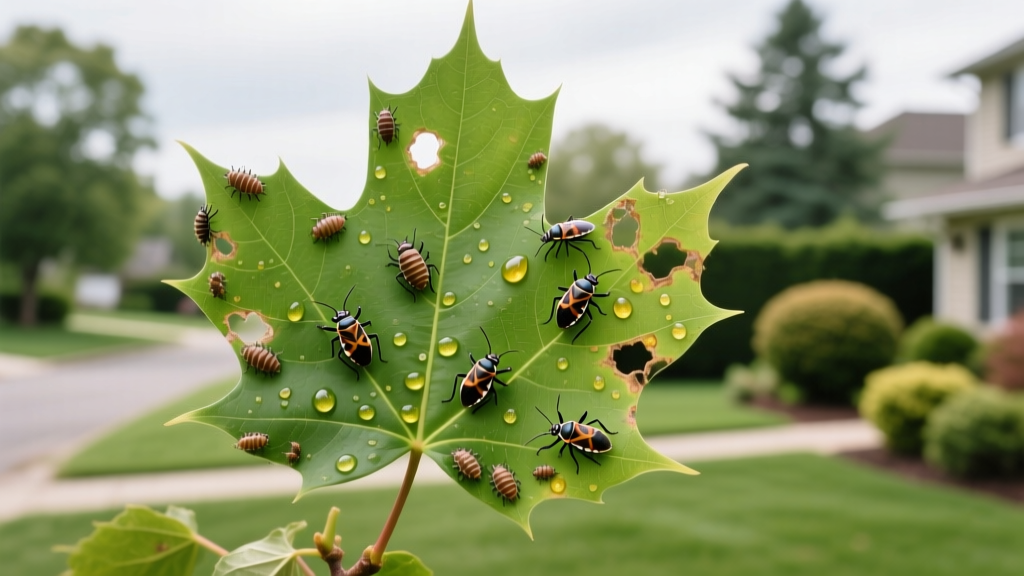
How to Get Rid of Maple Bugs: Scale, Aphids, and Borers
Identifying the Culprit: Maple Pest Diagnostic Matrix
Maple trees (Acer species) are highly susceptible to a specific spectrum of sap-sucking insects, wood-boring beetles, and nuisance seed-feeders. Misidentifying the pest leads to wasted chemical applications and irreversible canopy dieback. Before purchasing any insecticide, cross-reference your tree's symptoms with the diagnostic matrix below to isolate the exact species.
| Pest Species | Visual Symptoms & Damage | Primary Location | Peak Activity Window |
|---|---|---|---|
| Cottony Maple Scale (Pulvinaria innumerabilis) | White, cottony waxy masses on twigs; yellowing leaves; heavy honeydew drip. | Undersides of small twigs and branches. | Mid-June to July (crawler stage). |
| Maple Aphids (Periphyllus spp.) | Leaf curling, stunted shoot growth, black sooty mold on lower canopy leaves. | Leaf undersides and new terminal shoots. | Spring (May) and early Autumn. |
| Boxelder Bugs (Boisea trivittata) | Red and black flat-backed bugs congregating in massive clusters; no structural tree damage. | Trunk base, female seed pods, and sunny home siding. | Early Fall (overwintering search) and Spring. |
| Asian Longhorned Beetle (Anoplophora glabripennis) | 3/8-inch perfectly round exit holes; coarse sawdust (frass) at trunk base; canopy thinning. | Main trunk and primary scaffold branches. | Summer (adult emergence and egg-laying). |
How to Get Rid of Sap-Sucking Maple Bugs (Scale & Aphids)
Sap-sucking insects weaken maples by draining phloem nutrients and excreting honeydew, which fosters capnodium (sooty mold) fungi. Eradication requires timing your application to the insect's most vulnerable life stage.
Cottony Maple Scale Eradication Protocol
According to the University of Minnesota Extension, adult female scales are protected by their thick waxy ovisacs, making contact sprays ineffective during late summer. You must target them during the dormant season or the brief crawler stage.
- Dormant Season (Late Winter): Apply a 2% to 4% solution of horticultural oil (e.g., Bonide All Seasons Horticultural Oil, ~$12 per 32oz bottle). Spray when ambient temperatures are between 40°F and 70°F, and absolutely before bud break. This suffocates overwintering nymphs.
- Crawler Stage (Mid-June): Monitor twigs for tiny, pale-yellow crawling nymphs. Once detected, apply a contact insecticide containing Bifenthrin (e.g., Ortho BugClear, ~$15) or Acetamiprid. Repeat application 14 days later to catch late-hatching crawlers.
Maple Aphid Management
Aphids reproduce parthenogenetically in spring, leading to explosive population growth. For localized infestations on smaller maples, avoid broad-spectrum pyrethroids that kill beneficial predatory lady beetles and lacewings.
- Mix insecticidal soap (potassium salts of fatty acids, such as Safer Brand Insect Killing Soap) at a rate of 2.5 oz per gallon of water.
- Spray directly onto the leaf undersides and terminal shoots until runoff.
- Reapply every 5 to 7 days until the colony collapses. Soap works strictly on contact by disrupting the insect's cellular membranes.
⚠️ The Honeydew & Sooty Mold Connection: If your maple leaves are covered in a black, powdery substance, you are looking at sooty mold. The mold itself does not infect the tree tissue; it grows exclusively on the sugary honeydew excreted by aphids and scale. Eliminating the sap-sucking insects will starve the fungus, and it will naturally flake off or wash away with rainfall within 3 to 4 weeks.
Managing Nuisance Pests: Boxelder Bug Defense
Boxelder bugs (Boisea trivittata) do not feed on maple wood or leaves; they feed exclusively on the developing seeds of female boxelder maples (Acer negundo) and occasionally other maple species. While harmless to the tree's structural integrity, they become a severe nuisance when they migrate to home foundations in autumn.
The Penn State Extension recommends an integrated perimeter defense rather than canopy spraying:
- Source Reduction: Rake and dispose of fallen maple helicopter seeds (samaras) in late summer. Removing the food source forces the bugs to disperse.
- Perimeter Chemical Barrier: In late August, apply a microencapsulated Lambda-cyhalothrin product (e.g., Spectracide Triazicide Insect Killer, ~$20) to the lower 3 feet of the maple trunk, the surrounding soil, and the foundation of your home. The microencapsulation allows the active ingredient to withstand UV degradation and rain for up to 8 weeks.
- Physical Exclusion: Seal weep holes and foundation cracks with copper mesh and silicone caulk to prevent overwintering entry.
The Red Flag: Asian Longhorned Beetle (ALB)
If you discover perfectly round, 3/8-inch exit holes on your maple trunk accompanied by coarse sawdust (frass) at the base, do not attempt DIY chemical treatment. The Asian Longhorned Beetle is a federally regulated quarantine pest capable of killing mature hardwoods within 3 to 4 years.
🚨 USDA APHIS Quarantine Protocol: The USDA Animal and Plant Health Inspection Service (APHIS) mandates that suspected ALB infestations be reported immediately. Do not prune the branches or move firewood from the suspect tree, as this spreads the larvae. Contact your state department of agriculture or the USDA APHIS hotline. Infested trees are typically removed and chipped at no cost to the homeowner under federal eradication programs.
Systemic vs. Contact Insecticides: Cost & Efficacy Breakdown
For large, mature maples (over 20 feet tall), hydraulic contact sprays are impractical for homeowners. Systemic insecticides provide superior canopy coverage by utilizing the tree's xylem to transport the active ingredient to the leaves.
| Application Method | Active Ingredient | Target Pests | Estimated Cost | Duration of Control |
|---|---|---|---|---|
| DIY Soil Drench | Imidacloprid (1.47%) | Aphids, Scale (suppression), Flatheaded borers. | $15 - $30 per bottle | 12 Months |
| Professional Trunk Injection | Emamectin benzoate | All borers, severe scale, and aphid outbreaks. | $15 - $25 per inch of DBH | 2 to 3 Years |
| DIY Trunk Spray | Bifenthrin / Onslaught | Surface crawling insects, boxelder bugs. | $40 - $60 per bottle | 4 to 8 Weeks |
How to Calculate and Apply an Imidacloprid Soil Drench
To use a product like Bayer Advanced 12-Month Tree and Shrub Protect & Feed, you must calculate the tree's Diameter at Breast Height (DBH) to avoid phytotoxicity or under-dosing.
- Measure Circumference: Wrap a measuring tape around the maple trunk at exactly 4.5 feet above the soil line.
- Calculate DBH: Divide the circumference by 3.14 (Pi). For example, a 31.4-inch circumference equals a 10-inch DBH.
- Mix the Drench: Apply 1 fluid ounce of imidacloprid concentrate per inch of DBH. For a 10-inch DBH tree, mix 10 oz of product into 5 gallons of water.
- Application: Pour the mixture evenly in a 12-inch wide band around the drip line of the tree, not directly against the trunk flare. The roots will absorb the chemical and translocate it to the canopy over 2 to 4 weeks.
Frequently Asked Questions (FAQ)
Will dormant oil damage my Japanese maple?
Japanese maples (Acer palmatum) have exceptionally thin bark and sensitive dormant buds. While a standard 2% horticultural oil is safe for silver and Norway maples, Japanese maples can suffer bud-burn. Reduce the concentration to a 1% solution, or delay treatment until the spring crawler stage using insecticidal soap.
Why are my maple leaves dropping early in July?
Premature summer leaf drop in maples is rarely caused by drought alone; it is a primary symptom of severe maple petiole borer (Caulocampus acericaulis) damage or heavy cottony maple scale feeding. Inspect the petioles (leaf stems) for small, blackened swellings or check the twigs for white waxy masses before initiating irrigation protocols.
Can I use neem oil for maple scale?
Cold-pressed neem oil (containing Azadirachtin) acts as an antifeedant and growth regulator, but it struggles to penetrate the thick, waxy ovisac of the adult cottony maple scale. Neem is highly effective against soft-bodied aphids and newly hatched scale crawlers, but horticultural mineral oil remains the superior choice for smothering overwintering nymphs.

