
Pest Control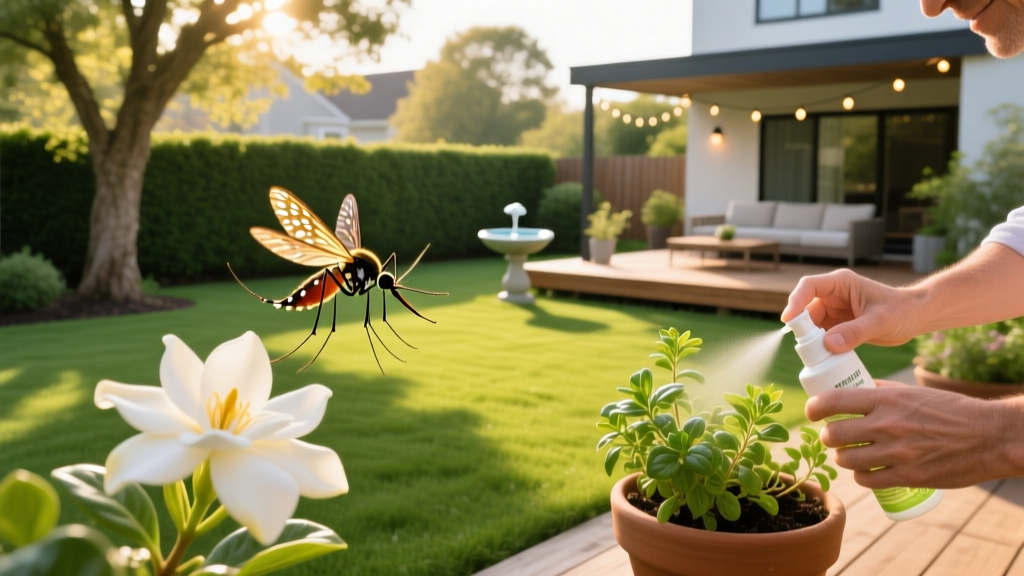
How to Get Rid of Mosquitoes in Your Yard: Expert Defense Guide
Most DIY mosquito control fails because it targets adult insects while completely ignoring the breeding cycle. Spraying a generic aerosol across your lawn grass provides less than 24 hours of relief and does nothing to stop the next generation from hatching. To permanently reclaim your outdoor space, you must implement a multi-stage defense strategy that disrupts the mosquito life cycle at the larval, pupal, and adult stages.
According to the CDC mosquito life cycle data, a single female Aedes aegypti can lay up to 400 eggs in her lifetime, and these eggs can survive dry conditions for months until submerged in water. Eradicating them requires precision, not just volume. Here is the professional 3-tier framework for total yard defense.
The 3-Tier Mosquito Eradication Framework
Tier 1: Micro-Habitat Source Reduction (The 48-Hour Rule)
Mosquitoes require standing water to breed, but the volume required is vastly misunderstood by homeowners. An Aedes mosquito can complete its entire aquatic life cycle in a bottle cap filled with rainwater. The 48-hour rule dictates that any standing water must be eliminated or treated within two days, as the transition from egg to adult can occur in as little as five to seven days in warm weather.
- Corrugated Downspout Extensions: The ridges in flexible black drain pipes trap 2-3 ounces of water per ridge. Replace these with smooth-wall PVC or solid corrugated pipes pitched at a minimum 1% grade.
- Tarp Folds and Wheelbarrows: Drainage tarps covering firewood or pools create micro-puddles. Store wheelbarrows and buckets inverted.
- Tree Rot Holes: Water pooling inside hollows of oak or maple trees is a prime breeding ground. Fill these cavities with expanding polyurethane foam or mortar to eliminate the reservoir.
Warning: Hidden French Drain Traps
Many modern yards use French drains wrapped in landscape fabric. If the catch basin is not fitted with a mosquito-proof screen (16x16 mesh or finer), the underground gravel trench becomes a massive, untreatable breeding cavern. Inspect all catch basin grates annually.
Many modern yards use French drains wrapped in landscape fabric. If the catch basin is not fitted with a mosquito-proof screen (16x16 mesh or finer), the underground gravel trench becomes a massive, untreatable breeding cavern. Inspect all catch basin grates annually.
Tier 2: Biological Larvicides (Stopping Them Before They Fly)
When standing water cannot be drained—such as in birdbaths, rain barrels, koi ponds, or drainage ditches—you must deploy a biological larvicide. The gold standard is Bacillus thuringiensis israelensis (Bti), a naturally occurring soil bacterium that produces proteins toxic only to dipteran larvae (mosquitoes, black flies, and fungus gnats).
As outlined by the EPA guidelines on Bti, this bacterium is completely safe for humans, pets, birds, fish, and beneficial insects like bees. When mosquito larvae ingest Bti, the alkaline environment of their gut dissolves the protein crystals, causing fatal internal paralysis.
Bti Product Selection and Dosage
- Summit Mosquito Dunks: Ideal for long-term treatment. One dunk (approx. $1.50) treats 100 square feet of surface water for 30 days. Break them into quarters for smaller containers like rain barrel overflow traps.
- Summosquito Bits: Granular Bti designed for rapid knockdown. Use this in muddy areas or shallow marshy zones where dunks cannot float. Apply 1 tablespoon per 10 square feet of wet soil.
- Cost Efficiency: Treating a standard quarter-acre property with multiple water features costs roughly $15 to $25 per month using Bti, making it the most cost-effective tier of defense.
Tier 3: Synthetic vs. Botanical Barrier Sprays
Source reduction and larvicides handle the breeding, but you still need to eliminate adult mosquitoes migrating from neighboring properties. Adult mosquitoes rest in shaded, humid vegetation during the heat of the day. Barrier sprays create a toxic residual film on these resting surfaces.
| Active Ingredient | Product Example | Residual Lifespan | Efficacy & Use Case |
|---|---|---|---|
| Bifenthrin (Synthetic Pyrethroid) | Talstar P Professional | 3 to 4 weeks | Highest efficacy. Binds well to soil and leaf cuticles. Best for heavy infestations and perimeter defense. |
| Permethrin (Synthetic Pyrethroid) | Cutter Backyard Bug Control | 2 to 3 weeks | Readily available consumer grade. Effective but breaks down faster under intense UV exposure than Bifenthrin. |
| Garlic Oil / Peppermint (Botanical) | Garlic Barrier / EcoSmart | 5 to 7 days | Repels rather than kills. Requires frequent reapplication. Safe for use near sensitive pollinator gardens. |
The "Underside of the Leaf" Application Rule
The most common failure mode in DIY barrier spraying is applying the chemical to the lawn grass. Mosquitoes do not rest on sun-baked grass blades; they harbor on the shaded undersides of broadleaf shrubs, tall weeds, and ground cover.
When mixing a Bifenthrin concentrate (typically 1 fluid ounce per gallon of water), use a pump sprayer with a flat-fan nozzle. Direct the spray upward into the canopy of shrubs, hedges, and the underside of leaves on plants like hostas, hydrangeas, and ivy. Treat a 10-foot perimeter band around your patio and property lines. Adding a non-ionic surfactant (like Dyna-Gro Pro-Wett) at 1/2 teaspoon per gallon will help the solution penetrate the waxy cuticle of leaves, preventing rain wash-off and extending the residual life by up to 40%.
Ineffective Gimmicks to Avoid
The pest control market is saturated with devices that offer a false sense of security. Save your budget for proven chemical and biological interventions by avoiding these traps:
- Bug Zappers (UV Light Traps): University entomology studies consistently show that zappers kill thousands of beneficial insects (moths, beetles) while eliminating less than 1% of the local biting mosquito population. Mosquitoes are attracted to CO2 and lactic acid, not UV light.
- Ultrasonic Repellers: Devices claiming to emit high-frequency sound waves to deter mosquitoes have been debunked repeatedly. Mosquitoes lack the auditory anatomy to be repelled by these frequencies.
- Citronella Candles: While citronella oil has mild repellent properties, a candle only creates a 1-to-2 foot protection radius in perfectly still air. A light breeze renders them entirely useless.
Seasonal Yard Defense Maintenance Schedule
Mosquito defense is not a one-time application; it is a seasonal maintenance protocol. Follow this timeline to keep populations suppressed year-round.
- Early Spring (March/April): Perform a full yard audit. Clear winter debris from gutters, flush out French drain catch basins, and apply the first round of Bti dunks to permanent water features before water temperatures exceed 50°F.
- Peak Summer (June-August): Apply synthetic barrier sprays (Bifenthrin) every 21 to 28 days. Schedule applications for early morning or dusk to avoid harming daytime pollinators. Reapply Bti bits to any new puddles formed by summer irrigation or thunderstorms.
- Autumn (September/October): Aedes mosquitoes lay overwintering eggs in damp soil and leaf litter. Rake and remove all heavy leaf accumulations near the foundation of your home. Drain and store hoses and irrigation equipment to prevent freeze-thaw water traps.
By combining rigorous micro-habitat elimination, targeted Bti larvicides, and precise underside-of-leaf barrier spraying, you shift from merely reacting to mosquito bites to actively engineering a hostile environment for their entire life cycle.

