
Pest Control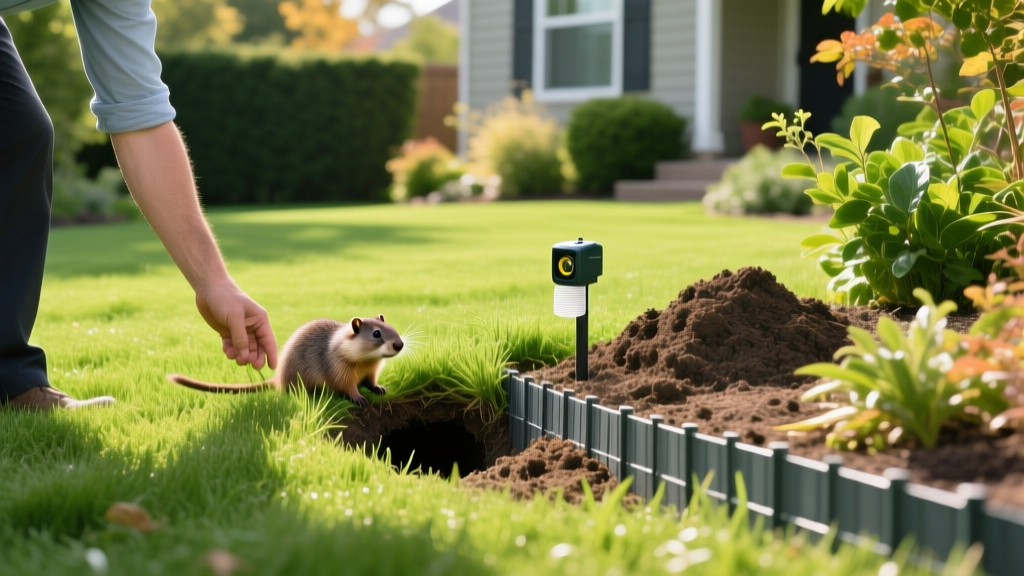
How to Keep Groundhogs Away From Your Garden for Good
The True Cost of a Groundhog Invasion
Groundhogs (Marmota monax), also known as woodchucks, are among the most destructive mammals to invade residential landscapes. An adult groundhog consumes up to 1.5 pounds of vegetation daily, but the foraging damage is only half the problem. Their extensive burrow systems—often featuring multiple entrances, secondary escape tunnels, and chambers extending up to 5 feet deep and 60 feet long—severely undermine patios, shed foundations, and retaining walls. If you are trying to figure out how to keep groundhogs away from your property, surface-level scare tactics will not work. You need a multi-layered defense strategy combining physical exclusion, habitat modification, and targeted deterrents.
By the Numbers: A single groundhog can excavate over 700 pounds of soil to create a single burrow system. They are diurnal (active during the day) and typically forage within a 50- to 150-foot radius of their primary den entrance.
Physical Exclusion: The L-Footer Fencing Method
Standard garden fencing fails against groundhogs because they are exceptional diggers and surprisingly adept climbers. According to Cornell University's Wildlife Damage Management program, standard vertical fences are easily bypassed by burrowing underneath. The only permanent physical solution is the 'L-footer' technique.
Step-by-Step L-Footer Installation
- Select the Right Wire: Use 16-gauge galvanized welded wire with a 1x2 inch mesh. Avoid chicken wire (poultry netting), as it is too flimsy and groundhogs can easily crush or bite through the thin gauge.
- Determine Height: The fence must be at least 3 feet tall above ground. Groundhogs can climb, so leave the top 12 inches of the wire unattached to the posts, allowing it to flop outward. This overhang prevents them from climbing over the top.
- Dig the Trench: Dig a trench 12 inches deep and 18 inches wide along the entire perimeter of the garden, extending outward away from the protected area.
- Form the 'L': Bury the bottom 18 inches of the wire horizontally in the trench, pointing away from the garden. Bend the wire at a 90-degree angle so it goes straight down for 12 inches. Secure the horizontal section with landscape staples every 2 feet.
- Backfill and Tamp: Fill the trench with soil and tamp it down firmly. When a groundhog attempts to dig at the base of the fence, they will hit the horizontal wire barrier and give up rather than digging further back.
Chemical and Organic Repellents: What Actually Works?
Repellents are best used as a secondary line of defense or a temporary measure while you install permanent fencing. They must be reapplied after heavy rain and rotated to prevent the animals from habituating to the scent or taste.
| Active Ingredient | Product Example (2026) | Application Target | Efficacy & Limitations |
|---|---|---|---|
| Castor Oil | Bonide Mole & Gopher Repellent | Soil and root zones | Highly effective at ruining the taste of tubers and roots. Requires soil drenching; useless on above-ground foliage. |
| Capsaicin (Hot Pepper) | Nature's Mace Deer & Rabbit Repellent | Foliage and stems | Irritates nasal passages and taste buds. Must be applied directly to the plants they are eating. Washes off in rain. |
| Predator Urine (Coyote) | Shake-Away Coyote Urine Granules | Perimeter borders | Creates a psychological barrier. Effectiveness drops after 5-7 days as the scent degrades in UV light and rain. |
| Thiram (Fungicide) | Bonide Rabbit & Deer Repellent | Non-edible ornamentals ONLY | Extremely effective taste deterrent, but highly toxic if ingested by humans. Never use on vegetable gardens or fruit-bearing plants. |
Live Trapping and Relocation Protocols
If exclusion and repellents fail, live trapping is the next viable option. The Humane Society of the United States emphasizes that trapping must be done humanely and in strict accordance with local wildlife regulations. Many states prohibit the relocation of rabies-vector species (which includes groundhogs) across county lines or require that trapped animals be euthanized rather than released elsewhere.
Legal Warning: Before setting any trap, contact your state's Department of Natural Resources (DNR) or local wildlife control officer. Relocating a groundhog to a new environment often results in the animal's death due to territorial disputes with established wildlife, and it may be illegal in your jurisdiction.
The Pre-Baiting Technique for Havahart Traps
Groundhogs are notoriously neophobic (fearful of new objects). If you set a baited Havahart 1084 (10x12x32 inches, typically retailing around $65) near their burrow, they will simply dig a new exit tunnel to avoid it. You must acclimate them to the trap using the pre-baiting method:
- Days 1-2: Place the trap near the primary burrow entrance with the doors wired open. Place a trail of cantaloupe rinds or sweet corn leading into the trap, with a large pile at the very back. Allow the groundhog to enter and eat freely.
- Day 3: Move the bait slightly closer to the trigger pan. Keep the doors wired open.
- Day 4: Remove the wire ties, set the trigger pan, and place the bait directly behind it. Cover the top of the trap with a dark towel or burlap sack to make the interior feel like a secure tunnel.
- Monitoring: Check the trap at dawn and dusk. Never leave a trapped animal in direct sunlight or freezing temperatures.
Motion-Activated Sprinklers: The Best Active Deterrent
Ultrasonic pest repellers are largely ineffective against groundhogs; the high-frequency sound waves are absorbed by dense garden soil and foliage, and the animals habituate to the noise within 48 hours. Conversely, motion-activated sprinklers provide an unpredictable, physical stimulus that groundhogs cannot ignore.
The Orbit 62100 Yard Enforcer (priced around $55-$60 in 2026) remains the industry standard for mammal deterrence. It features a 120-degree motion sensor with a 70-foot detection range. For groundhogs, set the sensor height to the lowest setting (approx. 6 inches off the ground) and switch the mode to 'Day' or 'Always'. Connect it to a standard garden hose with a minimum of 30 PSI. The sudden burst of water and the mechanical 'click' of the valve trigger a startle response that conditions the groundhog to avoid the area entirely.
Seasonal Defense Timeline
Groundhog management requires timing your interventions to their biological clock.
- Early Spring (March-April): Groundhogs emerge from hibernation ravenous. This is the highest risk period for garden damage. Install L-footer fencing and deploy motion sprinklers before the first spring shoots emerge.
- Mid-Summer (June-July): Breeding season. Mothers will forage aggressively to feed litters of 2-6 pups. Ensure repellents are reapplied weekly, as rapid plant growth outpaces previous spray applications.
- Late Fall (September-October): Groundhogs enter hyperphagia (extreme eating) to build fat reserves for hibernation. Harvest all remaining crops promptly and remove fallen fruit to eliminate late-season attractants.
Pro-Tip: Groundhogs use prominent landmarks to navigate. Removing large rock piles, woodpiles, and dense brush within 50 feet of your garden eliminates the cover they need to feel safe traveling from their burrow to your crops.

