
Pest Control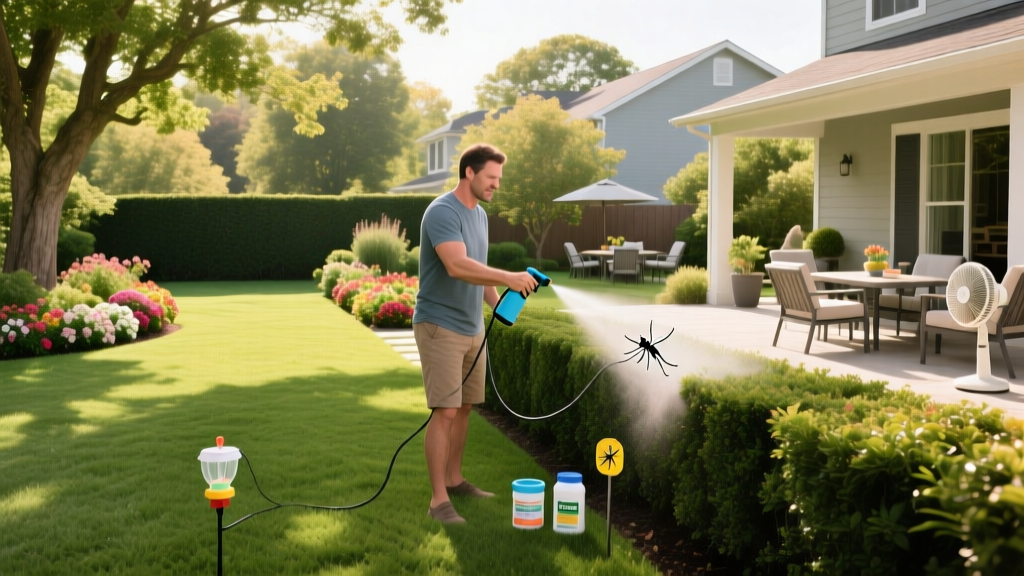
How to Keep Mosquito Out of Yard: Proven Defense Strategies
When researching how to keep mosquito out of yard spaces, most homeowners default to ineffective citronella candles or bug zappers. True mosquito control requires a systematic approach that targets the insect's life cycle and resting behaviors. According to the Centers for Disease Control and Prevention (CDC), eliminating breeding sites and utilizing targeted larvicides are the most effective methods for reducing local mosquito populations. By implementing a 3-tier defense framework—habitat modification, biological larval control, and adult spatial repellency—you can reduce mosquito landings by over 90% without relying on broad-spectrum chemical fogging.
Tier 1: Habitat Modification and Source Reduction
Mosquitoes require standing water to complete their larval and pupal stages, which typically take 7 to 14 days depending on ambient temperatures. However, the amount of water required is drastically underestimated by most homeowners. A female Culex or Aedes mosquito can lay up to 200 eggs in a volume of water no larger than a bottle cap.
⚠️ The Hidden Water Traps
Standard 'tip and toss' advice misses the most prolific micro-habitats. Inspect these specific areas weekly:
- Corrugated downspout extensions: The ridges hold water even when the pipe is angled downward. Switch to smooth PVC or drill 1/4-inch weep holes in the bottom of every ridge.
- Tarp folds and grill covers: Even a 1-inch depression in a weatherproof cover will breed hundreds of larvae. Pull covers taut or use bungee cords to eliminate pooling.
- Bromeliads and Taro plants: These ornamental plants naturally hold water in their leaf axils. Flush them with a hose weekly or treat them with Bti granules.
Landscaping for Airflow and Sunlight
Adult mosquitoes are incredibly weak fliers, topping out at roughly 1 to 1.5 miles per hour. They also desiccate (dry out) quickly in direct sunlight and high wind, forcing them to rest in dense, shaded, humid vegetation during the day. Trim the lower 12 inches of foliage from dense shrubs like boxwood, privet, and holly to allow ground-level air circulation. For immediate patio defense, install an outdoor-rated oscillating fan. A fan producing at least 400 CFM (Cubic Feet per Minute) placed 6 to 10 feet from your seating area will physically prevent mosquitoes from entering your immediate space while dispersing the carbon dioxide and lactic acid plumes that attract them.
Tier 2: Biological Larval Controls (Bti)
When standing water cannot be drained—such as in rain barrels, French drains, koi ponds, or low-lying yard swales—biological controls are mandatory. The gold standard is Bacillus thuringiensis israelensis (Bti), a naturally occurring soil bacterium. The Environmental Protection Agency (EPA) notes that Bti produces protein crystals that bind exclusively to the alkaline gut walls of mosquito and black fly larvae, causing fatal ruptures. It is completely non-toxic to humans, pets, birds, fish, and beneficial pollinators.
Bti Product Comparison Matrix
| Product Format | Best Use Case | Application Rate | Active Duration | Avg. Cost |
|---|---|---|---|---|
| Mosquito Dunks (Solid) | Ponds, rain barrels, large puddles | 1 dunk per 100 sq ft of surface water | 30 Days | $8 - $12 (6-pack) |
| Mosquito Bits (Granular) | Swales, muddy areas, potting soil (fungus gnats) | 1 tablespoon per 5 sq ft | 7 - 14 Days | $15 - $20 (30 oz) |
| Water-Soluble Pods | Birdbaths, small ornamental fountains | 1 pod per 50 gallons | 14 Days | $10 - $14 (12-pack) |
Tier 3: Adult Repellents and Barrier Treatments
Even with perfect source reduction, neighboring properties will inevitably produce adult mosquitoes that drift into your yard. To defend your outdoor living spaces, you must deploy spatial repellents or chemical barriers.
Spatial Repellents: Metofluthrin vs. Allethrin
Spatial repellents heat a chemical matrix to create an invisible, odorless vapor dome that disrupts the mosquito's olfactory receptors. The American Mosquito Control Association (AMCA) recognizes these as highly effective for localized patio defense.
- Thermacell E55 / E85 (Metofluthrin 5.5%): Uses a rechargeable battery to heat a liquid cartridge. Creates a 20-foot protection zone. Best for low-wind patios. Refills cost roughly $12 for 12 hours of runtime.
- Thermacell Liv System (Allethrin): A hardwired, smart-home-integrated system that mounts to your deck or eaves. It creates a continuous perimeter barrier for up to 1,000 square feet. Installation costs around $300 for a 3-node kit.
- OFF! Clip-On (Metofluthrin): A budget-friendly, battery-operated fan that blows the repellent outward. Less effective in breezy conditions but highly portable for gardening tasks.
DIY vs. Professional Barrier Sprays
If you require whole-yard protection, barrier sprays applied to foliage (where mosquitoes rest) are the next step. Professional services typically charge $150 to $250 per treatment for a 1/4-acre lot, utilizing synthetic pyrethroids like bifenthrin or lambda-cyhalothrin. These bind to leaf surfaces and remain effective for 21 to 30 days. However, they are broad-spectrum and will harm beneficial insects like bees and butterflies if sprayed directly on blooming flowers.
💡 The Organic Alternative:
For a DIY, pollinator-safe barrier, use a concentrated garlic and cedarwood oil spray (e.g., Garlic Barrier or Nature's Mace). Mix at a rate of 2 oz per gallon of water and apply to the underside of shrub leaves and perimeter fencing using a pump sprayer. It costs roughly $35 per application and repels adults for 10 to 14 days without leaving toxic residue.
Common Mosquito Control Myths Debunked
Do not waste your budget on products that lack entomological backing:
- Bug Zappers (UV Light Traps): Studies consistently show that zappers kill less than 1% biting mosquitoes, while decimating populations of beneficial moths, beetles, and pollinators that make up the other 99% of the catch.
- Ultrasonic Phone Apps and Plug-ins: Mosquitoes do not possess tympanal organs tuned to the frequencies emitted by these devices. They are biologically incapable of hearing or being deterred by ultrasonic sound.
- Citronella Candles: While citronella oil does have mild masking properties, a candle only creates a 1-meter effective radius, and its efficacy drops to zero in winds exceeding 3 mph.
Frequently Asked Questions
Will planting marigolds or lavender keep mosquitoes away?
No. While the essential oils inside these plants have repellent properties, simply growing them in your yard does not release enough of the active compounds (like linalool or limonene) into the air to deter mosquitoes. You would need to crush the leaves and rub them directly on your skin for any localized effect.
How often should I treat my rain barrels with Bti?
Apply one-quarter of a Mosquito Dunk to a standard 50-gallon rain barrel every 30 days during the active mosquito season (when temperatures consistently stay above 50°F). Break the dunk into pieces to ensure it disperses evenly across the surface tension.

