
Pest Control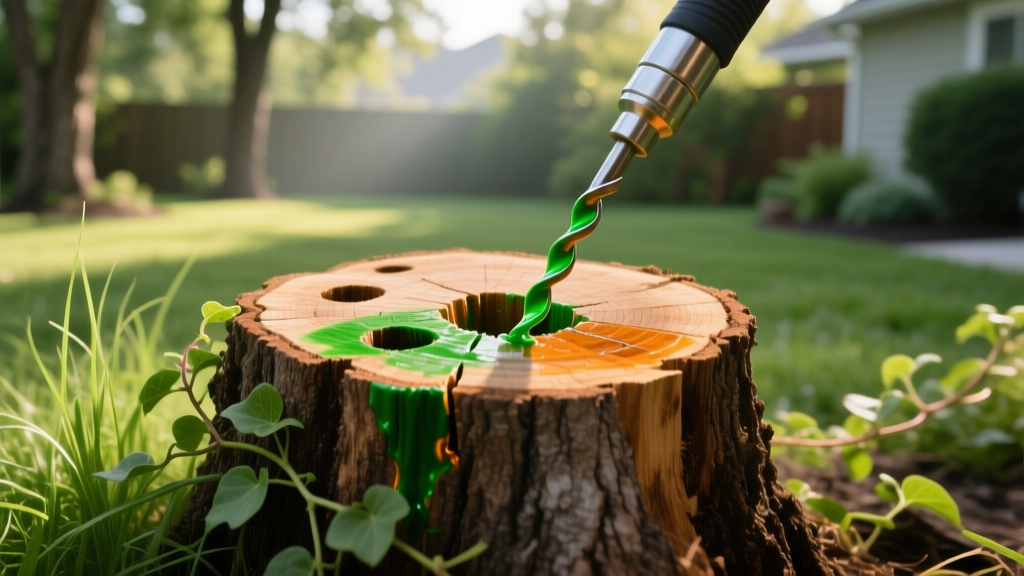
How to Poison a Tree Stump to Stop Suckers and Regrowth
The Biology of Stump Suckering: Why Cutting Isn't Enough
When you cut down an aggressive tree species—such as Tree of Heaven, Bradford Pear, Poplar, or Elm—the root system remains fully alive and energized. Without a canopy to support, the roots panic and push out dozens, sometimes hundreds, of root suckers across your lawn. Simply grinding or cutting the trunk does not solve this pest control problem; it accelerates it. To permanently eradicate the root system, you must understand how to poison a tree stump using systemic herbicides that travel through the vascular tissue to kill the lateral roots.
The success of a cut-stump treatment relies entirely on the cambium layer, a thin ring of actively dividing cells located just inside the bark. This layer transports nutrients and water. If you apply herbicide to the dead heartwood in the center of the stump, it will not translocate. The chemical must be applied precisely to the outer 1 to 2 inches of the stump perimeter to enter the phloem and xylem networks.
⚠️ Critical Timing Warning: Trees possess a defense mechanism called tyloses formation. Within 15 to 30 minutes of being cut, the tree's xylem vessels plug themselves with resin and sap to prevent bleeding and block pathogens. If you wait an hour to apply your herbicide, the vascular system will be sealed, and the chemical will sit uselessly on the surface. Always have your herbicide mixed and ready before the chainsaw makes the final cut.
Best Systemic Herbicides for Stump Treatment
Not all weed killers are formulated for woody plant eradication. Standard consumer lawn herbicides lack the active ingredients and surfactants required to penetrate bark and translocate through mature root systems. Below is a comparison of the most effective active ingredients used by arborists and land managers in 2026.
| Active Ingredient | Brand Examples | Cut-Stump Concentration | Average Cost |
|---|---|---|---|
| Triclopyr (Ester) | Garlon 4, Ortho Poison Ivy Killer | 20% to 25% in basal oil | $75 - $90 / Quart |
| Picloram + 2,4-D | Tordon RTU | Ready-to-use (undiluted) | $35 - $45 / Quart |
| Glyphosate | Roundup Pro, Rodeo | 41% to 50% (undiluted) | $45 - $60 / Gallon |
According to forestry guidelines published by Penn State Extension, Triclopyr is generally the most effective choice for broadleaf woody species because it mimics plant growth hormones, causing the root system to literally grow itself to death. Tordon RTU is highly effective but contains Picloram, which is a restricted-use pesticide in several states due to its high soil mobility and potential to leach into groundwater. Always check your local Department of Agriculture regulations before purchasing Picloram-based products.
Step-by-Step: How to Poison a Tree Stump Effectively
Follow this precise protocol to ensure maximum translocation to the root tips.
- Make a Clean, Low Cut: Cut the tree as close to the ground as safely possible, leaving a 2-inch stump. A low cut prevents tripping hazards and targets the root flare where vascular tissue is most concentrated.
- Prepare the Chemical: Mix your chosen herbicide with a non-ionic surfactant (if required by the label) and a blue indicator dye (like Basoil or standard turf marking dye). The dye is non-negotiable; it allows you to see exactly which parts of the cambium have been treated.
- Apply Within 15 Minutes: Using a foam brush, a squeeze bottle with a pinpoint nozzle, or a low-pressure hand sprayer, apply the herbicide exclusively to the outer 1.5 inches of the stump's perimeter. Do not waste chemical on the dead heartwood in the center.
- Drill for Large Stumps (Optional but Recommended): For stumps wider than 12 inches, the Missouri Department of Conservation recommends drilling vertical holes to increase chemical uptake. Use a 1/2-inch drill bit to bore 1-inch-deep holes spaced 2 inches apart around the perimeter, angling slightly inward to create a cup that holds the liquid.
Troubleshooting: Why Your Stump Treatment Failed
If you treated a stump but still see aggressive suckering emerging from the lawn three months later, one of the following failure modes occurred:
- The Tyloses Blockade: You waited longer than 30 minutes after cutting to apply the herbicide. The tree sealed its vascular system, and the chemical never reached the roots. Fix: Re-cut the stump 1 inch lower with a chainsaw to expose fresh, unsealed wood, and reapply immediately.
- Rain Wash-Off: It rained within 6 hours of application, washing the water-soluble herbicide into the topsoil before it could translocate. Fix: Check the 10-day forecast before treating. If rain is imminent, use an oil-based carrier (like diesel or specialized basal oil) with Triclopyr, which becomes rainfast in under 2 hours.
- Wrong Concentration: You diluted Glyphosate with water. For cut-stump applications, Glyphosate must be used at a 41% to 50% concentration (essentially straight from the jug). Diluting it to standard foliar spray rates (1% to 2%) will only kill the surface tissue.
💡 Pro-Tip for Sucker Management: If a treated stump still pushes out a few root suckers, do not pull them by hand. Snip them and immediately paint the fresh cut with your herbicide. The USDA Forest Service notes that treating secondary suckers creates a 'vacuum effect,' pulling the remaining chemical deeper into the lateral root network.
Organic and Non-Chemical Alternatives
For homeowners who prefer to avoid synthetic herbicides near vegetable gardens or water features, there are desiccation and decay-based alternatives. Note that these methods do not kill the root system systemically; they only accelerate the rotting of the main taproot and stump.
Potassium Nitrate (Stump Remover)
Products like Spectracide Stump Remover consist of 100% Potassium Nitrate. By drilling deep holes into the stump and filling them with these granules, you introduce massive amounts of nitrogen and oxygen. This feeds wood-decaying fungi and bacteria, accelerating the rot process. Timeframe: 4 to 8 weeks to soften the wood enough to chop out with a mattock. Drawback: It does not stop lateral root suckering in species like Elm or Poplar.
Epsom Salt (Magnesium Sulfate)
A common DIY method involves drilling holes and filling them with Epsom salt, then sealing with wax. The salt draws moisture out of the wood, desiccating the stump. While effective for killing the main trunk tissue, it rarely translocates to the fine feeder roots at the drip line, meaning you may still need to manually dig out suckers.
Frequently Asked Questions
Will poisoning a tree stump harm the grass around it?
Glyphosate binds tightly to soil particles and is deactivated by soil microbes within a few weeks, making it relatively safe for surrounding turf once dry. Triclopyr and Picloram, however, can persist in the soil and may cause broadleaf weed control effects or damage to nearby desirable shrubs if their roots overlap with the treated stump. Always apply carefully and avoid spilling chemical on the soil.
Can I use copper nails to poison a tree stump?
No. The idea that driving copper nails into a stump will kill it is a persistent gardening myth. The amount of copper oxidation that enters the tree's vascular system is microscopically small and entirely insufficient to cause systemic toxicity or halt root growth.
How long does it take for the stump to die after treatment?
You will typically see the leaves on any remaining branches or emerging suckers curl, yellow, and die within 7 to 14 days. However, the physical decay of the woody stump itself will still take 1 to 3 years depending on the species and local fungal activity. The chemical kills the living tissue; nature must still decompose the dead wood.

