
Pest Control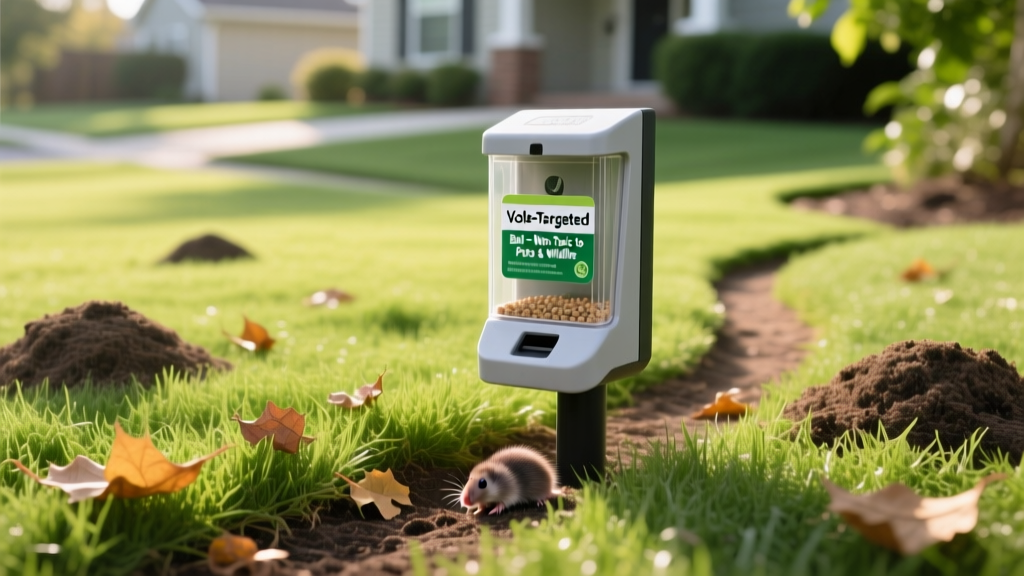
How to Poison Voles Safely: Best Baits & Placement Guide
The Subterranean Reality: Why Surface Baiting Fails
Voles (often misidentified as meadow mice) are among the most destructive lawn and garden pests in North America. A single colony can girdle hundreds of ornamental trees, decimate bulb gardens, and carve extensive surface and subterranean runways through turfgrass. When trapping and habitat modification fail, homeowners often search for how to poison voles to reclaim their property. However, simply scattering rodenticide pellets across the lawn is entirely ineffective and highly dangerous to non-target wildlife.
Voles are profoundly agoraphobic. They spend the vast majority of their lives in enclosed, dark tunnels or beneath dense thatch and snow cover. If bait is exposed to sunlight or placed in open areas, voles will ignore it. Furthermore, exposed poison poses a severe lethal threat to foraging birds, domestic pets, and beneficial predators. To successfully eradicate a colony, rodenticides must be deployed exclusively inside active runways using tamper-resistant bait stations that mimic the dark, enclosed environments voles require to feel secure enough to feed.
Active Ingredient Breakdown: Acute vs. Chronic Poisons
Choosing the correct toxicant depends on your specific environment, the presence of predators, and local regulations. Vole baits generally fall into two categories: acute single-dose toxicants and chronic multiple-dose anticoagulants.
| Active Ingredient | Type | Lethality Timeline | Secondary Poisoning Risk | Average Cost per Pound |
|---|---|---|---|---|
| Zinc Phosphide (ZP) | Acute (Single-dose) | 24 - 48 hours | Extremely Low (Toxic gas dissipates) | $15 - $22 |
| Chlorophacinone | Chronic (FGAR Anticoagulant) | 3 - 7 days | Moderate to High (Toxins remain in tissue) | $20 - $30 |
| Diphacinone | Chronic (FGAR Anticoagulant) | 3 - 7 days | Moderate to High (Toxins remain in tissue) | $25 - $35 |
Zinc Phosphide (ZP) is often the preferred choice for agricultural and large-scale turf applications. When a vole ingests ZP, it reacts with stomach acids to release highly toxic phosphine gas. Because the gas dissipates rapidly after the vole dies, the risk of secondary poisoning to owls, hawks, or domestic cats that might consume the carcass is negligible. The primary drawback of ZP is bait shyness; if a vole consumes a sublethal dose, it will associate the bait's distinct garlic-like odor with illness and avoid it permanently.
First-Generation Anticoagulants (FGARs) like Chlorophacinone and Diphacinone disrupt blood clotting. They require multiple feedings over several days to achieve a lethal dose. While they do not typically cause bait shyness, they carry a documented risk of secondary poisoning. According to the Environmental Protection Agency (EPA), strict adherence to bait station protocols is mandatory when using anticoagulants to protect non-target species.
The Apple Sign Test: Mapping Active Runways
Before deploying any toxicant, you must confirm which runways are actively being used. Voles frequently abandon old tunnels, and placing expensive bait in dead zones wastes resources. Use the industry-standard Apple Sign Test:
- Identify Potential Runways: Look for 1.5 to 2-inch wide paths in the grass, often lined with clipped grass stems and small (3mm) droppings. Part the grass near the base of damaged trees to locate entry holes.
- Prepare the Bait: Cut a fresh apple into 1-inch cubes. The high moisture and strong scent make it highly attractive to voles.
- Deploy the Test: Place one apple cube directly inside the runway. Cover the area with a small piece of cardboard, a roofing shingle, or a wooden board to block sunlight and simulate a tunnel roof.
- Wait 24 Hours: Return the next day and lift the cover. If the apple is partially eaten, marked with tiny teeth grooves, or completely gone, the runway is highly active and ready for toxic baiting.
Bait Station Construction: The PVC T-Pipe Method
Commercial bait stations designed for rats and mice are often too large and clunky for narrow vole runways. The most effective, cost-efficient method for turf and garden beds is constructing custom PVC T-pipe stations.
Materials Required
- 1.5-inch or 2-inch diameter PVC pipe
- PVC T-joints and end caps
- Hacksaw or PVC cutter
- Bailing wire or landscaping stakes
Assembly and Placement Steps
- Cut the Pipe: Cut the PVC into 6-inch to 8-inch lengths. Attach the T-joint to the center. The horizontal ends of the T should remain open to allow the vole to pass through as if it were a natural tunnel.
- Cap the Vertical Opening: Place a removable PVC end cap on the top (vertical) opening of the T-joint. This is your access port to inspect and refill the bait without disturbing the runway.
- Anchor the Station: Dig a shallow trench directly over the active runway. Bury the horizontal PVC pipe flush with the soil surface so the vole does not have to climb or step up to enter it. Secure the station with landscaping stakes to prevent dogs or raccoons from digging it up.
- Load the Bait: Using a small spoon, place 1 to 2 ounces of pelleted bait into the top opening. Let it fall into the horizontal chamber. Replace the cap immediately.
⚠️ CRITICAL WARNING: Secondary Poisoning and Legal Compliance
Never broadcast bait onto the surface of your lawn. Not only is it a violation of federal pesticide label laws, but it also guarantees the death of ground-foraging birds like quail and robins. Always use secured bait stations. If you live in an area with high raptor populations, prioritize Zinc Phosphide over anticoagulants to prevent fatal secondary poisoning in owls and hawks.
Overcoming Environmental Spoilage and Bait Shyness
Voles are highly sensitive to mold and fungal growth. Because subterranean runways trap moisture, pellet baits can spoil within 48 hours in humid conditions. Once bait molds, voles will refuse to touch it. To combat this, use paraffinized bait blocks or extruded pellets specifically treated with fungicides. Inspect your PVC stations every 3 to 4 days. If you find moldy pellets, remove them with a gloved hand, wipe the inside of the PVC pipe with a dry cloth, and replace the bait.
If you are using Zinc Phosphide and notice that the bait is being nibbled but the colony remains active, you are likely dealing with bait shyness. The surviving voles have detected the phosphine reaction in their peers and will avoid the ZP bait. In this scenario, you must switch your active ingredient. Pre-baiting with untreated, highly attractive grain (like oatmeal or cracked corn) for three days establishes trust, after which you can introduce a Diphacinone-treated grain bait to finish the eradication.
State Regulations and Professional Alternatives
Rodenticide regulations vary wildly by jurisdiction. States like California have enacted severe restrictions on the sale and use of Second-Generation Anticoagulant Rodenticides (SGARs), though First-Generation options and Zinc Phosphide often remain available to licensed applicators or for specific agricultural uses. Always consult your local university extension office or state department of agriculture before purchasing bulk toxicants.
If your property exceeds one acre, or if the infestation has severely compromised the root systems of high-value ornamental trees, DIY baiting may be insufficient. Professional pest control operators have access to restricted-use fumigants, such as aluminum phosphide, which is injected directly into the burrow systems as a gas. This method achieves near 100% colony mortality in a single afternoon without leaving toxic solid residues in the soil, though it requires strict licensing and buffer-zone calculations to ensure human safety.

