
Pest Control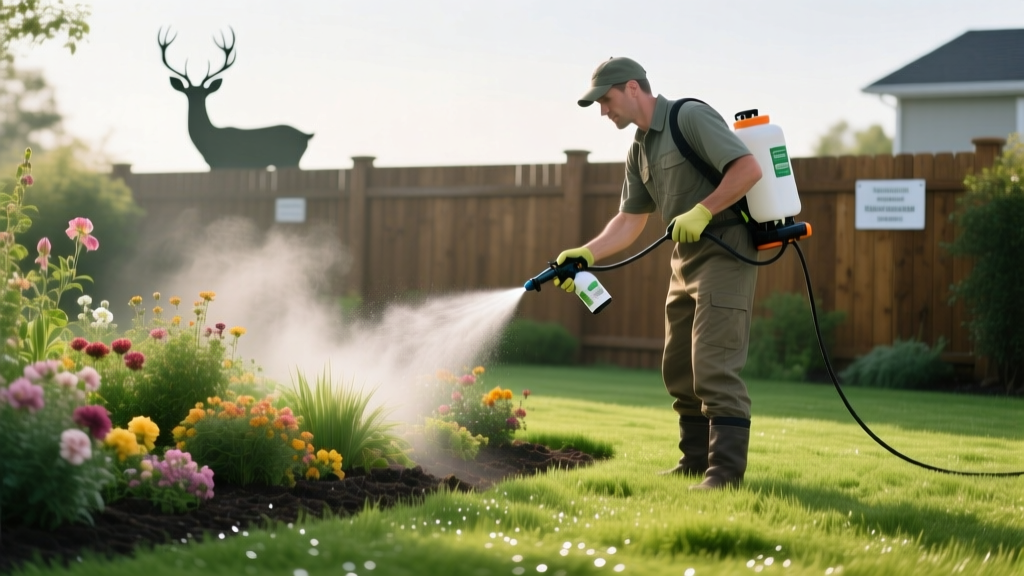
How to Repel Deer From Gardens: Fencing & Spray Guide
The Deer Damage Decision Matrix
A single adult white-tailed deer consumes between 6 to 10 pounds of forage daily. When a herd targets a residential landscape, they can strip thousands of dollars of ornamental shrubs, hostas, and young trees in a matter of weeks. Learning how to repel deer effectively requires moving beyond generic scare tactics and implementing a multi-layered defense system based on your specific property size, budget, and local herd pressure.
According to the Internet Center for Wildlife Damage Management, no single deterrent works indefinitely due to the 'habituation curve'—deer will test and eventually ignore static deterrents within 14 to 21 days. To maintain efficacy, you must combine physical barriers with rotating chemical and sensory deterrents.
| Property Size | Primary Defense | Secondary Support | Est. Budget |
|---|---|---|---|
| Small (< 1/4 Acre) | Motion-Activated Sprinklers | Rotating Scent Repellents | $150 - $300 |
| Medium (1/4 - 1 Acre) | 7.5ft Polypropylene Mesh Fence | Deer-Resistant Buffer Planting | $800 - $2,500 |
| Large (> 1 Acre) | 8ft Woven Wire Perimeter | Interior Contact Sprays | $3,000 - $8,000+ |
Physical Barriers: Fencing Specifications That Actually Work
When physical exclusion is possible, it remains the only 100% effective method for deer deterrence. However, standard residential fences (4 to 6 feet) are useless; white-tailed deer can easily clear 6-foot vertical jumps from a standstill. The Penn State Extension Wildlife Damage Management program outlines three primary fencing architectures that exploit deer biomechanics and visual limitations.
1. Woven Wire Fencing (The Gold Standard)
For permanent perimeter exclusion, an 8-foot tall woven wire fence is the industry standard. Deer can jump 8 feet vertically, but they cannot clear 8 feet vertically and horizontally in a single bound. Woven wire costs between $15 and $25 per linear foot installed. Use 10-foot galvanized steel T-posts driven at least 2 feet into the ground, spaced 10 to 12 feet apart, to prevent the fence from bowing under snow loads or deer pushing.
2. Polypropylene Mesh Fencing (The Cost-Effective Alternative)
For medium-sized garden enclosures, UV-stabilized black polypropylene deer fencing (7.5 feet tall) is highly effective and visually unobtrusive. It costs roughly $3 to $6 per linear foot for materials. The black color blends into tree lines, and deer struggle to judge the depth and height of the thin mesh, often refusing to jump it out of fear of entanglement. Secure the bottom 6 inches of the mesh to the ground using landscape staples every 3 feet to prevent fawns and rabbits from crawling underneath.
3. The 35-Degree Slanted Fence (For Small Yards)
If local HOA rules or budget constraints prohibit 8-foot vertical fences, a slanted fence exploits the deer's poor depth perception. Install two to three strands of high-tensile wire or electric tape on posts that are angled outward at a 35 to 45-degree angle. The fence should be 4 feet tall at the base and extend outward to a height of 6 feet. Deer looking at this fence cannot accurately calculate the width of the barrier, causing them to abort the jump.
Chemical & Scent Repellents: Active Ingredients Breakdown
When fencing is not an option, chemical repellents are your next line of defense. Repellents generally fall into two categories: contact repellents (applied directly to plants, making them taste bad) and area repellents (emitting a foul odor that creates a scent barrier). To prevent herd habituation, you must rotate active ingredients every 4 to 6 weeks.
⚠️ Critical Application Rule: Never apply liquid contact repellents to wet foliage or right before a rainstorm. Water dilutes the active ingredients and prevents the binding agents (like pine resins or latex polymers) from adhering to the leaf cuticle. Always spray on dry days with at least 6 hours of sunlight remaining to allow the product to cure.
Top Active Ingredients & Product Recommendations
- Putrescent Whole Egg Solids (e.g., Liquid Fence): Contains roughly 2.0% egg solids and 4.8% garlic. This mimics the scent of decaying protein, signaling to deer that predators are nearby. Cost: ~$25 for a 32oz Ready-To-Use bottle. Best for spring and summer when deer are foraging for tender new growth.
- Dried Blood (e.g., Plantskydd): An area and contact repellent that triggers a primal predator-avoidance response. Unlike liquid egg sprays, Plantskydd's powder and oil-based formulations are highly rain-resistant, lasting up to 3 months on active growth and 6 months on dormant plants. Cost: ~$45 for 2.5 lbs of powder concentrate. Ideal for late fall and winter protection of arborvitae and yews.
- Capsaicin / Hot Pepper Wax: Irritates the deer's nasal passages and taste buds upon contact. Highly effective for vegetable gardens and fruit trees where you do not want to use foul-smelling egg or blood products. Note: You must wash produce thoroughly before consumption.
Sensory Deterrents: Motion-Activated Sprinklers
Ultrasonic noise emitters and static scarecrows fail because deer quickly realize they pose no physical threat. The most reliable sensory deterrent is the sudden, unpredictable combination of water, noise, and movement provided by infrared motion-activated sprinklers.
Spotlight: Orbit 62100 Yard Enforcer
The Orbit Yard Enforcer (retailing around $60) is the benchmark for residential mammal deterrence. It features a 120-degree infrared detection arc and can trigger a sharp burst of water accompanied by a loud mechanical 'click' that startles browsing deer.
💡 Pro-Tip for Night Browsing: Up to 70% of deer damage occurs between dusk and dawn. Set the Yard Enforcer to 'Night Only' or '24-Hour' mode. Ensure the sensor is mounted at a height of 24 to 30 inches—directly at the eye level of an adult foraging deer—rather than pointing at the ground.
Landscape Design: The Deer-Resistant Buffer Zone
There is no such thing as a completely 'deer-proof' plant; if a deer is starving in late February, it will eat almost anything. However, you can use highly deer-resistant plants to create a buffer zone around the perimeter of your property. Deer are edge-feeders and prefer to browse without entering deep into unfamiliar, heavily scented, or textured territory.
Plant a 5-to-10-foot deep perimeter border using highly resistant species such as:
- Shrubs: Boxwood (Buxus), Japanese Pieris, Mountain Laurel (Kalmia latifolia), and Spirea.
- Perennials: Lamb's Ear (Stachys byzantina), Russian Sage, Lavender, and Ferns.
- Grasses: Miscanthus and Fountain Grass (deer avoid the sharp silica edges of ornamental grasses).
Keep your highly susceptible plants—such as hostas, daylilies, tulips, and young fruit trees—tucked safely inside this buffer zone, closer to the home and high-traffic human areas.
Seasonal Application Calendar
Deer foraging behavior shifts drastically with the seasons. Your deterrence strategy must adapt to their biological needs.
| Season | Deer Behavior | Primary Action Required |
|---|---|---|
| Spring (Mar-May) | Seeking protein-rich new growth; does are pregnant/nursing. | Apply putrescent egg contact sprays every 3 weeks to emerging shoots. |
| Summer (Jun-Aug) | Abundant wild forage available; browsing is opportunistic. | Rely on motion sprinklers and buffer zones. Reapply sprays after heavy rain. |
| Fall (Sep-Nov) | Hyperphagia (bulking up for winter); rubbing antlers on young trees. | Wrap young tree trunks with corrugated plastic guards. Apply blood-based area repellents. |
| Winter (Dec-Feb) | Starvation phase; will eat toxic or woody plants out of desperation. | Physical fencing is mandatory. Use heavy oil-based dormant sprays on evergreens. |
Summary: Building Your Defense Strategy
Mastering how to repel deer requires acknowledging that deer are highly adaptable, intelligent foragers. Relying on a single product or a low fence will inevitably lead to landscape damage. By investing in an 8-foot woven wire or 7.5-foot poly mesh fence for your primary perimeter, utilizing motion-activated water deterrents for localized garden beds, and rotating chemical repellents based on the season, you can effectively protect your property and force the local herd to move on to easier foraging grounds.

