
Pest Control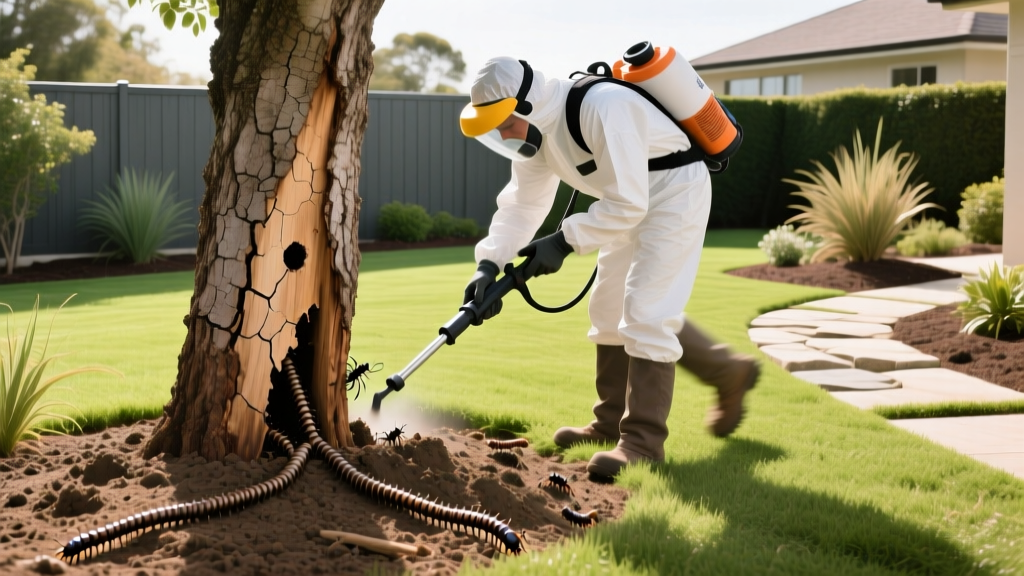
How to Rid Termites From Your Yard and Secure the Perimeter
The Staging Ground: Why Your Yard is the Real Battleground
When homeowners figure out how to rid termites from their property, they often focus exclusively on the interior structure. However, subterranean termites (Reticulitermes spp.) live in the soil. Your yard is their staging ground, highway, and primary food source. According to the U.S. Environmental Protection Agency, termites cause over $5 billion in property damage annually, and the vast majority of these infestations originate in the surrounding soil before breaching the foundation.
Defending your yard requires a multi-layered approach: chemical soil barriers, strategic bait deployment, and correcting landscaping errors that provide moisture and cellulose. This guide provides exact measurements, product specifications, and deployment frameworks to secure your property perimeter.
Identifying the Threat: Subterranean vs. Drywood Termites
Before purchasing termiticides, you must identify which species is invading your yard. Treatment protocols for soil-dwelling subterranean termites are entirely different from those for wood-boring drywood termites.
| Feature | Subterranean Termites | Drywood Termites |
|---|---|---|
| Habitat | Underground soil colonies | Inside dry wood (fences, dead trees) |
| Mud Tubes | Yes, on foundation walls and piers | No |
| Frass (Droppings) | Used to build tubes, rarely seen | Pellets pushed out of kick-out holes |
| Primary Yard Treatment | Liquid soil trenching & bait stations | Localized wood injection or removal |
Liquid Soil Treatment: Creating a Chemical Barrier
For subterranean termites, a non-repellent liquid termiticide is the gold standard for yard defense. Non-repellents, like Fipronil, allow termites to pass through the treated soil, pick up the active ingredient, and transfer it to the colony via trophallaxis (grooming and food sharing).
Step-by-Step Trenching Protocol
- Select the Chemical: Termidor SC (9.1% Fipronil) or Taurus SC. A 20-ounce bottle costs between $65 and $85 and treats approximately 60 linear feet of foundation.
- Mix the Solution: Mix 0.8 fluid ounces of Fipronil concentrate per 1 gallon of water. Use a pump sprayer or a dedicated 5-gallon bucket with a stirring stick.
- Dig the Trench: Using a trenching shovel, dig a trench 6 inches deep and 6 inches wide directly against the foundation or the perimeter of the outdoor structure you are protecting.
- Apply the Solution: Pour exactly 4 gallons of the mixed solution into the trench for every 10 linear feet of soil.
- Backfill: Push the excavated soil back into the trench to cap the chemical barrier.
Warning: Well Water and Soil Types
Do not apply Fipronil within 5 feet of a well or cistern to prevent groundwater contamination. Furthermore, if your yard consists of dense clay soil, you may need to rodding-inject the soil rather than just trenching, as clay restricts lateral chemical absorption.
Bait Station Deployment: Sentricon vs. Trelona
If trenching is impossible due to concrete patios, landscaping features, or environmental concerns, termite bait stations offer a highly effective alternative. According to NC State Extension Entomology, modern bait systems use chitin synthesis inhibitors to disrupt the molting process of the termite colony.
System Comparison Matrix
| Feature | Sentricon Always Active | Trelona ATBS |
|---|---|---|
| Active Ingredient | Noviflumuron (0.5%) | Novaluron (0.5%) |
| Bait Matrix | ||
| Station Spacing | 10 to 20 feet apart | 10 to 20 feet apart |
| Professional Install Cost | $1,200 - $2,500 | $1,000 - $2,200 |
| DIY Availability | Restricted to licensed pros | Available to consumers (DIY kits ~$600) |
Deployment Rule: Install stations flush with the soil surface. Do not place them under dense shrubbery where maintenance access is difficult. Inspect stations every 30 to 90 days; if the bait matrix is more than 50% consumed, replace the cartridge immediately.
Landscaping and Mulch Mistakes That Invite Colonies
Chemical and bait treatments will fail if your yard's physical environment continuously provides ideal termite conditions. Termites require moisture and cellulose. Correct these common landscaping errors:
- The Mulch Volcano: Piling mulch against wooden siding or foundation weep holes creates a hidden bridge over your chemical soil barrier. Maintain a strict 12-to-18-inch bare-soil gap between any mulch and the foundation.
- Mulch Depth: Limit organic mulch (wood chips, bark) to a maximum depth of 2 to 3 inches. Deeper layers retain excessive subterranean moisture.
- Wood-to-Soil Contact: Fence posts, deck stairs, and trellis bases buried directly in the soil act as termite superhighways. Use galvanized steel post anchors to elevate wood structures at least 2 inches above the soil grade.
- Stump Removal: Never leave dead tree stumps or root systems in the yard. Grind stumps to at least 12 inches below grade and treat the remaining wood debris with a localized borate solution.
Biological Control: Beneficial Nematodes
For homeowners seeking an organic yard defense strategy, entomopathogenic nematodes offer a natural way to suppress subterranean termite populations. These microscopic roundworms actively seek out termite larvae in the soil, enter their bodies, and release symbiotic bacteria that kill the host within 48 hours.
Pro Tip: Nematode Application Specifics
Purchase Heterorhabditis bacteriophora (Hb) nematodes, which are proven to target deep-soil pests like termites. Apply at a rate of 1 billion nematodes per acre. Because UV light destroys them, you must apply the nematode-water slurry at dusk or on an overcast day, and immediately water the soil to wash them below the surface.
Decision Framework: DIY vs. Professional Extermination
Determining whether to handle yard termite defense yourself or hire a licensed operator depends on the scale of the infestation and your property layout.
When to DIY
- You are establishing a preventative perimeter barrier on a standard, rectangular lot with bare soil foundations.
- You are treating isolated wooden yard structures (sheds, detached pergolas) using localized borate foams and Trelona DIY bait stations.
- You have the physical ability to trench 60+ linear feet of hard-packed soil.
When to Call a Professional
- Your foundation includes slab-on-grade construction, requiring sub-slab drilling and injection.
- There is an active, massive colony already breaching the home's interior (evidenced by swarming alates inside the house or extensive mud tubes).
- Your property features a well, intricate drainage systems, or French drains that complicate liquid termiticide runoff and groundwater safety.
Securing your yard is the most critical step in long-term termite management. By combining a non-repellent Fipronil soil barrier with strict mulch management and strategic bait station monitoring, you effectively cut off the colony's access routes, starving them out before they can compromise your home's structural integrity.

