
Pest Control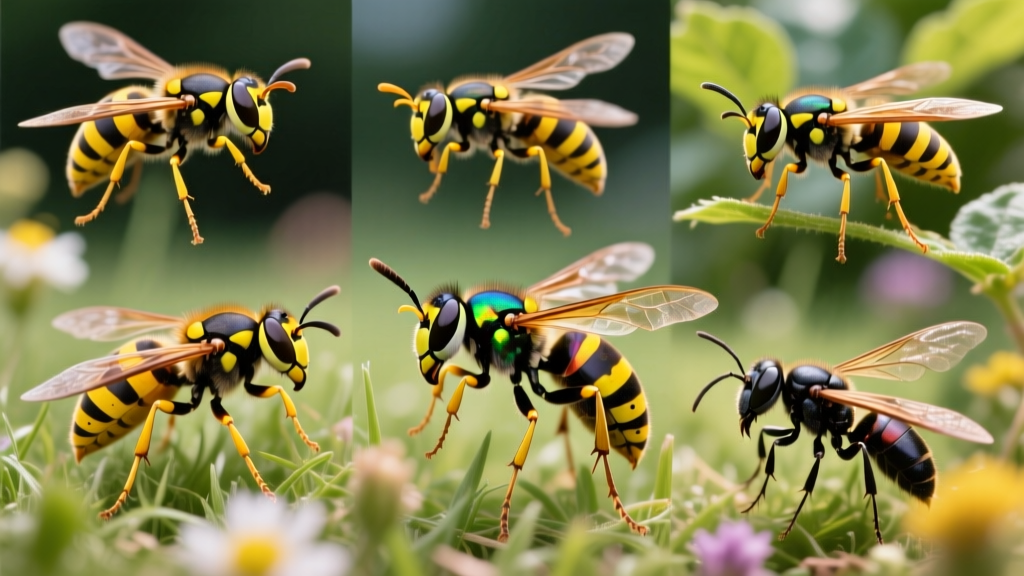
Bugs That Look Like Wasps But Aren't: Identification Guide
The Evolutionary Trick: Batesian Mimicry in Your Garden
When a yellow-and-black striped insect darts across your patio, the instinct to grab a can of aerosol wasp spray is immediate. However, a significant percentage of the 'wasps' terrorizing homeowners are actually harmless flies and moths engaging in Batesian mimicry. This evolutionary strategy allows defenseless species to adopt the warning coloration (aposematism) of stinging Hymenoptera to deter predators.
Misidentifying these mimics leads to unnecessary pesticide applications, which inadvertently wipe out beneficial predators that naturally control aphid and scale populations. Conversely, failing to identify the destructive mimics—specifically wood-boring moths—can result in severe structural damage to ornamental trees and fruit crops. This guide provides a precise, actionable framework to differentiate true wasps from their mimics and outlines specific treatment protocols for the pests among them.
The 3-Point Field Identification Framework
Before reaching for a treatment, evaluate the insect using these three morphological markers:
- Wing Count: True wasps possess four wings (two forewings, two hindwings). Flies (Diptera) possess only two functional wings, with the hindwings reduced to small balancing knobs called halteres.
- Antennae Structure: Wasps feature long, distinctly elbowed (geniculate) antennae. Mimics like hoverflies have short, stubby, or bristle-tipped antennae. Moths feature feathery or heavily pectinate antennae.
- Flight Pattern: Wasps fly with direct, purposeful trajectories. Hoverflies exhibit erratic, darting movements and can hover perfectly still in mid-air. Moths fly with a heavier, more erratic flutter, usually at dusk.
The Beneficial Mimics: Leave These Alone
Many wasp mimics are critical components of integrated pest management (IPM). Eradicating them removes free biological control agents from your landscape.
Hoverflies (Family Syrphidae)
Often called flower flies or syrphid flies, these are the most common wasp mimics in North American gardens. Species like the Calligrapher Fly (Toxomerus marginatus) and the Narcissus Bulb Fly (Merodon equestris) perfectly replicate the yellow and black banding of yellowjackets.
While the adults feed on nectar and act as secondary pollinators, their larvae are voracious aphid predators. According to research from the University of Minnesota Extension, a single hoverfly larva can consume up to 400 aphids during its development. If you see these insects hovering around your rose bushes or vegetable garden, they are actively hunting aphid colonies. Do not apply broad-spectrum pyrethroids (like bifenthrin) when hoverflies are present, as this will trigger a massive aphid rebound.
Bee Flies (Family Bombyliidae)
Bee flies are stout, fuzzy insects that mimic bees and smaller wasps. The Great Bee Fly (Bombylius major) features a distinct long proboscis used for extracting nectar from deep-throated flowers. While the adults are harmless pollinators, their larvae are parasitoids of ground-nesting bees and beetles. They pose zero threat to humans or structural wood and should be tolerated in wildflower zones.
The Destructive Mimics: When to Intervene
Not all mimics are beneficial. The Clearwing Moth family (Sesiidae) contains several species that mimic wasps in their adult stage but act as devastating wood-boring pests in their larval stage.
Clearwing Borers (Family Sesiidae)
Adult clearwing moths, such as the Peachtree Borer (Synanthedon exitiosa) and the Lilac Borer (Podosesia syringae), have transparent, sparsely scaled wings and bright yellow or red abdominal bands, making them nearly indistinguishable from paper wasps in flight. However, their larvae bore into the cambium layer of trees, girdling branches and trunks.
The NC State Extension notes that heavy infestations of clearwing borers will produce sawdust-like frass (excrement) and gummy sap exudations at the base of the tree or on main branches. If left untreated, the structural integrity of the tree is compromised, leading to windthrow or death within two to three seasons.
Comparison Matrix: True Wasps vs. Mimics
| Feature | True Wasps (Vespidae) | Hoverflies (Syrphidae) | Clearwing Moths (Sesiidae) |
|---|---|---|---|
| Wing Count | 4 distinct wings | 2 wings + halteres | 4 wings (transparent/dusted) |
| Antennae | Long, elbowed | Short, stubby/bristled | Feathery/pectinate |
| Sting Risk | High (females) | None | None |
| Landscape Role | Predator / Nuisance | Aphid predator / Pollinator | Wood-boring pest |
Targeted Treatment Protocols for Pest Mimics
If you have confirmed the presence of clearwing moths or other destructive mimics, generic bug sprays will not penetrate the bark to reach the larvae. Use these targeted protocols based on the life cycle stage.
1. Adult Moth Suppression (Spinosad)
To prevent egg-laying, target the adults when they are active (typically June through August, depending on your USDA zone). Apply a Spinosad-based spray, such as Monterey Garden Insect Spray (approximately $16 for a 16 oz concentrate). Spinosad is a bacterial fermentation product that is highly effective against Lepidoptera adults but has low toxicity to mammals. Spray the trunk and main scaffold branches at dusk when the moths are actively flying. Reapply every 7 to 10 days during the peak flight window.
2. Larval Control via Beneficial Nematodes
For larvae already boring into the soil line or shallow root crown, chemical sprays are useless. Instead, apply Steinernema carpocapsae beneficial nematodes (available from suppliers like Arbico Organics for roughly $35 per 10 million nematodes). Mix the nematodes in cool water and apply via a watering can to the moist soil within a 2-foot radius of the tree trunk. The nematodes will actively seek out and infect the borer larvae. This must be done when soil temperatures are consistently above 55°F.
3. Systemic Prevention (Imidacloprid)
For high-value ornamental trees with a history of borer damage, a systemic soil drench provides 12-month protection. Products like BioAdvanced 12 Month Tree and Shrub Protect & Feed (approx. $22 for 32 oz) contain Imidacloprid. The tree absorbs the chemical through its roots, making the cambium toxic to boring larvae.
CRITICAL WARNING: Never apply Imidacloprid soil drenches to linden (basswood) trees, as it is highly toxic to the specialized bees that pollinate them. Additionally, do not apply systemic neonicotinoids to trees that are currently in bloom or about to bloom to prevent pollinator exposure.
Frequently Asked Questions
Do any bugs that look like wasps actually sting?
No. By definition, if an insect is mimicking a wasp (like a hoverfly or clearwing moth), it belongs to a different taxonomic order (Diptera or Lepidoptera) and lacks a stinger. However, some true wasps, like the velvet ant (which is actually a wingless wasp), mimic other insects and possess an incredibly painful sting. Always use the 3-point ID framework before handling any insect.
Why do hoverflies hover in front of my face?
Male hoverflies (specifically species in the genus Eristalis) are highly territorial. They will hover in a specific sunlit patch of your yard and dart out to intercept any flying insect that enters their airspace, including humans. They are investigating you, not preparing to sting. A gentle wave of the hand is sufficient to displace them.

