
Pest Control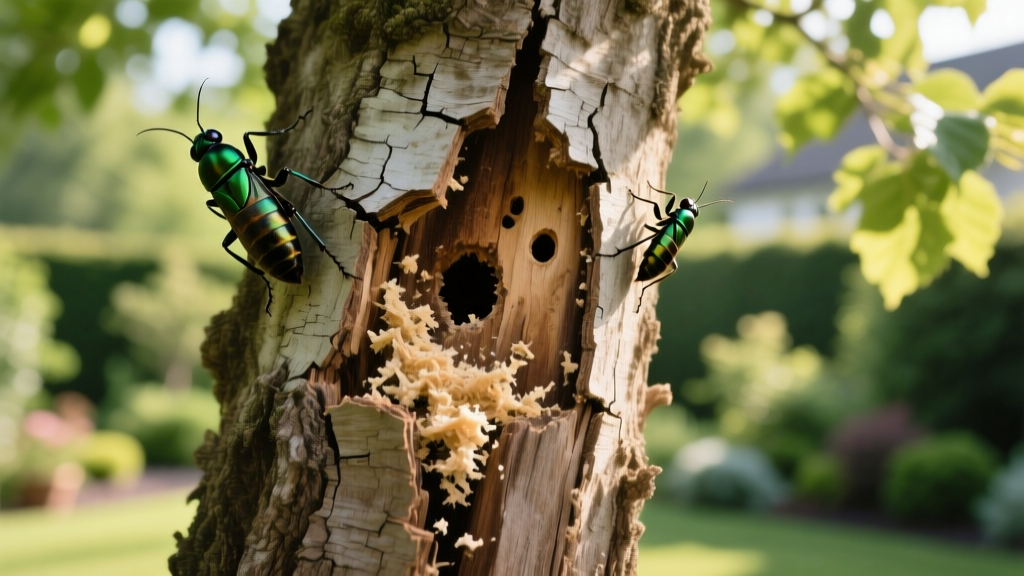
How to Identify and Eliminate Destructive Bugs in Trees
A mature shade tree can add between $1,000 and $10,000 to your property value, but wood-boring insects and secondary pests can reduce that investment to deadwood in a single season. When managing your yard's perimeter, identifying the exact species of bugs in trees is the critical first step before selecting a chemical or mechanical intervention. Misidentifying a pest often leads to wasted money on contact sprays that cannot penetrate the cambium layer where the actual damage occurs.
The Big Three: Most Destructive Wood-Boring Insects
While hundreds of insects interact with your landscape, three specific borers cause the vast majority of catastrophic tree loss in North America. Understanding their distinct visual signatures prevents misdiagnosis and ensures you apply the correct active ingredient.
1. Emerald Ash Borer (EAB)
Targeting all Fraxinus (ash) species, the EAB larva feeds on the phloem, severing the tree's nutrient transport system. Look for distinct 1/8-inch, D-shaped exit holes in the bark. If you peel back loose bark, you will find S-shaped larval galleries packed with fine sawdust (frass). According to the USDA APHIS, EAB has killed hundreds of millions of ash trees, making proactive defense mandatory if you live in a quarantined zone.
2. Asian Longhorned Beetle (ALB)
Unlike the EAB, the ALB attacks a wide variety of hardwoods, particularly maples, elms, and willows. The exit holes are perfectly round and roughly 3/8-inch in diameter—large enough to fit a standard pencil. You will also notice deep, oval-shaped scars in the bark where females lay eggs, often accompanied by weeping sap and excessive woodpecker activity.
3. Southern Pine Beetle (SPB)
SPB targets stressed pine trees, overwhelming them with mass attacks. The primary symptom is the sudden browning of the entire canopy within weeks. Inspect the trunk for popcorn-sized, reddish-brown pitch tubes. Cutting into the bark reveals Y-shaped galleries and blue-stain fungus introduced by the beetles, which permanently blocks water transport.
Symptom-to-Pest Decision Matrix
Use this diagnostic table to narrow down the culprit before purchasing treatments. Accurate identification dictates whether you need a systemic insecticide, a physical barrier, or a chainsaw.
| Visual Symptom | Likely Culprit | Primary Host Trees | Immediate Action Required |
|---|---|---|---|
| 1/8-inch D-shaped exit holes, S-shaped galleries | Emerald Ash Borer | Ash (all species) | Systemic trunk injection or soil drench |
| 3/8-inch round holes, weeping sap at oviposition scars | Asian Longhorned Beetle | Maple, Elm, Willow, Birch | Report to state agriculture dept; remove tree |
| Popcorn-sized pitch tubes, rapid canopy browning | Southern Pine Beetle | Loblolly, Shortleaf, Ponderosa Pines | Remove infested tree; treat surrounding pines |
| Peeling bark at soil line, severed root cambium | Meadow Voles (Rodent) | All young trees, fruit trees | Install hardware cloth guards, clear mulch |
Proactive Defense: Soil Drench vs. Trunk Injection
Once you have identified the bugs in trees threatening your landscape, you must choose a delivery method that bypasses the outer bark and reaches the xylem. Surface spraying the trunk is entirely ineffective against internal borers because the chemical cannot penetrate the cork cambium.
Systemic Soil Drench (Imidacloprid)
Products like BioAdvanced 12 Month Tree & Shrub Protect & Feed (1.47% Imidacloprid) cost roughly $25 to $35 per gallon. The standard application rate is 1.5 fluid ounces of concentrate per inch of trunk circumference, measured at 4.5 feet above the ground. Apply the drench in early spring just as buds break, and water it in with 1 inch of irrigation to pull the chemical into the root zone. The Limitation: Imidacloprid soil drenches are generally ineffective for trees exceeding 22 inches in diameter. The chemical degrades in the soil or fails to translocate to the upper canopy of massive trees before the borers cause fatal damage.
Direct Trunk Injection (Emamectin Benzoate)
For large heritage trees or severe EAB pressure, trunk injection is the gold standard. Products like TREE-äge G4 (4.0% emamectin benzoate) provide up to two years of protection. The Protocol: Using a 5/64-inch drill bit, drill holes 1.5 to 2 inches deep into the sapwood (xylem) at the root flare. Space the ports 4 to 6 inches apart around the entire circumference. The cost averages $15 to $25 per inch of Diameter at Breast Height (DBH), meaning a 20-inch ash tree will cost $300 to $500 for professional injection.
The Rodent Connection: Voles, Squirrels, and Secondary Pests
Effective yard defense requires looking beyond insects. Rodents frequently create the physical vulnerabilities that allow secondary bugs in trees to establish colonies. Ignoring mammalian pests will render your insect treatments useless.
Meadow Voles: During winter, voles tunnel under the snow and girdle the root flare, chewing away the vital cambium layer. A girdled tree experiences severe hydraulic stress, emitting volatile organic compounds (VOCs) that attract secondary borers like the Bronze Birch Borer. Defense: Pull mulch back 6 inches from the trunk and install a 24-inch tall cylinder of 1/4-inch hardware cloth buried 3 inches deep into the soil.
Bark-Stripping Squirrels: Gray squirrels often strip vertical patches of bark from mature maples and oaks to line nests. These open wounds invite fungal pathogens and sap-feeding beetles. Defense: Wrap the lower 4 feet of the trunk with corrugated tree wrap in late fall. Remove the wrap by early April to prevent moisture buildup and trunk girdling as the tree expands during the spring growth flush.
The Economics of Tree Defense: Treat or Remove?
Not every tree is worth saving. Penn State Extension recommends using the 30% canopy dieback threshold to make your decision. If more than 30% of the upper canopy is dead, the vascular system is too compromised to distribute systemic insecticides, and treatment is a waste of money.
- Treatment Cost: $300 - $500 every 1 to 2 years for a mature 20-inch DBH ash tree via trunk injection.
- Removal Cost: $1,200 - $3,500 to safely dismantle a 60-foot dead tree near a home, plus $150 - $300 for stump grinding.
- Replacement Cost: $400 - $800 for a 15-gallon nursery tree, plus installation and first-year watering labor.
If the tree is within falling distance of your home, vehicle, or property line, proactive treatment is an essential insurance policy. If it is in a remote back corner of your property and shows >30% dieback, allocate your budget toward removal and replanting with a resistant species like the Lacebark Elm (Ulmus parvifolia) or Ginkgo biloba.

