Pest Control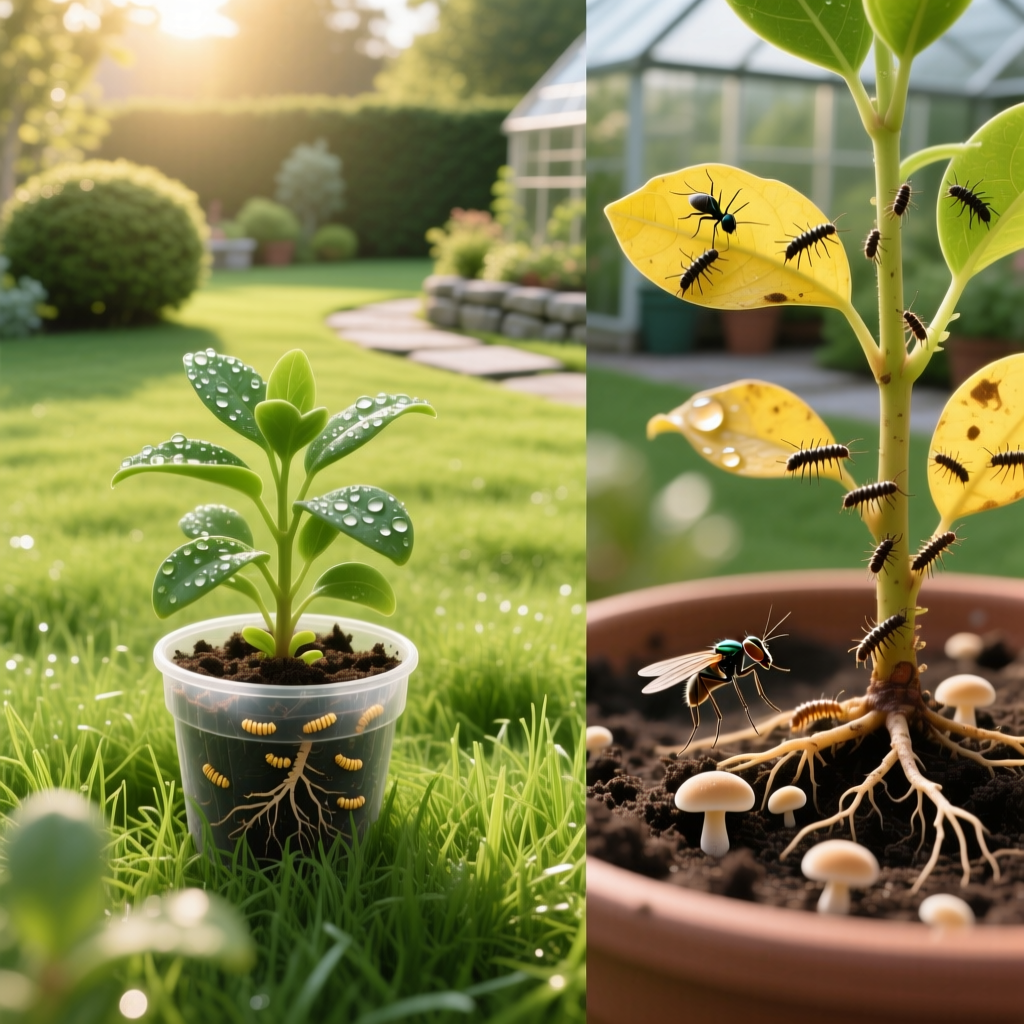
Identify & Eliminate Fungus Gnats in Houseplants &...
Sarah ChenPublished
How to Identify & Eliminate Fungus Gnats in Houseplants & Greenhouses
Fungus gnats are one of the most common and frustrating pests that plague indoor gardeners, houseplant enthusiasts, and greenhouse operators alike. These tiny, dark-colored flies may seem harmless at first glance, but their larvae can wreak havoc on root systems, stunt plant growth, and spread devastating fungal diseases throughout your collection. Whether you are nurturing a few potted plants on your windowsill or managing a full greenhouse operation, understanding how to identify, prevent, and eliminate fungus gnats is essential for maintaining healthy, thriving plants.
Unlike outdoor pests such as grub worms that damage turfgrass, fungus gnats thrive in the moist, organic-rich environments found in potting soil and greenhouse growing media. Their life cycle is closely tied to damp conditions, making overwatered plants and poorly drained soil the perfect breeding ground. The good news is that with the right knowledge and a consistent approach, you can bring a fungus gnat infestation under control without resorting to harsh chemicals. This comprehensive guide walks you through every step of the process, from accurate identification to long-term prevention strategies.
How to Identify Fungus Gnats: Signs, Symptoms & Life Cycle
Before you can effectively eliminate fungus gnats, you need to confirm that they are indeed the pest causing problems in your home or greenhouse. Misidentification can lead to ineffective treatments and wasted effort, so take the time to understand what fungus gnats look like and how they behave.
Adult Fungus Gnat Appearance
Adult fungus gnats are small flies, typically measuring between 1/16 and 1/8 of an inch in length. They have delicate, dark gray or black bodies with long legs and segmented antennae. Their wings are clear or smoky gray and feature a distinctive Y-shaped vein pattern that is visible under magnification. When at rest, they hold their wings flat over their bodies, giving them a somewhat mosquito-like appearance, though they are much smaller and do not bite humans or animals.
One of the most telling behaviors of adult fungus gnats is their weak, erratic flight pattern. You will often see them hovering just above the soil surface of potted plants, darting short distances when disturbed, or running rapidly across leaves and soil rather than flying away. They are most active in the morning and evening and are strongly attracted to light, which is why you may notice them gathering near windows or grow lights.
Larval Stage & Root Damage
The real damage caused by fungus gnats occurs during the larval stage. Fungus gnat larvae are tiny, translucent to white worm-like creatures with shiny black head capsules. They measure about 1/4 inch when fully mature and live in the top two to three inches of soil, where they feed on fungi, algae, decaying organic matter, and, critically, plant root hairs and tender young roots.
When populations are high, larvae can cause significant root damage, leading to symptoms that include:
- Yellowing leaves that may be mistaken for nutrient deficiencies or overwatering
- Wilting despite adequate soil moisture
- Stunted or slowed growth compared to healthy plants
- Leaf drop, particularly in younger foliage
- Damping-off disease in seedlings, causing stems to collapse at the soil line
- Poor overall plant vigor and reduced flowering or fruiting
Seedlings and young plants are especially vulnerable because their root systems are small and cannot tolerate extensive feeding damage. In greenhouse settings, fungus gnat larvae have been linked to the spread of soil-borne pathogens such as Fusarium, Pythium, and Thielaviopsis, making them not just a direct pest but also a vector for serious plant diseases.
Understanding the Fungus Gnat Life Cycle
A thorough understanding of the fungus gnat life cycle is crucial for timing your control efforts effectively. The complete life cycle from egg to adult takes approximately three to four weeks, depending on temperature and environmental conditions.
- Egg stage (4-6 days): Adult females lay up to 200 tiny, oval, translucent eggs in moist soil crevices, usually near the surface where organic matter is abundant.
- Larval stage (10-14 days): Larvae hatch and begin feeding immediately. They go through four instars, growing larger with each stage. This is the most destructive phase.
- Pupal stage (3-6 days): Larvae spin silken cocoons in the soil and transform into adults. Pupae are typically found in the upper layer of the growing medium.
- Adult stage (7-10 days): Adults emerge, mate, and begin the cycle anew. Females can begin laying eggs within one to two days of emerging.
Because multiple generations can overlap, you will often find all life stages present simultaneously in an infested plant. This is why a single treatment is rarely sufficient and why integrated, ongoing control measures are necessary for complete elimination.
Prevention Strategies: Keeping Fungus Gnats Out of Your Plants & Greenhouse
As with most pest problems, prevention is far easier and more cost-effective than elimination. Whether you are maintaining a well-kept landscape or a curated indoor plant collection, these preventive measures will help you avoid fungus gnat infestations before they start.
Water Management: The Foundation of Fungus Gnat Prevention
Overwatering is the single biggest factor contributing to fungus gnat infestations. Fungus gnats require consistently moist soil to complete their life cycle, so allowing the top one to two inches of soil to dry out between waterings creates an inhospitable environment for egg-laying females and kills existing larvae near the surface.
Adopt these watering best practices:
- Water plants from the bottom using saucers or self-watering containers when possible, keeping the soil surface dry
- Use a moisture meter or your finger to check soil moisture before watering
- Ensure all pots have adequate drainage holes and never let plants sit in standing water
- Adjust watering frequency seasonally, reducing irrigation during cooler, darker months when evaporation slows
- Avoid overhead watering in greenhouses, as wet foliage and soil surfaces attract adult gnats
Soil & Growing Media Selection
The type of potting mix you use plays a significant role in fungus gnat prevention. Soilless mixes that contain large amounts of peat moss tend to retain excessive moisture and provide abundant organic matter for larvae to feed on. Consider these alternatives:
- Use well-draining potting mixes amended with perlite, coarse sand, or bark to improve aeration and reduce surface moisture
- Avoid using garden soil or compost in containers, as these often contain fungus gnat eggs and larvae
- Store unused potting soil in sealed containers to prevent contamination
- Pasteurize or sterilize reused potting soil by baking it at 180°F for 30 minutes before use
- In greenhouse settings, consider using growing media such as rockwool, coconut coir, or expanded clay pellets that are less attractive to fungus gnats
Sanitation & Environmental Controls
Good sanitation practices are especially critical in greenhouse environments where large numbers of plants are grown in close proximity. Remove dead leaves, fallen flowers, and decaying plant material from soil surfaces promptly, as these provide food sources for larvae and attract egg-laying adults. Clean and disinfect benches, floors, and tools regularly to eliminate algae and fungal growth that serve as additional food sources.
Install fine-mesh insect screens on greenhouse vents, doors, and windows to prevent adult gnats from entering from outside. In homes, check new plants carefully before bringing them indoors and quarantine them for at least two weeks to ensure they are pest-free. This simple step can prevent a single infested plant from spreading gnats throughout your entire collection, much like how early detection of chinch bugs in lawns prevents widespread turf damage.
Physical Barriers & Top Dressings
Adding a physical barrier on top of your potting soil is one of the simplest and most effective preventive measures. A layer of material that dries quickly and lacks organic content prevents adult females from accessing the moist soil below to lay eggs. Effective top dressing options include:
- One-quarter to one-half inch of coarse sand or aquarium gravel
- A thin layer of diatomaceous earth (food grade), which also has insecticidal properties
- Decorative moss or fine bark chips, though these must be monitored for moisture retention
- Perlite spread across the soil surface
DIY & Natural Solutions to Eliminate Fungus Gnats
If prevention measures have not been enough and you are dealing with an active infestation, there are numerous effective do-it-yourself and natural control methods available. The most successful approach combines strategies that target both adult gnats and larvae simultaneously, breaking the life cycle at multiple points.
Yellow Sticky Traps for Adult Monitoring & Control
Yellow sticky traps are among the most effective tools for managing adult fungus gnats. The bright yellow color attracts adult flies, which become stuck to the adhesive surface upon contact. While sticky traps alone will not eliminate an infestation, they serve two critical functions: they reduce the number of egg-laying adults and provide a visual monitoring tool to gauge the severity of your problem and track the effectiveness of your treatments over time.
Place sticky traps horizontally on the soil surface or vertically on stakes inserted into the pot, positioned just above the plant canopy. Replace traps when they become covered with insects or lose their stickiness. In greenhouses, deploy traps at a rate of one per every 50 to 100 square feet for monitoring purposes, and increase density for mass trapping.
Hydrogen Peroxide Soil Drench
A hydrogen peroxide soil drench is a popular and effective DIY treatment that kills fungus gnat larvae on contact while also helping to oxygenate the soil and suppress fungal growth. Use standard 3% hydrogen peroxide, which is available at most pharmacies and grocery stores.
Mix one part 3% hydrogen peroxide with four parts water. Allow the top inch of soil to dry, then water the plant thoroughly with the solution, ensuring it penetrates the root zone where larvae are feeding. You may see bubbling on the soil surface as the peroxide reacts with organic matter; this is normal and harmless to most established plants. Repeat the treatment every five to seven days for two to three applications to catch newly hatched larvae.
This method is safe for most houseplants and greenhouse crops, but it is wise to test on a small area first with sensitive species. Seedlings and very young plants may be more susceptible to root irritation, so use a slightly more diluted solution for these.
Beneficial Nematodes (Steinernema feltiae)
Beneficial nematodes are microscopic, soil-dwelling worms that actively seek out and parasitize fungus gnat larvae. Steinernema feltiae is the species most effective against fungus gnats, and it is widely available from garden centers and online biological control suppliers. This is one of the most powerful biological controls available and is used extensively in professional greenhouse operations worldwide.
To apply nematodes, mix them with water according to the product instructions and drench the soil of affected plants. The nematodes enter the larvae through natural body openings, release bacteria that kill the host within two to three days, and then reproduce inside the cadaver, releasing new generations of nematodes to continue hunting. For best results:
- Apply when soil temperatures are between 55°F and 85°F
- Keep the soil consistently moist for at least two weeks after application
- Store nematodes in the refrigerator and use them before the expiration date
- Apply in the evening or on cloudy days to avoid UV damage to the nematodes
- Make two applications spaced two weeks apart for severe infestations
Bacillus thuringiensis israelensis (BTI)
BTI is a naturally occurring soil bacterium that produces toxins lethal to the larvae of fungus gnats, mosquitoes, and black flies while being completely harmless to humans, pets, beneficial insects, and plants. It is commonly sold in the form of mosquito dunks or granules, which can be crumbled and sprinkled on the soil surface or dissolved in water for a soil drench.
To use BTI for fungus gnat control, break a mosquito dunk into small pieces and place them in your watering can. Let them soak for several hours or overnight, then use the bacteria-infused water to irrigate your plants. The larvae ingest the BTI spores while feeding, and the toxins disrupt their digestive systems, killing them within a few days. Repeat applications every two to three weeks until the infestation is resolved.
Neem Oil & Insecticidal Soaps
Neem oil, derived from the seeds of the neem tree (Azadirachta indica), acts as both an insecticide and a fungicide, making it a versatile tool in the fight against fungus gnats. When used as a soil drench, neem oil is absorbed by plant roots and acts as a systemic insecticide, disrupting the feeding and development of larvae. As a foliar spray, it repels adult gnats and can kill them on contact.
Mix cold-pressed neem oil with water and a small amount of mild liquid soap (as an emulsifier) according to product directions. Apply as a soil drench every seven to fourteen days. For added effectiveness, combine neem oil treatments with yellow sticky traps to target adults simultaneously. Insecticidal soaps can also be sprayed directly on adult gnats to kill them on contact, though this requires thorough coverage and repeated applications.
Cinnamon & Chamomile Tea: Natural Fungicides
Since fungus gnat larvae feed heavily on fungi and algae in the soil, reducing these food sources can help suppress populations. Cinnamon is a natural fungicide that can be sprinkled on the soil surface to inhibit fungal growth. Simply dust a thin layer of ground cinnamon over the top of the soil in affected pots, reapplying after watering.
Brewed chamomile tea, cooled to room temperature, can also be used as a mild antifungal soil drench. While these methods are not powerful enough to eliminate a severe infestation on their own, they work well as complementary treatments alongside more targeted controls, particularly for prevention and maintenance of healthy soil conditions.
Advanced & Chemical Control Options for Severe Infestations
When natural and DIY methods have not provided adequate control, or when you are dealing with a severe infestation in a greenhouse or large plant collection, stronger interventions may be necessary. The following options range from reduced-risk biological products to conventional chemical treatments.
Pyrethrin-Based Sprays
Pyrethrins are natural insecticides derived from chrysanthemum flowers that are effective against adult fungus gnats on contact. They break down quickly in the environment, typically within one to two days, making them a lower-risk option compared to synthetic alternatives. Spray pyrethrin-based products directly on adult gnats and on soil surfaces where they rest, taking care to follow all label instructions and avoid application when beneficial pollinators are active.
Keep in mind that pyrethrins primarily target adults and have limited effect on larvae protected within the soil. For comprehensive control, combine pyrethrin sprays with larvicidal treatments such as BTI or beneficial nematodes. This integrated approach mirrors the multi-pronged strategies used to manage armyworms in lawns, where targeting multiple life stages is essential for lasting results.
Systemic Insecticides
For extreme infestations that resist other treatments, systemic insecticides containing active ingredients such as imidacloprid or dinotefuran can be applied as soil drenches or granules. These products are absorbed by the plant roots and distributed throughout the plant tissues, killing larvae that feed on roots and providing extended protection for several weeks.
Systemic insecticides should be used as a last resort and only on ornamental plants. Never use them on edible crops or herbs intended for consumption. Always read and follow the product label carefully, wear appropriate protective equipment, and keep treated plants away from children and pets until the product has been fully absorbed. Consider the environmental impact of these products, particularly their potential effects on pollinators, and use them sparingly and responsibly.
Greenhouse-Specific Strategies
Greenhouse growers face unique challenges with fungus gnats due to the warm, humid conditions and high plant density that favor rapid population growth. Professional-level integrated pest management (IPM) strategies for greenhouses include:
- Implementing a regular scouting program with yellow sticky traps placed throughout the facility to detect infestations early
- Establishing banker plant systems with beneficial insects such as Hypoaspis miles (predatory soil mites) that feed on fungus gnat larvae and pupae
- Introducing Atheta coriaria (rove beetles), which are aggressive predators of fungus gnat eggs, larvae, and pupae
- Using automated irrigation systems with moisture sensors to prevent overwatering across large growing areas
- Rotating biological control agents with targeted chemical treatments to prevent resistance development
- Maintaining detailed records of pest pressure, treatments applied, and outcomes to refine management strategies over time
When to Call a Professional Pest Control Service
While most fungus gnat infestations can be managed with the DIY and natural methods described above, there are situations where professional intervention is warranted. Knowing when to escalate to expert help can save you time, money, and the loss of valuable plants.
Signs You Need Professional Help
Consider contacting a licensed pest control professional or a horticultural consultant if you experience any of the following:
- Persistent infestations that return repeatedly despite consistent application of multiple control methods over several weeks
- Infestations that have spread throughout an entire greenhouse or large indoor plant collection and are causing significant economic damage
- Suspected secondary infections with soil-borne pathogens such as Pythium or Fusarium that require professional diagnosis and treatment
- Inability to identify the pest with certainty, as other insects such as shore flies or moth flies can resemble fungus gnats but require different management approaches
- Concerns about pesticide safety and proper application in homes with children, pets, or individuals with chemical sensitivities
A professional can provide accurate pest identification, develop a customized IPM plan, and apply commercial-grade products that are not available to consumers. They can also assess environmental factors such as irrigation practices, ventilation, and drainage that may be contributing to recurring problems. Just as professional lawn aeration and care services can rejuvenate struggling turf, professional pest management can restore health to your plant collection.
Choosing the Right Professional
When selecting a pest control provider for fungus gnat issues, look for companies or consultants with specific experience in horticultural or greenhouse pest management rather than general household pest control. Ask about their approach to integrated pest management, their familiarity with biological control agents, and whether they offer ongoing monitoring services. Request references from other growers or homeowners who have dealt with similar infestations, and ensure that any professional you hire is properly licensed and insured in your area.
Frequently Asked Questions About Fungus Gnats
Do fungus gnats bite humans or pets?
No, fungus gnats do not bite humans or pets. Adult fungus gnats lack the mouthparts necessary for biting and feed only on liquids such as nectar and water. They are a nuisance pest rather than a health threat, though their presence in large numbers can be irritating and their larvae can cause significant damage to plants. If you are experiencing bites from small flying insects, the culprit is more likely to be biting midges, mosquitoes, or another species entirely, and you may want to explore mosquito control strategies for your yard.
Can I use apple cider vinegar traps to catch fungus gnats?
Apple cider vinegar traps are effective for fruit flies but are generally less effective for fungus gnats, which are not strongly attracted to fermentation odors. Fungus gnats are far more attracted to the color yellow and to the moist soil environments where they breed. Yellow sticky traps placed near the soil surface will catch significantly more fungus gnats than vinegar traps. However, if you are unsure whether you are dealing with fruit flies or fungus gnats, setting out both types of traps can help with identification based on which trap catches more insects.
How long does it take to get rid of a fungus gnat infestation completely?
With consistent and comprehensive treatment, most fungus gnat infestations can be brought under control within two to four weeks. The key is to target both adults and larvae simultaneously and to continue treatments for at least one full life cycle (approximately three to four weeks) after the last adult is observed. Breaking the treatment cycle too early is the most common reason for recurring infestations. Remember to maintain preventive measures such as proper watering practices and soil top dressings indefinitely to prevent re-infestation from new plants or contaminated soil.
Will repotting my plants get rid of fungus gnats?
Repotting can be an effective strategy for severely infested plants, particularly when combined with other control measures. Remove the plant from its pot, gently shake off as much of the infested soil as possible, and rinse the roots under lukewarm water to dislodge larvae and eggs. Repot the plant in fresh, sterile potting mix and a clean or new container. However, repotting alone will not eliminate adult gnats that are still flying around your home or greenhouse, so you must also use sticky traps and other adult control measures. Additionally, repotting is stressful for plants and should be done during the active growing season when plants can recover more quickly.
Are fungus gnats the same as fruit flies or drain flies?
No, fungus gnats are a distinct species from fruit flies and drain flies, though they are frequently confused due to their similar size and general appearance. Fungus gnats (family Sciaridae) are dark-colored, have long legs and antennae, and are typically found near potted plants and damp soil. Fruit flies (Drosophila species) are tan or brown with red eyes and are attracted to ripening fruit and fermenting organic matter in kitchens. Drain flies (family Psychodidae) are fuzzy, moth-like insects with rounded wings and are found near drains and sewage areas. Correct identification is important because each pest requires different control strategies. If you are dealing with outdoor flying pests near your lawn or garden, our pest control guides can help you identify and manage a wide range of common insects.
What is the difference between fungus gnats and shore flies?
Shore flies (family Ephydridae) are commonly found in greenhouses and are often mistaken for fungus gnats, but they have important differences. Shore flies are slightly larger, more robust, and darker in color with short antennae and distinctive white spots on their wings. Unlike fungus gnats, shore flies are strong fliers and are not attracted to yellow sticky traps to the same degree. Shore fly larvae feed on algae rather than plant roots, so they cause less direct plant damage, but their fecal spots on leaves can be unsightly and they can still spread plant diseases. Shore fly management focuses primarily on eliminating algae growth through improved sanitation and reduced moisture, rather than the larvicidal treatments used for fungus gnats. Understanding these differences ensures you apply the correct control methods for your specific pest problem.
By combining accurate identification, consistent prevention practices, and targeted treatment strategies, you can successfully eliminate fungus gnats from your houseplants and greenhouse and enjoy a healthy, thriving plant collection free from these persistent pests. Stay vigilant, monitor regularly with sticky traps, and maintain the cultural practices that make your growing environment inhospitable to fungus gnats in the first place. For more tips on maintaining healthy landscapes and gardens, explore our lawn care resources and comprehensive pest control guides.
