
Pest Control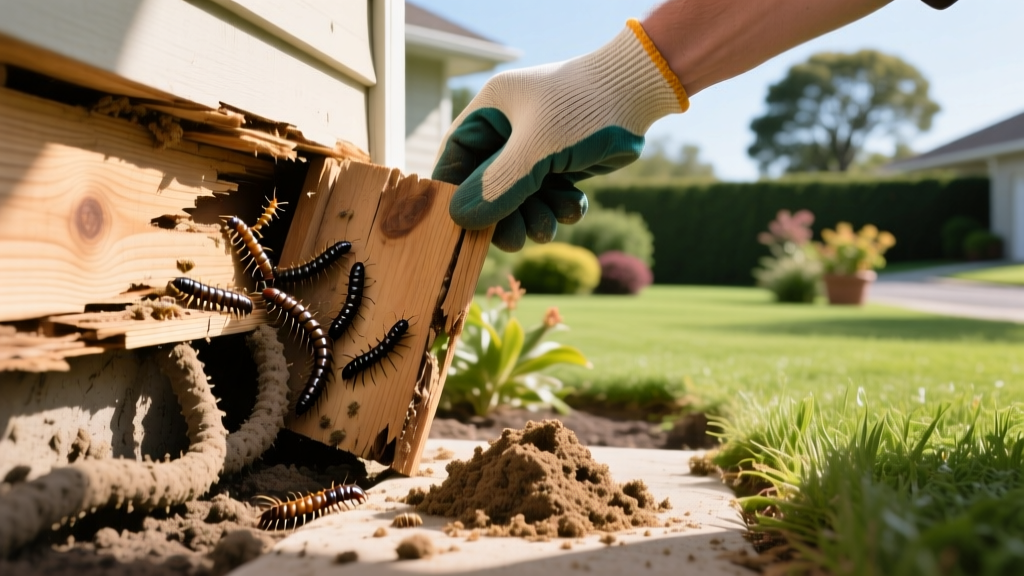
How to Identify and Eliminate the Termite Bug in Your Yard
Decoding the 'Termite Bug': What You Are Actually Fighting
When homeowners notice hollow-sounding wood or mysterious mud tubes creeping up their foundation, they often begin searching for the "termite bug." However, in the pest control industry, we don't deal with just one generic insect. The vast majority of yard and structural damage in North America is caused by the Eastern Subterranean Termite (Reticulitermes flavipes). Unlike drywood termites that live entirely inside the timber they consume, subterranean termites nest deep in the soil, requiring constant contact with ground moisture to survive. They build intricate foraging tunnels through your yard to reach wooden fence posts, deck supports, and ultimately, your home's sill plates.
According to the Environmental Protection Agency (EPA), termites cause billions of dollars in structural damage annually, much of which originates from unchecked colonies thriving in moist, wood-rich yard environments. Defending your property requires shifting your focus from the visible wood damage to the hidden soil networks beneath your lawn.
Termite Bug vs. Carpenter Ant: The Backyard Identification Matrix
Before purchasing expensive termiticides, you must confirm the culprit. Swarming season (typically spring) often brings winged reproductive termites (alates) to the surface, which are frequently mistaken for carpenter ants. Misidentification leads to ineffective treatments. Use this matrix to verify your pest:
| Physical Trait | Subterranean Termite | Carpenter Ant |
|---|---|---|
| Waist | Broad, uniform connection between thorax and abdomen | Narrow, pinched (wasp-like) waist |
| Antennae | Straight, bead-like (moniliform) | Elbowed (geniculate) with a distinct bend |
| Wings (if present) | Two pairs of equal length, milky white, easily broken | Two pairs, front wings longer than hind wings, tinted brown |
| Frass (Debris) | Soil and mud packed into galleries | Sawdust-like wood shavings pushed out of kick holes |
The 6x6 Trench Method: DIY Liquid Soil Barrier Application
If you have confirmed a subterranean termite bug presence in your yard, the most effective immediate defense is a non-repellent liquid soil barrier. Non-repellents, specifically those utilizing Fipronil, do not kill on contact. Instead, foraging termites pass through the treated soil, pick up the active ingredient, and transfer it to the colony through trophallaxis (food sharing), eventually collapsing the entire nest.
WARNING: Never use repellent termiticides (like Bifenthrin) for subterranean soil treatments. Repellents merely force the colony to find an untreated gap in your yard's perimeter, potentially pushing them directly into your home's foundation.
The industry-standard product for DIY application is Taurus SC (9.1% Fipronil). A standard 20 oz bottle costs between $110 and $130 and treats approximately 60 linear feet of foundation.
Step-by-Step Trenching Protocol
- Measure the Perimeter: Calculate the linear footage of your foundation. For a 200-foot perimeter, you will need roughly four 20 oz bottles of Taurus SC.
- Dig the Trench: Using a trenching shovel, dig a continuous trench exactly 6 inches deep and 6 inches wide directly against the foundation wall. Remove all loose soil and debris from the bottom of the trench.
- Mix the Solution: The standard application rate is 0.8 fluid ounces of Taurus SC per gallon of water. For every 10 linear feet of trench, you must apply 4 gallons of mixed solution.
- Apply and Backfill: Pour the mixed solution evenly into the trench. As the liquid absorbs, backfill the trench with the excavated soil, mixing the remaining dry dirt with any surface puddles to ensure a continuous treated zone.
- Drill Concrete Slabs: If your yard features concrete patios or walkways abutting the house, you must drill 1/2-inch holes through the concrete every 12 inches, inject the solution beneath the slab, and seal the holes with concrete patch.
Bait Stations vs. Liquid Barriers: Choosing Your Defense
While liquid trenching provides immediate colony elimination, baiting systems offer long-term monitoring and targeted eradication. According to PestWorld, the choice between these methods depends heavily on your yard's soil composition and landscaping features.
Liquid Soil Barriers (e.g., Taurus SC, Dominion 2L)
- Pros: Kills the colony within 30 to 90 days; creates an immediate, continuous chemical shield; highly effective in dense clay soils where termites travel predictably.
- Cons: Labor-intensive trenching; requires drilling through hardscaping; degrades over 5 to 7 years requiring reapplication.
In-Ground Baiting Systems (e.g., Advance Termite Bait System)
- Pros: Minimal soil disruption; ideal for yards with extensive root systems, wells, or French drains where liquid pooling is dangerous; provides ongoing monitoring via untreated wood monitors.
- Cons: Slower colony elimination (can take 3 to 6 months); requires quarterly inspections to replace wood monitors and add active bait (Diflubenzuron) once feeding is detected; higher long-term maintenance costs.
Landscaping Adjustments to Starve the Colony
Chemical treatments will fail if your yard's landscaping continually invites the termite bug back to your foundation. Subterranean termites require a highly specific microclimate: wood moisture content above 20% and constant soil contact. Implement these structural yard defenses:
- The 12-Inch Mulch Gap: Never allow organic mulch (wood chips, pine straw, cedar) to touch your siding or brick veneer. Maintain a strict 12-inch gap of bare soil or gravel between the foundation and any mulch beds. If you must use mulch near the house, switch to inorganic rubber mulch or crushed stone, which do not provide a cellulose food source.
- Grade Correction: Termites thrive in damp soil. Ensure your yard slopes away from the foundation at a minimum grade of 6 inches of drop over the first 10 feet. This prevents water from pooling against the foundation, keeping the soil too dry to support a primary termite nest.
- Stump and Root Removal: Buried tree stumps are the primary incubators for new termite colonies in residential yards. Rent a stump grinder to remove stumps at least 12 inches below the soil surface, and treat the remaining wood chips with a localized borate wood preservative like Bora-Care before covering with topsoil.
- Fix Irrigation Leaks Promptly: A single dripping sprinkler head or leaking hose bib can saturate the soil enough to sustain a satellite termite colony. Audit your irrigation system monthly and replace leaking poly-pipe fittings with brass compression connectors.
When to Call a Professional Exterminator
DIY yard defense is highly effective for preventative trenching and managing isolated outdoor satellite colonies. However, you must hire a licensed pest control professional if you discover mud tubes actively crossing your foundation's brick mortar, or if you find termite frass inside your home's baseboards. Professional exterminators have access to commercial-grade rod-and-drill equipment capable of injecting termiticide deep beneath structural slabs, a task that is physically impossible to replicate with standard consumer trenching tools.

