
Pest Control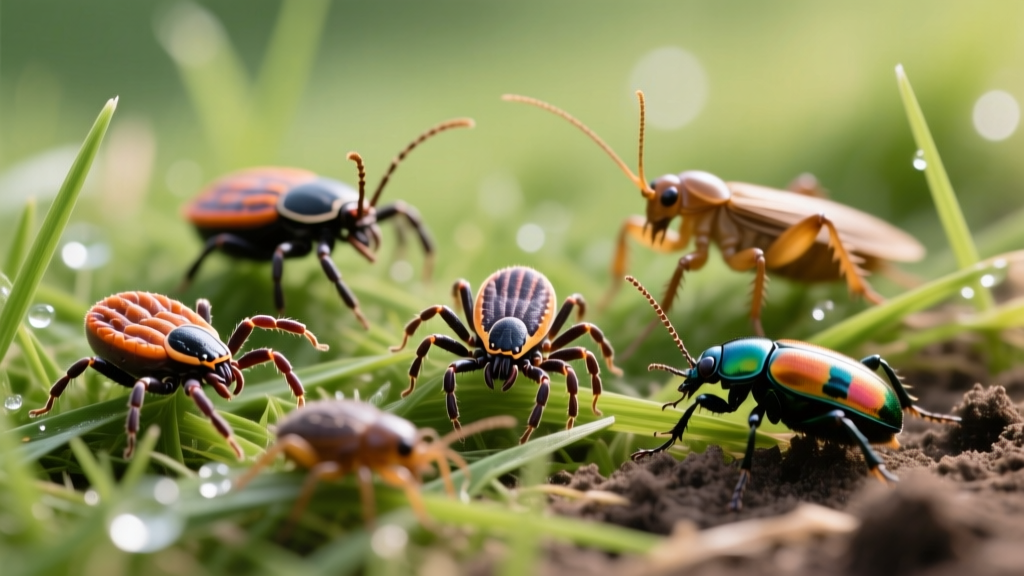
How to Identify Insects That Look Similar to Ticks in Your Yard
The 'Tick Panic' Protocol: Arachnids vs. Insects
Finding a small, dark, oval-shaped bug on your clothing or crawling across your patio furniture triggers an immediate biological alarm. Before you reach for a broad-spectrum pyrethroid spray or book an expensive pest control inspection, you need to confirm the specimen's identity. Misidentifying benign insects as ticks leads to unnecessary chemical exposure and wasted money. According to the Centers for Disease Control and Prevention (CDC), accurate identification is the first critical step in preventing tickborne diseases and managing household pests effectively.
The fundamental rule of thumb relies on basic entomology: ticks are arachnids, not insects. Adult and nymph ticks possess eight legs, two distinct body segments (the capitulum and idiosoma), and completely lack antennae. Conversely, almost all insects that look similar to ticks possess six legs, three body segments (head, thorax, abdomen), and visible antennae.
⚠️ The Seed Tick Edge Case: Larval ticks (commonly called 'seed ticks') only have six legs. This frequently causes homeowners to misclassify them as insects. To differentiate a seed tick from an insect, look for the absence of antennae and the presence of a distinct, leathery scutum (shield) on its back.
Habitat Mapping: Where Did You Find It?
Before examining the bug under a microscope, map the location where you found it. Habitat is often the fastest way to rule out a tick infestation.
- Leaf Litter, Tall Grass, or Brush: High probability of actual ticks (Ixodes, Amblyomma, or Dermacentor species) or beneficial pseudoscorpions.
- On Poplar, Willow, or Birch Trees: Almost certainly a Poplar Weevil. They do not bite humans or enter homes.
- Inside the Pantry, Attic, or Crawlspace: Likely a Spider Beetle scavenging for dry goods or organic debris.
- On Upholstery, Mattresses, or Pet Beds: High suspicion of Bed Bugs.
- Crawling on a Child's Scalp After Outdoor Play: Head Lice (highly host-specific, will not survive on pets or in yards).
Top 4 Insects That Look Similar to Ticks
Let us break down the specific morphological markers of the most common tick lookalikes so you can confidently identify your specimen.
1. The Poplar Weevil (Cryptorhynchus lapathi)
Poplar weevils are notorious for causing 'tick panic' in the spring and summer. They are roughly 1/4 inch long, dark brown to black, and have a rounded, globular abdomen that closely mimics an engorged tick. The Giveaway: Weevils have a distinct, elongated snout (rostrum) at the front of their head and jointed, elbowed antennae. They feed exclusively on tree bark and wood, posing zero threat to humans or pets.
2. Spider Beetles (Ptinidae Family)
Spider beetles range from 1/16 to 1/4 inch and feature a large, bulbous abdomen with long, spindly legs. When viewed from above, their head is often tucked under the thorax, making them look like a two-segmented tick. The Giveaway: They have long, whip-like antennae and are typically found indoors near stored food, bird nests, or rodent droppings in attics. They do not bite.
3. Bed Bugs (Cimex lectularius)
Unfed bed bugs are flat, but after a blood meal, they become engorged, elongated, and reddish-brown—strikingly similar to a fed tick. The Giveaway: Bed bugs have six legs, prominent antennae, and a distinct segmented abdomen. Furthermore, bed bug bites typically appear in clusters or linear 'breakfast, lunch, and dinner' patterns, whereas tick bites are usually singular and may feature a localized rash or bullseye.
4. Pseudoscorpions (Chelifer cancroides)
While technically an arachnid (eight legs) rather than an insect, the pseudoscorpion is frequently mistaken for a bizarre, deformed tick. They are tiny (1/8 to 1/4 inch), tear-drop shaped, and brown. The Giveaway: They possess large, prominent front pincers (pedipalps). Pseudoscorpions are highly beneficial predators that eat carpet beetle larvae, ants, and even actual ticks. Never kill a pseudoscorpion.
Morphological Comparison Matrix
Use this quick-reference table when examining your trapped specimen under magnification.
| Specimen | Leg Count | Antennae | Body Shape | Bites Humans? |
|---|---|---|---|---|
| Adult Tick | 8 | None | Flat, leathery, oval | Yes (Blood) |
| Poplar Weevil | 6 | Elbowed, clubbed | Globular with snout | No |
| Spider Beetle | 6 | Long, whip-like | Bulbous abdomen | No |
| Bed Bug | 6 | Short, 4-segmented | Flat or engorged oval | Yes (Blood) |
| Pseudoscorpion | 8 | None | Teardrop with pincers | No (Venomous to prey only) |
Step-by-Step: How to Safely Capture and Identify the Specimen
Do not crush the bug. Crushing destroys the morphological features required for identification and, if it is a tick, can smear pathogens onto your skin. Follow this protocol for safe capture.
- Isolate the Specimen: Use a clear plastic cup or a glass to trap the bug against a flat surface. Slide a piece of stiff cardstock underneath.
- The Tape Method: For tiny specimens like seed ticks or spider beetles, gently press a piece of clear Scotch tape over the bug, trapping it against the surface. Fold the tape over to create a sealed pouch.
- Freeze for Examination: Place the taped specimen or capped vial in the freezer for 15 minutes. This halts movement without destroying the physical structure (unlike rubbing alcohol, which can cause some insects to curl or discolor).
- Magnify: Use a digital microscope or a clip-on smartphone macro lens (such as the Moment Macro Lens or ShiftCam LensUltra) to achieve 10x to 15x magnification. Count the legs and check the head for antennae.
- Consult Experts: If you cannot identify it, submit the clear macro photo to your local university cooperative extension office or use the EPA's Pest Identification resources for guidance.
Targeted Treatment: When to Act vs. When to Ignore
Once identification is confirmed, your response should be strictly proportional to the threat level.
Scenario A: You Confirmed Spider Beetles in the Pantry
Spider beetles indicate a sanitation or stored-product issue. Action: Discard all infested dry goods (flour, grains, pet food). Vacuum pantry shelves thoroughly, paying attention to cracks and crevices. Apply a residual insecticide labeled for indoor use, such as Alpine WSG (active ingredient: dinotefuran), to baseboards and voids. Warning: Never apply chemical sprays directly to food preparation surfaces.
Scenario B: You Found Poplar Weevils on Your Trees
These are a nuisance but rarely cause fatal damage to mature trees. Action: Ignore them. If you have young, vulnerable poplar or willow saplings suffering from heavy weevil boring, apply a systemic soil drench containing Imidacloprid (e.g., BioAdvanced 12 Month Tree and Shrub Protect & Feed) in early spring before adult emergence. Expect to pay around $45-$60 for a concentrate that treats multiple trees.
Scenario C: You Confirmed Bed Bugs
This requires immediate, aggressive intervention. DIY foggers are entirely ineffective against bed bugs and will only scatter them deeper into wall voids. Action: Wash all bedding on high heat (minimum 120°F for 30 minutes). Encase mattresses in bed-bug-proof encasements. Hire a licensed pest control professional for a targeted heat treatment or application of CrossFire (metofluthrin, clothianidin, and PBO), which typically costs between $800 and $1,500 for a standard single-family home.
Scenario D: It Was a Pseudoscorpion or Weevil
Action: Relocate the specimen outside. Pseudoscorpions are excellent allies in the garden, naturally preying on the larvae of pests that actually damage your landscape. No chemical treatment is necessary or recommended.
Pro-Tip for Tick Prevention: If your initial panic was caused by finding actual ticks in your yard, skip the broadcast spraying of your entire lawn. Instead, create a 3-foot-wide barrier of wood chips or gravel between your lawn and wooded edges, and apply a targeted perimeter spray of Lambda-cyhalothrin (e.g., Demand CS) strictly to the brush line and shady perimeter zones.

