
Pest Control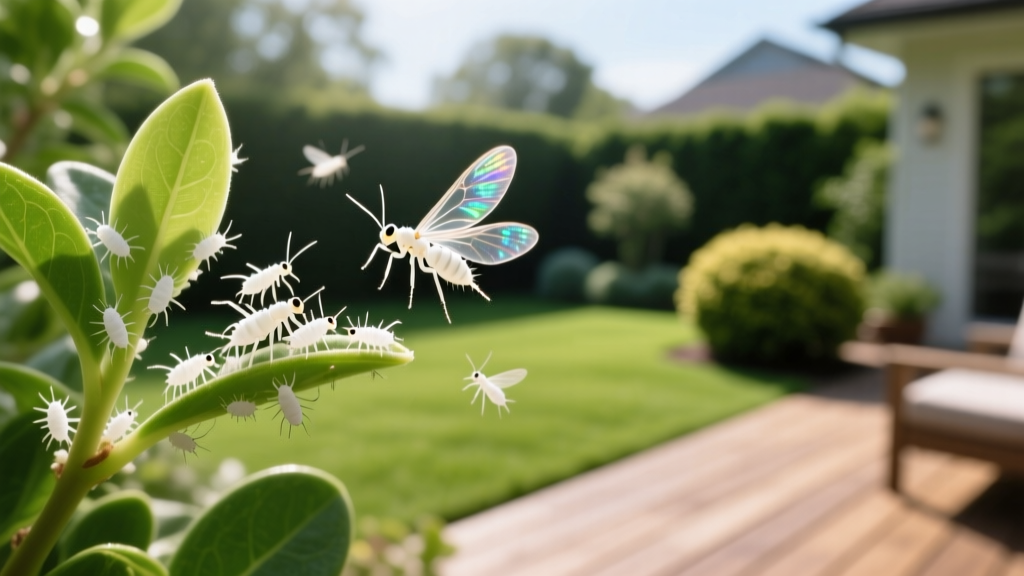
What Are These Little White Bugs Flying Around My Plants?
Identifying the Culprit: What Are These Little White Bugs Flying Around?
If you have noticed a cloud of tiny, white, moth-like insects erupting from your garden beds or houseplants when you brush past them, you are almost certainly dealing with whiteflies (family Aleyrodidae). However, accurate identification is critical before applying any treatment, as misidentifying the pest leads to wasted money and ineffective chemical applications. While whiteflies are the primary suspect for the query 'what are these little white bugs flying around', a few other pests share similar visual characteristics.
The Suspect Lineup: Visual & Behavioral Comparison
| Pest Species | Size & Appearance | Flight Pattern | Primary Location | Key Identifier |
|---|---|---|---|---|
| Whiteflies (Aleyrodidae) | 1-2mm, white powdery wings, triangular body | Erratic, short bursts when disturbed | Undersides of new, tender leaves | Leaves a sticky honeydew residue; causes sooty mold |
| Woolly Aphids (Eriosomatinae) | 2-3mm, covered in white waxy filaments | Sluggish, rarely fly unless migrating | Stems, branches, and root crowns | Looks like fuzzy white cotton on woody stems |
| Fungus Gnats (Sciaridae) | 2-5mm, dark gray/black bodies, clear wings | Weak, hovering, zig-zag flight near soil | Top 2 inches of potting soil | Dark color (not white); larvae damage roots |
| Planthoppers (Fulgoroidea) | 3-10mm, varies, some have white waxy tails | Powerful jumpers, fly short distances | Stems and leaf midribs | Hold wings like a tent over their back; jump when approached |
According to the Clemson Cooperative Extension, the two most destructive whitefly species in North America are the Greenhouse Whitefly (Trialeurodes vaporariorum) and the Silverleaf Whitefly (Bemisia tabaci). The Silverleaf variant is particularly devastating to vegetable crops like tomatoes, squash, and poinsettias, and can be identified by its wings, which are held flatter against the body compared to the tent-like posture of the Greenhouse whitefly.
The Whitefly Lifecycle and Damage Mechanics
Understanding the lifecycle of the whitefly is mandatory for breaking the infestation cycle. Whiteflies undergo incomplete metamorphosis, and their reproductive rate is heavily temperature-dependent. At optimal temperatures of 80°F to 90°F (27°C to 32°C), a single female can lay up to 400 eggs over her 30-to-60-day lifespan.
Warning: The Honeydew Vector
Whiteflies do not just damage plants by sucking phloem sap, which causes leaf yellowing (chlorosis) and stunted growth. Their primary secondary damage comes from excreting honeydew—a sugar-rich waste product. This honeydew coats the leaves and acts as a breeding medium for sooty mold (Capnodium spp.), a black fungus that blocks photosynthesis and can rapidly kill a stressed plant.
Whiteflies do not just damage plants by sucking phloem sap, which causes leaf yellowing (chlorosis) and stunted growth. Their primary secondary damage comes from excreting honeydew—a sugar-rich waste product. This honeydew coats the leaves and acts as a breeding medium for sooty mold (Capnodium spp.), a black fungus that blocks photosynthesis and can rapidly kill a stressed plant.
The Four Nymphal Instars
- First Instar (Crawler): Hatches from the egg in 5-10 days. This is the only mobile nymph stage. It wanders for a few hours before inserting its mouthparts into the leaf and becoming sessile.
- Second & Third Instars: The nymph molts, leaving behind a white, waxy exoskeleton. It remains flat against the leaf, feeding continuously and looking like a tiny, translucent scale insect.
- Fourth Instar (Pupa): Often called the 'pupal' stage, the nymph develops distinct red eyes and a thicker, more opaque waxy coating before the adult emerges.
Because contact sprays cannot penetrate the waxy coating of the later instars or the eggs, treatment protocols must target the vulnerable 'crawler' stage or utilize systemic/biological controls.
Step-by-Step Eradication Protocol
Eradicating whiteflies requires a multi-phased approach. Relying on a single chemical application will fail due to the overlapping generations present on a single leaf. The University of Florida IFAS recommends an Integrated Pest Management (IPM) strategy combining physical, biological, and targeted chemical controls.
Phase 1: Physical Reduction (Days 1-3)
- High-Pressure Water Spray: Use a hose nozzle with a flat-jet setting to blast the undersides of leaves early in the morning. This physically dislodges adults and early-stage crawlers.
- Yellow Sticky Traps: Whiteflies are highly attracted to the yellow light spectrum (specifically 550nm wavelength). Hang 3x5 inch yellow sticky cards (cost: $8-$12 for a 20-pack) at the plant canopy level. This won't eliminate the population but will trap mating adults and serve as a monitoring tool.
- Pruning: Severely infested leaves that are heavily coated in sooty mold or whitefly pupae should be pruned and sealed in a plastic bag immediately. Do not compost these clippings.
Phase 2: Biological & Organic Controls (Days 4-14)
For outdoor gardens and greenhouses, introducing natural predators is the most sustainable long-term solution.
- Encarsia formosa Parasitic Wasps: These microscopic, non-stinging wasps lay their eggs inside whitefly pupae. The wasp larva consumes the whitefly from the inside out, turning the pupa black. Cost & Application: Approximately $35 to $45 for a batch of 1,000 wasps shipped on perforated cards. Hang the cards directly on the lower branches of infested plants.
- Insecticidal Soap: Potassium salts of fatty acids (e.g., Bonide Insecticidal Soap, ~$10) work by dissolving the protective waxy cuticle of the soft-bodied crawlers. Mix according to label directions (usually 2.5 oz per gallon) and spray at dusk to avoid leaf burn and protect foraging bees.
- Neem Oil (Azadirachtin): Cold-pressed neem oil acts as an antifeedant and growth disruptor. Mix 1 to 2 tablespoons of 70% clarified hydrophobic extract of neem oil per gallon of water, adding 1 teaspoon of mild liquid dish soap as an emulsifier. Apply every 7 days for three consecutive cycles.
Phase 3: Chemical Interventions (Severe Infestations)
If organic methods fail to curb the population after 14 days, targeted chemical insect growth regulators (IGRs) are required. Avoid broad-spectrum pyrethroids (like bifenthrin), as they kill beneficial insects and often trigger whitefly resurgences.
- Pyriproxyfen (e.g., Distance Insecticide): An IGR that mimics juvenile hormones, preventing nymphs from maturing into reproducing adults. It is highly effective against the pupal stage. Expect to pay around $40-$50 for a concentrate that yields dozens of gallons of spray.
- Bifenazate (e.g., Floramite): Highly effective for ornamental plants, targeting the nervous system of mites and whiteflies without harming most predatory beneficials.
Pro-Tip: Rotate Active Ingredients
Whiteflies develop chemical resistance rapidly. If you use Pyriproxyfen for the first application, switch to a different mode of action (like Bifenazate or a botanical oil) for the follow-up spray 10 days later to prevent genetic resistance in the surviving population.
Whiteflies develop chemical resistance rapidly. If you use Pyriproxyfen for the first application, switch to a different mode of action (like Bifenazate or a botanical oil) for the follow-up spray 10 days later to prevent genetic resistance in the surviving population.
Prevention Framework: Keeping Them From Returning
Once an infestation is cleared, implementing preventative environmental controls will stop the next generation from establishing.
- Reflective Mulching: Laying aluminum or silver polyethylene reflective mulch around the base of vegetable crops disorients incoming whiteflies. The reflected UV light masks the visual cues of the host plant, reducing landing rates by up to 70%.
- Trap Cropping: Plant Nasturtiums (Tropaeolum majus) near your prized crops. Whiteflies heavily prefer nasturtiums, drawing them away from your tomatoes and brassicas. Inspect and treat the nasturtiums weekly.
- Nitrogen Management: Avoid high-nitrogen synthetic fertilizers (like standard 10-10-10 blends). Excess nitrogen promotes rapid, succulent new leaf growth, which is exactly what whiteflies seek out for egg-laying. Switch to slow-release organic fertilizers (like feather meal or compost) to ensure steady, hardened growth.
Frequently Asked Questions
Are these white bugs harmful to humans or pets?
No. Whiteflies, woolly aphids, and fungus gnats are strictly plant pests. They do not bite, sting, or transmit diseases to humans, dogs, or cats. They are, however, a severe nuisance when they swarm indoors.
Why do I see more white bugs flying in the late afternoon?
Whitefly flight activity is heavily influenced by temperature and light. As the late afternoon sun warms the leaf canopy, their metabolic rate increases, prompting mating flights and dispersal to new host plants.
Can I use a household bug spray on my indoor plants?
Never use standard household aerosol insecticides (like Raid) on houseplants. These products contain solvents and propellants that will cause immediate phytotoxicity (chemical leaf burn) and can contaminate indoor air quality. Stick to ready-to-use indoor insecticidal soaps or neem oil formulations specifically labeled for indoor ornamental use.

