
Pest Control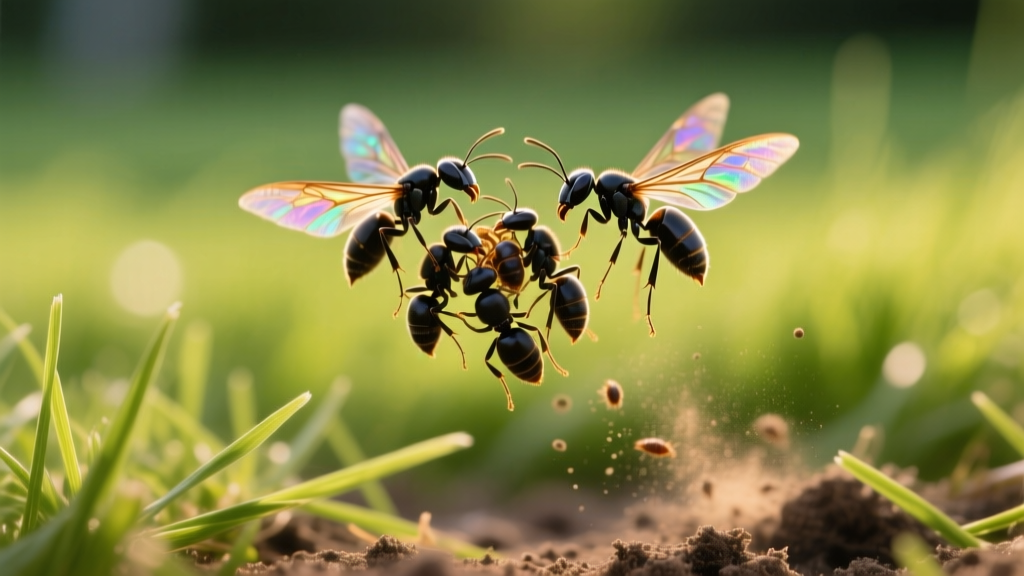
Pictures of Termites With Wings: Identify Swarmers & Defend Yard
Decoding the Visuals: What Pictures of Termites With Wings Reveal
When homeowners search for pictures of termites with wings, they are typically trying to identify alates—the reproductive caste of a termite colony. Finding these insects or their discarded wings on your windowsills, patio, or yard mulch is a critical biological indicator. According to the Environmental Protection Agency (EPA), spotting swarmers means a mature colony (typically three to five years old and containing hundreds of thousands of workers) is actively attempting to expand its territory. The winged termites you see in your yard are merely the tip of the iceberg; the real threat lies in the subterranean workers silently consuming the cellulose in your home's structural timber and landscape features.
Unlike worker termites, which remain hidden underground or inside wood, alates emerge in massive numbers during specific seasonal windows to mate and establish new colonies. If you are comparing pictures of termites with wings to the insects in your yard, you must look closely at three distinct morphological features: their antennae, their waist, and their wing structure.
Swarmer Termites vs. Flying Carpenter Ants
Misidentification is the most common failure point in DIY pest control. Carpenter ants also produce winged swarmers, but their biology and the treatment protocols required to eliminate them are entirely different. Use this comparison matrix to verify your visual ID.
| Anatomical Feature | Swarmer Termites (Alates) | Flying Carpenter Ants |
|---|---|---|
| Antennae | Straight, beaded, and moniliform | Elbowed (bent at a 90-degree angle) |
| Waist (Thorax) | Broad, uniform thickness (no pinch) | Pinched, distinct narrow node between thorax and abdomen |
| Wings | Four wings of equal length, translucent, easily shed | Front wings significantly longer than hind wings, dark/tinted |
| Discarded Wings | Piles of identical, uniform wings near light sources | Rarely shed wings in large, uniform piles |
⚠️ Critical Yard Defense Warning: Never spray over-the-counter aerosol bug killers (like standard Raid) on a termite swarm. This only kills the visible alates, which are already dying post-swarm, and alerts the hidden worker colony to your presence. This causes the workers to retreat deeper into the soil and bypass your DIY treatments, ultimately worsening the structural threat.
Seasonal Swarm Timelines: Know Your Enemy
Matching pictures of termites with wings to the correct species requires understanding their swarming calendars. Different species exploit different environmental triggers to launch their nuptial flights.
- Eastern Subterranean Termites (Reticulitermes flavipes): Swarm during daylight hours from March through May, typically on warm, calm mornings following a significant rainfall.
- Formosan Subterranean Termites (Coptotermes formosanus): A highly aggressive invasive species that swarms at dusk from late May through July. They are attracted to exterior porch lights and streetlamps.
- Drywood Termites (Incisitermes spp.): Swarm in the late summer and early fall (August through November). Unlike subterranean species, they do not require soil contact and will infest attic framing and dry landscape timber directly.
Research from the University of Kentucky Entomology Department highlights that a single mature Eastern Subterranean colony can produce tens of thousands of alates in a single season. However, the survival rate of these swarmers is less than 2% due to predation by birds, ants, and environmental desiccation. The danger is not the swarmers themselves, but the proven presence of the parent colony on your property.
Strategic Yard Defense: Liquid Barriers vs. Bait Systems
Once you have confirmed the presence of swarmers via pictures or physical specimens, you must transition from identification to active yard defense. You have two primary professional-grade options: non-repellent liquid soil barriers and in-ground cellulose bait matrices.
Protocol A: Non-Repellent Liquid Trenching (Termidor SC / Taurus SC)
Liquid termiticides containing 9.1% Fipronil (such as Termidor SC or the generic equivalent Taurus SC) utilize a 'transfer effect.' Worker termites cannot detect the chemical, so they tunnel through the treated soil, pick up the active ingredient on their cuticle, and transfer it to the rest of the colony through grooming and trophallaxis (food sharing).
- Calculate Perimeter: Measure the linear footage of your home's foundation.
- Dig the Trench: Using a trenching shovel, dig a continuous trench 6 inches wide and 6 inches deep directly against the foundation wall.
- Mix the Solution: Dilute the Fipronil concentrate at a rate of 0.8 fluid ounces per gallon of water.
- Apply: Apply exactly 4 gallons of the diluted solution per 10 linear feet of trench. For a 150-foot perimeter, you will need 60 gallons of mixed solution.
- Backfill: Push the excavated soil back into the trench to cap the chemical barrier and prevent surface runoff.
Protocol B: In-Ground Bait Stations (Advance Termite Bait System)
If your yard features extensive hardscaping, concrete patios, or sensitive garden beds where trenching is impossible, bait stations are the superior alternative. The Advance Termite Bait System utilizes a two-stage process: a wood monitoring base to detect foraging workers, followed by a 0.25% Diflubenzuron (chitin synthesis inhibitor) bait cartridge.
Installation Specs: Install stations every 10 feet around the perimeter. Drill through concrete pads using a 2.5-inch masonry hole saw. Inspect and replace the wood monitoring base every 90 days. Once termite activity is confirmed in a station, swap the wood base for the active bait cartridge. Diflubenzuron prevents the termites from molting, leading to colony collapse within 90 to 120 days.
Cost Analysis: DIY vs. Professional Intervention
Understanding the financial commitment is crucial when planning your yard defense strategy after spotting swarmers.
| Treatment Method | DIY Material Cost (Avg. 2000 sq ft home) | Professional Service Cost | Longevity / Warranty |
|---|---|---|---|
| Fipronil Liquid Trench | $180 - $250 | $1,200 - $2,500 | 5 to 10 years in soil |
| Advance Bait Stations | $350 - $500 (Initial + Year 1 bait) | $800 - $1,200 (Annual contract) | Continuous (Requires 90-day monitoring) |
| Drywood Tent Fumigation | Not available for DIY | $2,500 - $5,000+ | No residual protection (0 years) |
Moisture and Mulch Management: The Hidden Catalysts
Chemical and bait treatments will fail if your yard's physical environment continuously invites termite foraging. Termites require high moisture levels to survive and construct their mud tubes. Implement these structural corrections immediately:
- The 6-Inch Mulch Rule: Keep all organic mulch, pine straw, and wood chips at least 6 inches away from your foundation siding. Mulch against siding provides a hidden, moisture-rich bridge over your chemical soil barrier.
- Positive Grading: Ensure your yard slopes away from the foundation at a minimum grade of 1/4 inch per foot for the first 6 feet. Pooling water against the foundation washes away liquid termiticides and creates ideal subterranean nesting conditions.
- Downspout Extensions: Route all gutter downspouts at least 5 feet away from the foundation using corrugated PVC extenders to prevent localized soil saturation.
By combining accurate visual identification with targeted, scientifically backed soil treatments and moisture control, you can neutralize the threat indicated by those winged swarmers and protect your property's structural integrity for decades.

