
Pest Control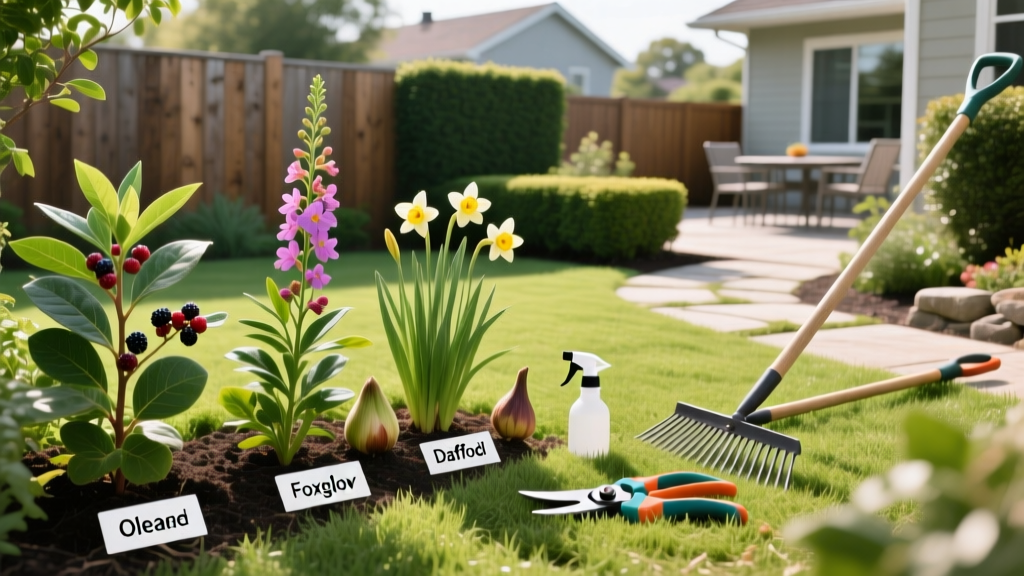
How to Identify the Top 10 Poisonous Plants for Dogs in Your Yard
The Hidden Hazards in Your Landscaping
Designing a beautiful yard often involves selecting vibrant shrubs, ornamental grasses, and flowering perennials. However, for homeowners with dogs, aesthetic choices can inadvertently introduce severe biological hazards. According to the ASPCA Animal Poison Control Center, tens of thousands of pets are exposed to toxic landscaping plants annually. Ingestion can lead to anything from mild gastrointestinal upset to acute hepatic necrosis and fatal cardiac arrhythmias.
This practical guide details the top 10 poisonous plants for dogs commonly found in residential landscapes, provides exact visual identification markers, and outlines step-by-step eradication protocols to secure your yard.
Emergency Protocol: The First 30 Minutes
If you suspect your dog has ingested a toxic plant, do not wait for symptoms to appear. Time is critical for hepatic and cardiac toxins.
- Secure the Sample: Gather the chewed plant material, including leaves, seeds, and flowers, in a ziplock bag. This allows veterinary toxicologists to identify the exact alkaloid or glycoside involved.
- Call the Experts: Contact the Pet Poison Helpline (855-764-7661) or the ASPCA APCC (888-426-4435). Note that consultation fees typically range from $65 to $95, but this provides a customized treatment protocol.
- Avoid Blind Induction: Never administer hydrogen peroxide to induce vomiting unless explicitly instructed by a veterinarian. Caustic plant saps can cause severe secondary esophageal burns during regurgitation.
The Top 10 Poisonous Plants for Dogs: Identification and Toxicity
1. Sago Palm (Cycas revoluta)
Toxic Principle: Cycasin (a hepatotoxic glycoside).
Identification: Features stiff, feather-like dark green fronds radiating from a central, textured brown trunk. Often used as a focal point in xeriscaping.
The Threat: All parts are toxic, but the seeds (nuts) contain the highest concentration of cycasin. Ingestion carries a 50% to 75% mortality rate in dogs without aggressive, immediate IV lipid emulsion therapy and liver support.
2. Oleander (Nerium oleander)
Toxic Principle: Cardiac glycosides (oleandrin).
Identification: An evergreen shrub with narrow, leathery leaves and clusters of pink, white, or red tubular flowers. Commonly planted as a privacy hedge in USDA zones 8-10.
The Threat: Oleander is exceptionally lethal. Ingestion of just one or two leaves can cause fatal ventricular fibrillation and severe bradycardia in a 50-pound dog.
3. Azalea and Rhododendron (Rhododendron spp.)
Toxic Principle: Grayanotoxins.
Identification: Broadleaf evergreens producing massive clusters of bell-shaped spring blooms in purple, pink, or white.
The Threat: Grayanotoxins bind to sodium channels in cell membranes, leading to excessive salivation, vomiting, diarrhea, and in severe cases, central nervous system depression and coma.
4. Lily of the Valley (Convallaria majalis)
Toxic Principle: Convallatoxin (cardiac glycoside).
Identification: A low-growing ground cover featuring broad green leaves and delicate, drooping white bell-shaped flowers.
The Threat: Similar to oleander, it disrupts the heart's electrical system. Even drinking water from a vase containing these flowers can cause dangerous arrhythmias in dogs.
5. Castor Bean (Ricinus communis)
Toxic Principle: Ricin (a highly potent toxalbumin).
Identification: Grown as an annual ornamental for its massive, star-shaped, reddish-green leaves and spiky seed pods.
The Threat: Chewing the spiky seed coat releases ricin, which halts cellular protein synthesis. Symptoms include severe hemorrhagic gastroenteritis, muscle twitching, and seizures.
6. Autumn Crocus (Colchicum autumnale)
Toxic Principle: Colchicine.
Identification: Blooms in the fall with pink or white crocus-like flowers, often emerging without leaves.
The Threat: Colchicine causes delayed, multi-systemic failure. Symptoms may not appear for 24 to 72 hours, ultimately leading to bone marrow suppression and renal failure.
7. Foxglove (Digitalis purpurea)
Toxic Principle: Digitalis glycosides.
Identification: Tall spikes of tubular, spotted flowers (usually purple or white) growing up to 4 feet high, often used in cottage garden borders.
The Threat: Directly affects cardiac muscle contractility. Ingestion results in severe vomiting, weakness, and potentially fatal cardiac arrest.
8. Japanese Yew (Taxus cuspidata)
Toxic Principle: Taxine alkaloids.
Identification: A dense, needle-leaved evergreen shrub producing bright red, berry-like arils in the fall.
The Threat: While the fleshy red aril is non-toxic, the seed inside and the needles are packed with taxines, which cause sudden cardiac arrest, often with no preceding gastrointestinal symptoms.
9. Lantana (Lantana camara)
Toxic Principle: Triterpenoids.
Identification: A sprawling, sun-loving shrub with rough, toothed leaves and flat-topped clusters of multi-colored flowers (yellow, orange, red).
The Threat: Unripe green berries and leaves cause hepatotoxicity and photosensitization. Dogs may experience liver failure and severe skin blistering when exposed to sunlight after ingestion.
10. Tulip and Narcissus Bulbs (Tulipa/Narcissus spp.)
Toxic Principle: Tulipalin A and B; Lycorine.
Identification: Spring-blooming bulbs. The danger lies underground or in newly planted beds where dogs dig.
The Threat: The bulbs contain the highest concentration of toxins. Dogs digging up and chewing freshly planted bulbs will suffer intense oral irritation, hypersalivation, and severe colic.
Dog-Safe Landscaping Alternatives
Removing toxic flora requires replacing them with visually similar, non-toxic alternatives to maintain your yard's aesthetic and ecological balance.
| Toxic Plant to Remove | Dog-Safe Alternative | Visual & Functional Match |
|---|---|---|
| Sago Palm | Boston Fern or Ponytail Palm | Provides similar architectural, feathery texture without cycasin. |
| Oleander Hedge | Viburnum or Camellia | Dense evergreen privacy screening with safe spring blooms. |
| Azalea | Astilbe or Fuchsia | Shade-tolerant shrubs offering vibrant pinks and purples. |
| Lily of the Valley | Sweet Woodruff or Creeping Thyme | Low-growing, dog-safe ground covers that tolerate foot traffic. |
| Tulip Bulbs | Marigolds or Zinnias | Bright, colorful annuals grown from safe seeds or starter plugs. |
Step-by-Step Eradication and Removal Guide
Simply cutting toxic plants down is insufficient; many, like Sago Palms and Oleanders, will regenerate from the root crown or leave toxic debris in the soil. Follow this extraction protocol.
Step 1: Preparation and PPE
Wear heavy-duty nitrile gloves and long sleeves. Plants like Dieffenbachia and Euphorbias (often confused with safe succulents) exude caustic sap that causes contact dermatitis. Have a heavy-duty contractor trash bag ready on-site to prevent dropping toxic leaves onto the grass where your dog plays.
Step 2: Mechanical Extraction (Preferred Method)
For shrubs like Oleander, Japanese Yew, and Azaleas, mechanical removal is the safest option for pet environments.
- Use a 14-inch round-point digging spade to cut a circle 12 to 18 inches around the base of the trunk.
- Sever the lateral roots and lever the root ball out of the soil.
- Sift through the excavated soil to remove any severed root fragments, which can sprout new toxic growth.
Step 3: Chemical Control (For Deep-Rooted Perennials)
If mechanical extraction of a Sago Palm is impossible due to the massive taproot, targeted chemical application is required. Avoid broadcast spraying.
- Organic Option: Apply a 20% acetic acid horticultural vinegar (e.g., Harris 20% Vinegar, approx. $25/gallon) directly to the cut stump immediately after sawing the trunk. Note that this may require 3-4 applications over two weeks.
- Conventional Option: Paint the freshly cut stump with a concentrated triclopyr or glyphosate brush killer (e.g., Roundup Pro Concentrate, approx. $40/gallon). Use a foam brush to apply only to the cambium layer to prevent soil leaching.
Step 4: Safe Disposal
Never compost toxic plants. The composting process does not reliably break down complex alkaloids like taxine or cycasin. Bag all plant material, including fallen leaves and seeds, in sealed plastic bags and dispose of them in your municipal landfill trash, not the green waste bin.
Veterinary Insight: 'Dogs are opportunistic foragers. If you must keep a mildly toxic plant like a tomato (leaves/stems contain solanine) or a hydrangea (contains cyanogenic glycosides), elevate them in raised cedar planter boxes at least 36 inches high, and apply a pet-safe bitter deterrent spray like Grannick's Bitter Apple ($12/bottle) to the lower stems.'
Ongoing Yard Maintenance and Dog-Proofing
Eradication is only the first phase. Seeds from neighboring properties or bird droppings can reintroduce toxic weeds. Implement these maintenance strategies:
- Weekly Perimeter Checks: Walk your fence line weekly during the spring and fall to identify newly sprouted toxic weeds like Castor Bean or Foxglove before they mature.
- Mulch Safely: Avoid cocoa bean mulch. While excellent for soil moisture retention, cocoa mulch contains theobromine (the same compound toxic to dogs in chocolate) and its sweet smell actively attracts dogs to ingest it. Use shredded cedar or pine bark instead.
- Install Dig-Proofing: For dogs prone to digging up dormant toxic bulbs, lay 1/2-inch galvanized hardware cloth (wire mesh) 4 inches beneath the topsoil in your garden beds, covering it with mulch.
Frequently Asked Questions
Are dried dead leaves of toxic plants still dangerous?
Yes. Toxins like cardiac glycosides in Oleander and cycasin in Sago Palm are highly stable and do not degrade when the plant dries out. Fallen, crispy autumn leaves remain just as lethal as fresh spring growth.
Can my dog get sick just by sniffing or brushing against these plants?
Generally, no. Most of the top 10 poisonous plants for dogs require ingestion (chewing and swallowing) to cause systemic toxicity. However, brushing against plants with caustic saps or pollen can cause localized contact dermatitis or ocular irritation.
How much does professional toxic plant removal cost?
Hiring a licensed landscaping crew to safely extract and dispose of large toxic shrubs like mature Oleander hedges or Sago Palms typically costs between $75 and $150 per plant, depending on root depth and access. For full-yard toxic audits and remediation, expect to pay $500 to $1,200.

