
Pest Control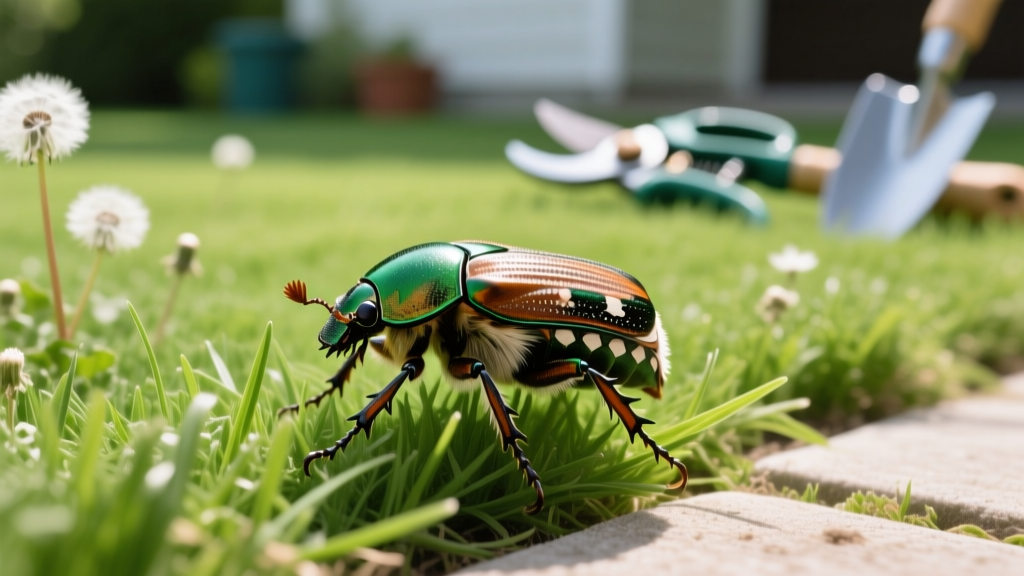
Identify and Treat Destructive Grass Bugs: A Homeowner's Guide
The Hidden Threat: Why Grass Bugs Destroy Lawns
When turfgrass turns brown, thins out, or fails to green up in spring, homeowners often blame drought, soil compaction, or fungal disease. However, subterranean and surface-dwelling grass bugs are frequently the true culprits. These insects target the structural integrity of the lawn—severing roots, hollowing out crowns, and shearing blades—which disrupts the plant's ability to uptake water and nutrients. Left unchecked, a localized infestation of grass bugs can decimate thousands of square feet of turf in a matter of weeks, leading to costly sod replacement and soil erosion.
The 3-Minute Soap Flush Diagnostic
Before purchasing any treatment, confirm the presence of grass bugs using a soap flush. Mix 2 tablespoons of liquid dish soap (lemon-scented works best) with 1 gallon of water. Pour the solution over a 1-square-foot area at the edge of the damaged turf. The soap irritates the insects' respiratory systems, forcing chinch bugs, armyworms, and sod webworms to the surface within 3 to 5 minutes. If you count more than 5 insects per square foot, treatment is immediately required.
The Big Three: Identifying the Most Destructive Grass Bugs
Effective yard defense requires matching the active ingredient to the specific biology of the pest. The following three grass bugs account for the vast majority of severe turf damage across North America.
1. Southern Chinch Bugs (Blissus insularis)
Chinch bugs are surface-feeders that primarily target St. Augustine, Zoysia, and Centipede grasses. Adults are small (about 1/5 inch), black with white folded wings, while nymphs are bright red with a white band. They inject a salivary toxin into the grass crown while feeding, which blocks water transport. Damage typically appears as irregular yellow-to-brown patches in hot, sunny areas of the lawn, often mimicking drought stress. According to Texas A&M AgriLife Extension, chinch bugs thrive in lawns with thick thatch layers (over 0.5 inches) and high nitrogen fertilization rates.
2. White Grubs (Scarabaeidae Larvae)
Grubs are the subterranean larvae of beetles, including Japanese beetles, June bugs, and European chafers. They are C-shaped, milky white, with distinct brown head capsules and six legs. Grubs feed aggressively on turf roots 2 to 4 inches below the soil surface. The hallmark sign of a grub infestation is turf that feels spongy underfoot and can be rolled back like a loose carpet. Secondary damage from foraging skunks, raccoons, and crows tearing up the lawn to eat the grubs often causes more visual destruction than the insects themselves. Penn State Extension notes that a threshold of 8 to 10 grubs per square foot warrants immediate chemical intervention.
3. Fall Armyworms (Spodoptera frugiperda)
Armyworms are voracious foliage feeders that can strip a Bermuda or Fescue lawn to bare dirt in less than 72 hours. They are most active in late summer and early fall. Identify them by their greenish-brown bodies, a distinct inverted 'Y' shape on the head capsule, and the presence of small, green, pellet-like droppings (frass) on the soil surface. As noted by NC State University's Turf Program, armyworm outbreaks often follow periods of heavy late-summer rainfall, which creates ideal conditions for moth egg-laying.
Grass Bug Identification & Treatment Matrix
Selecting the correct chemical or organic control depends on the pest's life cycle and feeding location. Use this matrix to determine the most cost-effective and environmentally sound approach for your specific infestation.
| Pest | Feeding Zone | Best Preventative | Best Curative | Est. Cost / 10k sq ft |
|---|---|---|---|---|
| Chinch Bugs | Surface / Crown | N/A (Curative focus) | Bifenthrin (Bifen IT) | $15 - $25 |
| White Grubs | Subterranean Roots | Chlorantraniliprole (Acelepryn) | Trichlorfon (Dylox 6.2) | $65 - $110 |
| Armyworms | Foliage / Blades | N/A (Curative focus) | Bt kurstaki (Thuricide) or Bifenthrin | $20 - $40 |
Step-by-Step Eradication Protocol
Applying insecticides without proper calibration or timing is the primary reason homeowners fail to eliminate grass bugs. Follow this precise protocol for maximum efficacy.
- Map the Damage and Test the Soil: Before applying curative grub treatments like Trichlorfon (Dylox), verify that the soil is moist. Grubs will migrate deeper into the soil profile during drought conditions to survive. Irrigate the lawn with 0.5 inches of water 24 hours prior to application to draw the grubs closer to the surface.
- Calibrate Your Sprayer or Spreader: For liquid surface treatments targeting chinch bugs and armyworms, calibrate your hose-end or pump sprayer to deliver exactly 1.5 to 2.0 gallons of mixed solution per 1,000 square feet. This ensures the active ingredient penetrates the thatch layer and reaches the soil surface where the insects reside.
- Apply the Active Ingredient:
- For Grubs (Preventative): Apply Acelepryn G (granular) at a rate of 1.15 to 2.3 lbs per 1,000 sq ft between mid-April and early June. Water in immediately with 0.25 inches of irrigation.
- For Grubs (Curative): Apply Dylox 6.2 granular at 3 lbs per 1,000 sq ft in late August or September when grubs are small (1st and 2nd instar). Dylox degrades rapidly in high-pH soils, so apply it only when active feeding damage is visible.
- For Chinch Bugs & Armyworms: Apply Bifen IT (7.9% Bifenthrin) at 0.5 to 1.0 fl oz per 1,000 sq ft. Do not mow for 48 hours post-application to allow the chemical to bind to the grass blades and thatch.
- Rotate Chemistries: If a second application of Bifenthrin is required for chinch bugs later in the season, rotate to a neonicotinoid like Imidacloprid (Merit) or a Diamide like Chlorantraniliprole to prevent the insect population from developing genetic resistance to pyrethroids.
Long-Term Yard Defense and Cultural Controls
Chemical interventions are only a temporary fix if the underlying cultural conditions favor grass bug proliferation. Implementing rigorous yard defense strategies reduces the need for synthetic pesticides over time.
"Turfgrass managed with deep, infrequent irrigation and moderate nitrogen inputs develops deeper root systems and thicker cell walls, making it inherently more resistant to both surface-sucking and root-feeding grass bugs."
Thatch Management
Chinch bugs and sod webworms use thick thatch layers as a physical shield against predators and contact insecticides. If your thatch layer exceeds 0.5 inches, perform core aeration in the fall or spring, followed by a top-dressing of compost. The microbial activity in the compost accelerates thatch decomposition, eliminating the primary habitat for surface-dwelling grass bugs.
Biological Nematode Applications
For homeowners seeking organic grub control, applying beneficial nematodes (Heterorhabditis bacteriophora) is a highly effective biological defense. These microscopic worms actively seek out and infect white grubs in the soil. Apply nematodes at a rate of 1 billion per acre (roughly 25,000 per square foot) in late summer when soil temperatures are between 60°F and 85°F. Because nematodes are living organisms, they must be applied in the early morning or late evening to avoid UV degradation, and the soil must remain consistently moist for 10 days post-application to ensure they survive and hunt effectively.

