
Pest Control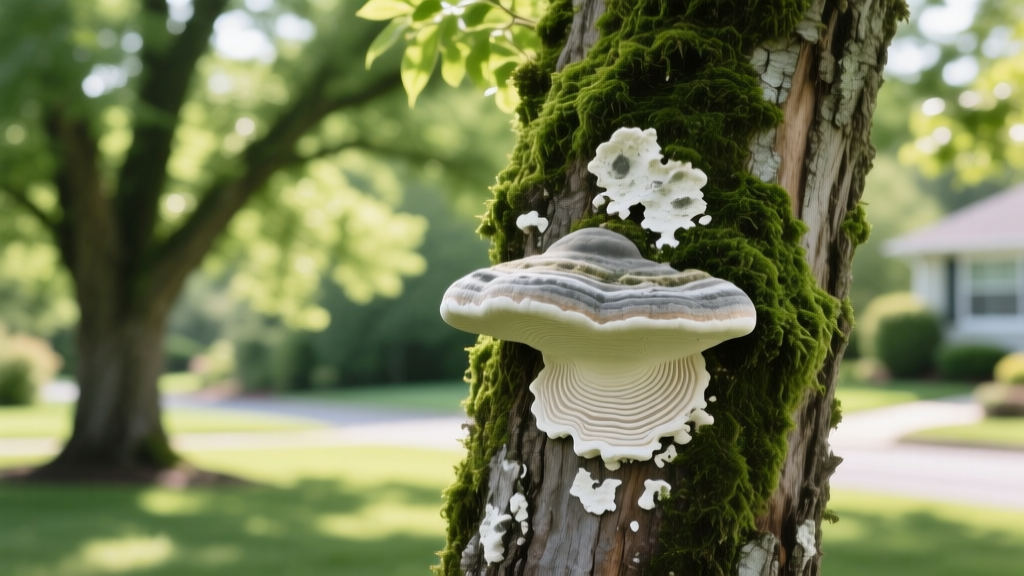
How to Identify and Treat Fungi on Trees: A Practical Guide
Discovering fungi on trees often triggers immediate concern, but not all fungal growth is lethal. The critical first step in tree pest and disease management is distinguishing between saprophytic fungi—which break down already dead wood—and pathogenic fungi, which actively attack living tissue and compromise structural integrity. Misidentifying the type of fungus leads to wasted money on ineffective fungicides or, worse, the premature removal of a healthy tree.
This practical guide provides a step-by-step framework for identifying tree fungi, assessing structural risk, and executing targeted treatment protocols using current arboricultural standards.
The Decision Matrix: Saprophytes vs. Pathogens
Before purchasing any chemical treatments, use this matrix to determine if the fungi on your tree actually require intervention. According to Penn State Extension, saprophytes are natural recyclers, while pathogens require active management.
| Characteristic | Saprophytic Fungi (Harmless) | Pathogenic Fungi (Requires Action) |
|---|---|---|
| Location | Only on dead, detached branches or heavily decayed stumps. | Emerging from the main trunk, root flare, or living branches. |
| Host Tissue | Feeds exclusively on dead cellulose/lignin. | Infects living cambium, phloem, or active root systems. |
| Common Examples | Turkey tail (Trametes versicolor), common shelf mushrooms on dead logs. | Armillaria (Oak root fungus), Ganoderma, Botryosphaeria cankers. |
| Action Required | Prune out deadwood; no chemical treatment needed. | Targeted pruning, systemic fungicides, or hazard removal. |
Step 1: Identify the Type of Tree Fungi
Tree fungi generally fall into three categories based on the tissue they attack. Accurate identification dictates your treatment strategy.
Wood Decay Fungi (Conks and Mushrooms)
These fungi destroy the structural lignin and cellulose of the tree. You will typically see bracket-like conks protruding from the trunk or clusters of mushrooms at the root flare (the base of the trunk where it meets the soil). Ganoderma lucidum (varnish rot) produces a shiny, reddish-brown conk and indicates severe internal decay. Armillaria mellea (oak root fungus) produces honey-colored mushrooms at the base in autumn and distinctive white, fan-like mycelial mats under the bark.
Canker Fungi
Cankers are localized dead areas on the bark and cambium layer, often caused by fungi like Botryosphaeria or Cytospora. Look for sunken, discolored bark, oozing sap (gummosis), and dieback in the canopy directly above the lesion. These pathogens usually enter through pruning wounds or frost cracks.
Foliar Fungi
These attack the leaves and needles. While unsightly, they rarely kill a mature tree unless defoliation occurs repeatedly over several years. Common examples include Anthracnose (irregular brown leaf spots following the veins) and Powdery Mildew (white, talc-like dusting on leaf surfaces). The University of California IPM program notes that powdery mildew thrives in warm days and cool, humid nights, making canopy airflow a critical preventative measure.
Step 2: Assess the Structural Risk (The 30% Rule)
If you have identified wood decay fungi on the main trunk or root flare, the tree's structural integrity is compromised. Fungicides cannot reverse internal wood decay. You must evaluate the hazard level.
⚠️ The 30% Hazard Threshold:
If fungal conks or mushrooms are present on more than 30% of the trunk's circumference, or if the root flare shows extensive decay, the tree is considered a high-risk hazard. In these cases, removal is the only safe option, especially if the tree's "target zone" (the area it would hit if it fell) includes a home, driveway, or pedestrian walkway.
If fungal conks or mushrooms are present on more than 30% of the trunk's circumference, or if the root flare shows extensive decay, the tree is considered a high-risk hazard. In these cases, removal is the only safe option, especially if the tree's "target zone" (the area it would hit if it fell) includes a home, driveway, or pedestrian walkway.
For borderline cases, hire an ISA-Certified Arborist to perform a sonic tomography or resistograph test. As of 2026, these advanced diagnostic tests typically cost between $300 and $500, mapping the exact percentage of internal decay without unnecessarily felling the tree.
Step 3: Treatment and Pruning Protocols
For canker fungi, foliar diseases, and localized branch decay, precise pruning and targeted chemical applications are required.
Surgical Pruning for Cankers and Dieback
- Locate the Margin: Identify the boundary between healthy, green cambium and the dead, sunken canker tissue.
- Make the Cut: Prune the branch at least 4 to 6 inches below the visible lower margin of the canker. Cutting too close leaves infected tissue behind, allowing the fungus to continue spreading down the branch.
- Sterilize Tools: This is the most frequently skipped step. Dip your pruning saw or shears in 70% isopropyl alcohol for 30 seconds between every single cut. A 10% bleach solution works but will rapidly corrode high-carbon steel blades.
- Dispose of Debris: Do not chip or compost infected wood. Bag it or burn it to prevent spore dispersal.
Fungicide Application Strategies
Chemical treatments are preventative, not curative. They protect new, uninfected tissue but will not cure an existing canker or reverse wood rot.
- For Foliar Fungi (Anthracnose, Mildew): Apply a copper octanoate spray (e.g., Bonide Liquid Copper Fungicide, approx. $18 per 16oz concentrate) just before bud break in early spring. Mix at a rate of 0.5 to 2.0 fl oz per gallon of water. Apply three times at 10-day intervals.
- For Systemic Protection (Cankers, Root Rots): Propiconazole 14.3% (e.g., Quali-Pro Propiconazole, approx. $55 per pint) is a highly effective systemic fungicide. It can be applied as a soil drench or via trunk micro-injection. For soil drench, apply 1.1 to 2.2 fl oz per inch of trunk diameter (DBH) at the root flare, watering it in immediately with 1 to 2 gallons of water per inch of DBH.
Step 4: Soil and Root Zone Management
Fungi like Phytophthora and Armillaria exploit trees stressed by poor soil conditions. Modifying the root zone environment is a non-chemical treatment that starves the pathogen.
💡 Pro Tip: Correcting Mulch Volcanoes
Piling mulch against the trunk ("volcano mulching") keeps the bark constantly wet, inviting fungal cankers and root rot. Pull all mulch back to expose the root flare. Maintain a mulch ring that is 3 to 4 inches deep, but keep it strictly 2 to 3 inches away from the actual trunk bark.
Piling mulch against the trunk ("volcano mulching") keeps the bark constantly wet, inviting fungal cankers and root rot. Pull all mulch back to expose the root flare. Maintain a mulch ring that is 3 to 4 inches deep, but keep it strictly 2 to 3 inches away from the actual trunk bark.
If dealing with aggressive root rots, consider Phosphite trunk injections. Products like Arborjet Alamo (potassium phosphite) boost the tree's natural systemic acquired resistance (SAR). Professional application costs roughly $15 to $25 per inch of trunk DBH. Phosphites do not kill the fungus directly but alter the tree's biochemistry to halt the infection's spread, making it a vital tool for high-value landscape trees where soil drenches are impractical.
Fungicide and Treatment Cost Matrix (2026 Estimates)
Understanding the financial commitment helps you decide whether to treat the tree or replace it. Below is a breakdown of common treatments and their associated costs for a standard 20-inch DBH shade tree.
| Treatment Method | Active Ingredient / Tool | Target Fungi | Est. Cost (20" DBH Tree) | Reapplication Frequency |
|---|---|---|---|---|
| Foliar Spray | Copper Octanoate | Anthracnose, Powdery Mildew | $25 - $40 (DIY materials) | Every 10-14 days in spring |
| Soil Drench | Propiconazole 14.3% | Cankers, Dutch Elm Disease | $60 - $85 (DIY materials) | Annually or bi-annually |
| Trunk Micro-Injection | Potassium Phosphite | Phytophthora, Armillaria | $300 - $500 (Pro service) | Every 1 to 2 years |
| Diagnostic Testing | Sonic Tomography | Internal Wood Decay | $300 - $500 (Pro service) | One-time assessment |
Successfully managing fungi on trees requires moving beyond generic "tree disease sprays" and adopting a targeted, diagnostic approach. By correctly identifying the fungal category, enforcing strict pruning hygiene, and utilizing systemic chemistry only when structurally viable, you can preserve your landscape's canopy and prevent catastrophic tree failures.

