
Pest Control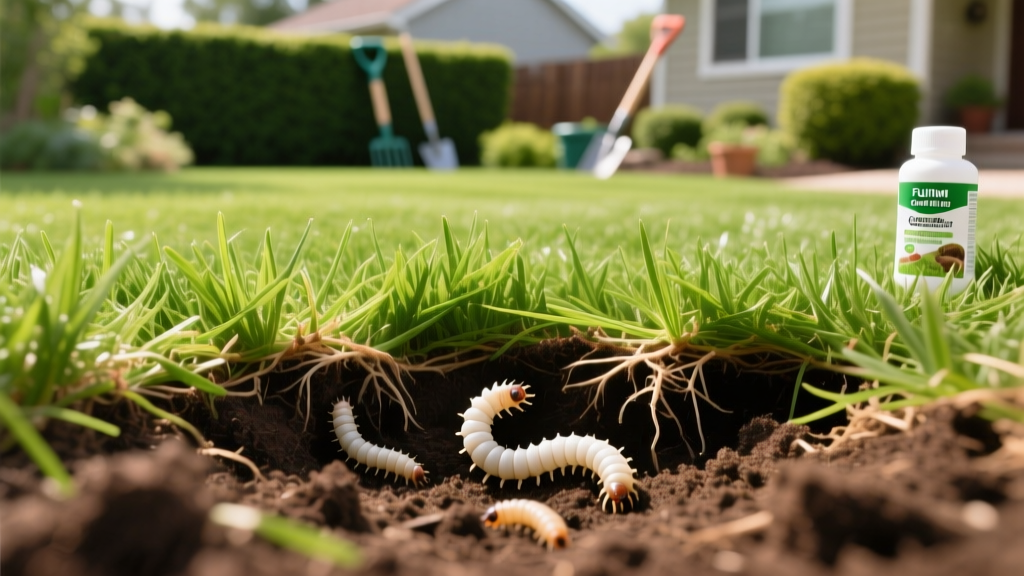
Stop Grub Worms From Destroying Your Lawn: Treatment Guide
Grub worms—the larval stage of scarab beetles like Japanese beetles, June bugs, and European chafers—are among the most destructive subterranean pests in residential lawns. They feed aggressively on grassroots, severing the plant from its water and nutrient supply. Left unchecked, a severe infestation can destroy thousands of square feet of turf in a single season, turning a lush lawn into a spongy, brown wasteland that rolls back like a carpet.
Effective defense requires precise timing, accurate identification, and an understanding of the shifting regulatory landscape surrounding lawn pesticides. This guide details the exact protocols for diagnosing, treating, and preventing grub worm damage using both conventional and organic methods.
The Lifecycle of Grub Worms: Timing is Everything
Treating grubs at the wrong time is the most common reason for pesticide failure. Grub worms follow a strict annual lifecycle that dictates their vulnerability to treatments.
Key Lifecycle Windows:
- Early Summer (June-July): Adult beetles mate and lay eggs in the top 2 inches of soil.
- Late Summer (August-September): Eggs hatch into young grubs. These 1st and 2nd instar grubs are small, actively feeding, and highly susceptible to both biological and chemical controls. This is the optimal curative window.
- Late Fall (October-November): Grubs mature into 3rd instars and burrow 4-8 inches deep to overwinter, becoming virtually untreatable.
- Spring (April-May): Grubs return to the surface to feed briefly before pupating. They are large, resilient, and cause the most visible damage during this short window.
Diagnosing Grub Worm Damage vs. Environmental Stress
Brown patches in late summer are frequently misdiagnosed. Before purchasing treatments, you must confirm that grub worms are the actual culprit. Drought stress, fungal diseases like brown patch, and dog urine spots present similar above-ground symptoms.
| Symptom | Grub Worm Damage | Drought Stress | Fungal Disease (Brown Patch) |
|---|---|---|---|
| Turf Texture | Spongy, rolls back easily like loose carpet | Brittle, crunchy, firmly rooted | Matted, slimy, or brittle but firmly rooted |
| Root Inspection | Roots completely severed or missing | Roots intact, often deep and dry | Roots intact, lesions on leaf blades |
| Soil Surface | Increased bird, skunk, or raccoon digging | Dry, cracked, hydrophobic | Damp, thatch buildup, morning dew |
The "Tug Test" and Soil Sampling Protocol
Do not apply curative insecticides based on visual symptoms alone. You must quantify the grub population to determine if it exceeds the economic injury threshold.
- Identify the Margin: Walk to the edge of a brown patch where dying green grass meets dead brown grass. Grubs will be actively feeding at this leading edge.
- Cut a Sample: Using a flat-edged spade, cut a 1-foot by 1-foot square of turf, 3 inches deep.
- Peel and Inspect: Peel the sod back like a carpet. Sift through the top 2 inches of exposed soil.
- Count the Grubs: Count the C-shaped white larvae. According to Penn State Extension, a healthy, well-irrigated lawn can tolerate 5 to 7 grubs per square foot. If you count 8 to 10 or more grubs per square foot, treatment is immediately required.
- Replace the Sod: Fold the turf back into place and step on it to ensure soil contact, then water heavily.
Chemical vs. Biological Treatments: What Actually Works?
The pest control industry has shifted significantly, with tighter regulations on neonicotinoids (like Imidacloprid) due to pollinator toxicity. When selecting a product, you must choose between long-residual preventatives, fast-acting curatives, and biological controls.
1. Preventative Chemicals (Apply May - June)
Preventatives target eggs and 1st instar larvae. They must be watered in and take time to translocate through the soil profile.
- Chlorantraniliprole (Acelepryn, Scotts GrubEx): The current gold standard for prevention. It has a low toxicity profile for bees and earthworms but requires 60 to 90 days to fully activate in the soil. Cost: $65-$85 for 5,000 sq. ft.
- Clothianidin (Arena): A neonicotinoid alternative that acts slightly faster than Imidacloprid. Note: Check local 2026 state regulations, as several states have restricted residential neonicotinoid use.
2. Curative Chemicals (Apply August - September)
Curatives are contact poisons used when active grubs are already causing damage.
- Trichlorfon (Bayer Advanced 24 Hour Grub Killer / Dylox): Highly effective, killing grubs within 24 to 48 hours. However, it degrades rapidly in soils with a pH above 7.2. If your soil is alkaline, this product will fail. Cost: $40-$55 for 5,000 sq. ft.
3. Biological Controls (Organic / Eco-Friendly)
- Beneficial Nematodes (Heterorhabditis bacteriophora): Microscopic worms that hunt and infect grubs with lethal bacteria. They must be applied in the late afternoon (UV light kills them) to moist soil above 60°F. Cost: $45 for 10 million nematodes (covers ~2,500 sq. ft.).
- Bacillus thuringiensis galleriae (Btg): Sold under brands like grubGONE!. This naturally occurring soil bacterium paralyzes the grub's gut upon ingestion. Best applied when grubs are small (August). Cost: $50-$70 for 5,000 sq. ft.
- Milky Spore (Paenibacillus popilliae): Only effective against Japanese beetle grubs, not European chafers or June bugs. It takes 2 to 3 years to establish in the soil and is highly dependent on soil temperature. Not recommended for immediate rescue treatments.
Warning on Application: All granular grub treatments must be watered in with at least 0.5 inches of irrigation immediately after application. Leaving chemical granules on the surface degrades the active ingredient via UV exposure and poses a severe ingestion risk to foraging birds and pets.
Preventative vs. Curative Application Timelines
Use this decision framework to select your treatment strategy based on the current month and lawn condition.
| Current Month | Lawn Condition | Recommended Action |
|---|---|---|
| April - May | Visible spring damage | Curative (Trichlorfon) if grubs are near surface; otherwise overseed. |
| June - July | Healthy, no damage | Preventative (Chlorantraniliprole) watered in deeply. |
| August - Sept | Brown patches, positive tug test | Curative (Trichlorfon) OR Biological (Nematodes/Btg). |
| October - Nov | Damage visible | No treatment. Grubs are too deep. Focus on turf repair. |
Repairing the Aftermath: Overseeding and Soil Recovery
Killing the grubs is only half the battle. The severed grassroots will not regenerate. You must physically repair the damaged zones to prevent weeds from colonizing the bare soil.
- Remove Dead Debris: Use a stiff thatch rake to aggressively pull up the dead, disconnected grass blades and expose the soil.
- Core Aerate: Rent a core aerator to pull 3-inch soil plugs. This relieves compaction and creates channels for seed-to-soil contact.
- Slice Seed: Use a slice seeder (or drop spreader followed by topdressing with 1/4 inch of compost) to introduce new turfgrass seed. Match the seed to your existing lawn (e.g., Tall Fescue for cool-season, Bermudagrass for warm-season).
- Fertilize: Apply a starter fertilizer high in phosphorus (e.g., 10-18-10) to stimulate rapid root development, provided a recent soil test does not indicate excessive phosphorus levels.
- Hydrate: Keep the top 1 inch of soil consistently moist for 14 to 21 days until germination is complete. Water lightly 2-3 times a day rather than one deep soaking.
For deeper insights into regional beetle species and localized treatment thresholds, consult the University of Kentucky Entomology White Grub guidelines. Proper identification of the adult beetle species dictating your grub population ensures you select the most effective biological or chemical defense for your specific microclimate.

