
Pest Control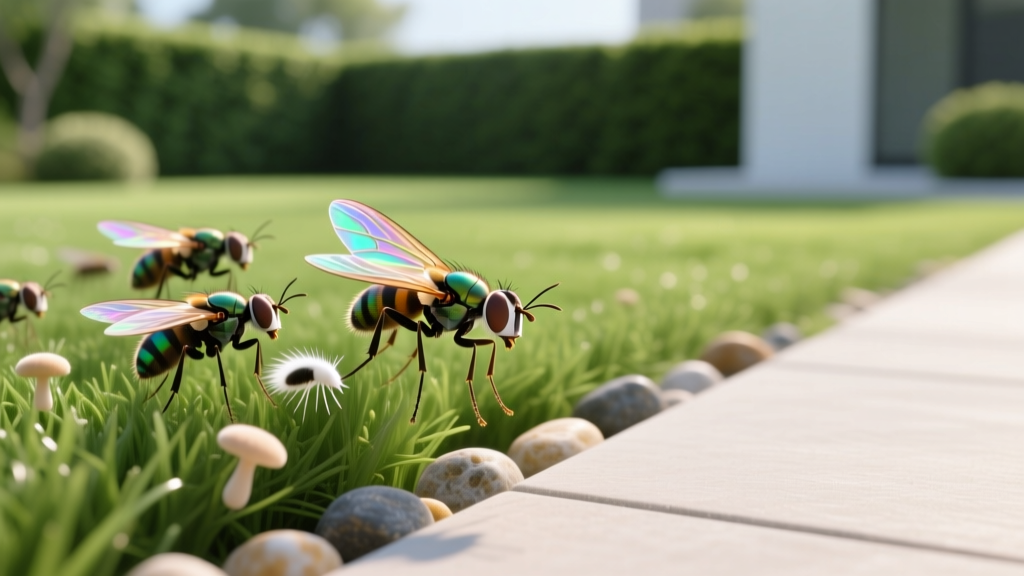
Little Flying Bugs in Yard: Identification and Control Guide
The Challenge of Unidentified Yard Swarms
Homeowners frequently encounter swarms of little flying bugs hovering over their lawn, patio plants, or compost bins. While the immediate impulse is to reach for a broad-spectrum aerosol pesticide, treating these insects without proper identification is a costly mistake. The term 'little flying bugs' encompasses dozens of distinct species, ranging from severe agricultural pests to highly beneficial pollinators. Applying the wrong treatment not only wastes money but can devastate your yard's local ecosystem, killing off the natural predators that keep actual pest populations in check.
Effective yard defense requires a targeted approach. By identifying the specific insect based on its size, flight pattern, and habitat, you can deploy precise biological or chemical interventions that break the breeding cycle without collateral damage to your landscape.
The Usual Suspects: Identifying Common Little Flying Bugs
Before purchasing any treatment, capture a specimen or observe the swarm closely. Use the matrix below to narrow down the culprit based on visual characteristics and yard location.
| Insect Type | Visual Identification | Primary Yard Habitat | Threat Level |
|---|---|---|---|
| Fungus Gnats (Bradysia spp.) | 1/8 inch, dark gray/black, long dangling legs, weak erratic flight. | Damp topsoil, compost piles, potted plants, low-lying wet grass. | Moderate (Nuisance to humans; larvae feed on fine root hairs and seedlings). |
| Whiteflies (Trialeurodes spp.) | 1/16 inch, powdery white, triangular shape, erupts in clouds when disturbed. | Undersides of ornamental and vegetable leaves (especially tomatoes and hibiscus). | High (Sap-sucking causes leaf yellowing; excretes honeydew leading to sooty mold). |
| Biting Midges (No-see-ums) | 1/8 inch, grayish, humpbacked, highly active at dawn/dusk. | Standing water, wet mud, marshy lawn edges, clogged gutters. | High (Females inflict painful, itchy bites on humans and pets). |
| Hoverflies (Syrphidae) | 1/4 to 1/2 inch, yellow and black striped (mimics bees/wasps), hovers in place. | Flowering beds, pollinator gardens, aphid-heavy shrubs. | None (Highly beneficial; larvae consume massive amounts of aphids). |
According to entomologists at the University of Florida IFAS Extension, misidentifying hoverflies as pests is a common error. If the little flying bugs in your yard are hovering steadily around flower heads and lack the 'cloud' eruption behavior of whiteflies, they are likely beneficial insects that should be left alone.
Step-by-Step Yard Defense Strategy
Once you have identified the pest, implement this three-tiered defense protocol to eliminate the current generation and prevent future hatchings.
Step 1: Eliminate Breeding Grounds via Moisture Control
Fungus gnats and biting midges are entirely dependent on high moisture levels for larval survival. You cannot chemically out-treat a yard with poor drainage. Audit your irrigation system: check 1/4-inch drip lines for weeping emitters and ensure your smart controller is not overwatering shaded zones. For potted plants and garden beds, allow the top two inches of soil to dry out completely between waterings. Use a digital soil moisture meter (such as the XLUX T10, approx. $12) to verify soil dryness before triggering automated sprinklers. Clear all leaf litter from clogged French drains and gutter downspouts where midge larvae thrive in stagnant sludge.
Step 2: Deploy Targeted Biological Controls
For soil-dwelling larvae (gnats and midges), Bacillus thuringiensis subsp. israelensis (Bti) is the gold standard. Bti is a naturally occurring soil bacterium that produces crystal proteins toxic only to the alkaline midguts of fly and mosquito larvae. The Environmental Protection Agency (EPA) classifies Bti as safe for humans, pets, and beneficial insects like earthworms and bees.
Application Protocol: Apply granular Bti (commonly sold as Mosquito Bits) directly to the soil surface at a rate of 4 tablespoons per 50 square feet. Water it in lightly. For severe infestations, steep 4 tablespoons of granules in a gallon of water for 30 minutes, strain the liquid, and use it as a soil drench to ensure the Bti reaches the root zone where larvae feed.
For an advanced biological strike, introduce Steinernema feltiae beneficial nematodes. These microscopic worms actively hunt gnat larvae in the soil, entering their bodies and releasing bacteria that kill the host within 48 hours.
Step 3: Chemical Interventions for Foliar Pests
Biological soil drenches do not work for foliar pests like whiteflies. For these, you need a targeted contact and systemic spray. Spinosad, derived from the soil bacterium Saccharopolyspora spinosa, is highly effective against whiteflies and thrips. It disrupts the insect's nervous system but breaks down quickly in sunlight, minimizing environmental persistence. According to the Penn State Extension, integrating Spinosad with insecticidal soaps (potassium salts of fatty acids) provides excellent knockdown power while resisting pest adaptation.
⚠️ Critical Warning: Protect Your Pollinators
Never apply Spinosad or Pyrethrins to plants while they are in active bloom. Even organic pesticides are highly toxic to bees upon direct contact. Spray only in the late evening when pollinators have returned to their hives and the product has time to dry before morning foraging begins.
2026 Product Spotlight: What Actually Works
Skip the generic bug bombs. Here are the specific, professional-grade products that deliver measurable results for little flying bugs, complete with current market pricing.
- Summit Mosquito Bits (Bti): The premier granular biological for soil drenching and standing water. Cost: ~$16.99 for a 30 oz shaker bottle.
- Monterey Garden Insect Spray (Spinosad): A concentrated liquid for foliar whitefly and thrip control. Mix 2 tablespoons per gallon of water. Cost: ~$22.50 for 16 oz concentrate.
- Arbico Organics Nematodes (S. feltiae): Live biological predators shipped in coolers. Must be applied immediately upon arrival using a hose-end sprayer. Cost: ~$38.00 for 5 million nematodes (treats ~5,000 sq ft).
- Safer Brand Insect Killing Soap: Potassium salts of fatty acids for soft-bodied insect knockdown. Best used in rotation with Spinosad to prevent resistance. Cost: ~$12.99 for 32 oz ready-to-use.
Frequently Asked Questions
Why are the little flying bugs worse at dusk?
Mating swarms of midges and fungus gnats are triggered by dropping light levels, cooling temperatures, and rising evening humidity. Furthermore, they are highly attracted to the carbon dioxide and heat plumes exhaled by humans and pets, which is why they seem to aggressively target your head and face when you sit on the patio at sunset.
Will UV bug zappers eliminate my yard swarms?
No. UV light traps are largely ineffective for fungus gnats and whiteflies, as these insects are not strongly phototactic to ultraviolet light in the same way moths are. Worse, zappers indiscriminately kill thousands of beneficial nocturnal insects, including parasitic wasps and predatory moths that naturally control your yard's pest populations.
Are yellow sticky traps enough to stop an infestation?
Yellow sticky traps are excellent monitoring tools and will catch adult whiteflies and gnats, but they are not a standalone cure. Because a single female fungus gnat can lay up to 200 eggs in the soil, sticky traps only address the adult stage. You must pair them with a Bti soil drench or nematode application to destroy the larval factory in the dirt.
How much does professional yard spraying cost compared to DIY?
Hiring a professional pest control service for a synthetic pyrethroid barrier spray typically costs between $150 and $250 per visit, requiring treatments every 21 days during peak season. A comprehensive DIY biological setup (Bti granules, Spinosad concentrate, and nematodes) costs roughly $75 upfront and provides highly targeted, ecologically safe control without the recurring monthly contracts.

