
Pest Control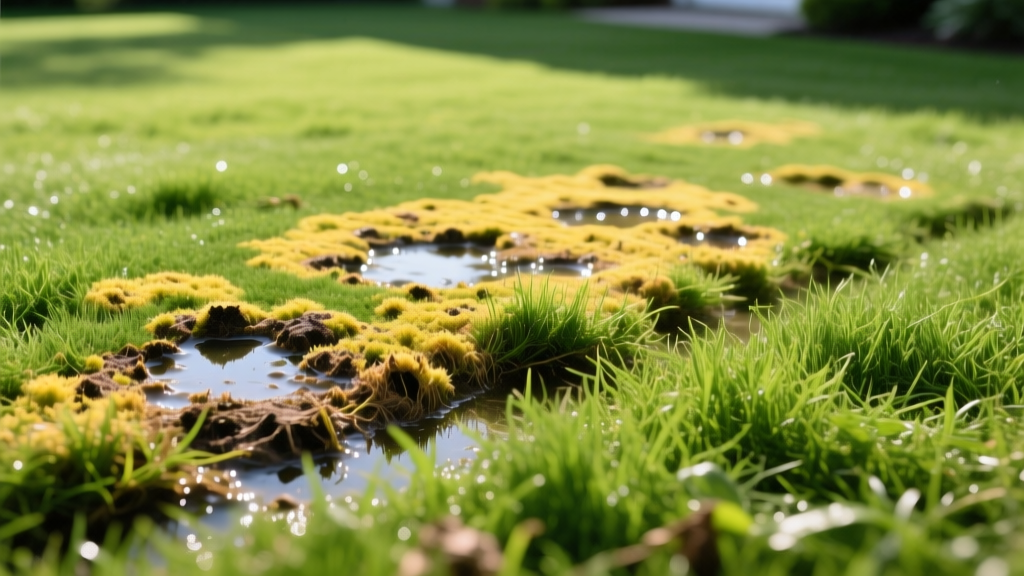
How to Identify and Treat Pythium Blight in Home Lawns
Understanding Pythium Blight: The Water Mold Threat
Pythium blight (often called cottony blight or grease spot) is one of the most destructive and rapidly spreading turfgrass diseases. Unlike common fungal pathogens, Pythium is an oomycete—a water mold. This biological distinction is critical for homeowners because many standard, broad-spectrum lawn fungicides found at big-box hardware stores are entirely ineffective against oomycetes. Pythium thrives in hot, humid conditions where daytime temperatures exceed 85°F and nighttime temperatures remain above 68°F, coupled with prolonged leaf wetness.
When left untreated, Pythium blight can destroy large sections of a cool-season lawn (like Kentucky bluegrass, perennial ryegrass, or tall fescue) in under 48 hours. The pathogen attacks the leaf blades and crowns, turning healthy green tissue into a dark, water-soaked, greasy mat that eventually dries into brittle, straw-colored patches.
Diagnostic Matrix: Is it Pythium Blight or Something Else?
Beginners frequently confuse Pythium blight with brown patch or dollar spot. Misdiagnosis leads to purchasing the wrong chemical controls, wasting money while the disease spreads. Use this comparison matrix to accurately identify the pathogen in your yard.
| Symptom / Feature | Pythium Blight | Brown Patch (Rhizoctonia) | Dollar Spot |
|---|---|---|---|
| Initial Patch Size | Irregular, 1 to 10 feet, merges rapidly | Circular, 1 to 5 feet | Small, silver-dollar sized (1-6 inches) |
| Leaf Appearance (Wet) | Dark, water-soaked, distinctly 'greasy' or slimy | Dark brown lesions with target centers | Hourglass-shaped lesions with red borders |
| Leaf Appearance (Dry) | Matte, straw-colored, matted down flat | Brittle, light brown, upright | Bleached white or straw-colored |
| Morning Mycelium | Abundant, white, cottony, web-like | Sparse, grayish-white, smoke-ring border | White, cobweb-like, but very thin |
| Root System Impact | Crowns rot, roots may darken (Pythium root rot) | Roots generally remain healthy | Roots remain healthy |
According to turfgrass pathology research from Penn State Extension, the 'greasy' texture of the leaves when wet is the most reliable visual indicator of Pythium. If you run your hand over the affected grass in the early morning and it feels slimy rather than just damp, you are likely dealing with an oomycete outbreak.
The 48-Hour Curative Treatment Protocol
Because Pythium spreads via swimming spores (zoospores) that move through water films on grass blades, speed is your most valuable asset. Follow this exact protocol the moment you confirm an infection.
Step 1: Halt Irrigation and Reduce Surface Moisture
Immediately stop all automated sprinkler cycles. Pythium requires free water to infect plant tissue. If the soil is saturated, use a flexible lawn squeegee or a push broom to physically knock excess water off the grass blades. Avoid mowing the lawn while the disease is active; mowing will drag the zoospores across the yard on your mower deck, inoculating healthy turf.
Step 2: Select an Oomycete-Specific Fungicide
You must use a fungicide specifically labeled for oomycetes. Check the active ingredient and the FRAC (Fungicide Resistance Action Committee) code. Do not rely on generic azoxystrobin or propiconazole products for curative Pythium control.
- Mefenoxam (FRAC 4): Sold professionally as Subdue MAXX. This is the gold standard for Pythium. Expect to pay around $145 for a 2.5-gallon jug, which treats up to 10,000 square feet at curative rates.
- Propamocarb (FRAC 28): Sold as Banol. Highly effective with a slightly different mode of action. Pricing averages $115 per 2.5 gallons.
- Cyazofamid (FRAC 21): Sold as Segway. Excellent for rotation to prevent chemical resistance. Costs approximately $180 for a 1-liter bottle.
⚠️ Resistance Management Warning: Pythium populations rapidly develop resistance to FRAC 4 (Mefenoxam) chemicals if used repeatedly. Always rotate your chemical classes. If you apply Subdue MAXX for your first curative treatment, your follow-up application 14 days later must be a different FRAC code, such as FRAC 28 (Banol) or a phosphite-based product (FRAC P7).
Step 3: Exact Application Rates and Mixing
For a curative application of Mefenoxam (Subdue MAXX), mix 1.0 fluid ounce of product per 1,000 square feet of turf. Use a minimum of 2 gallons of water per 1,000 square feet to ensure the chemical penetrates the thatch layer and reaches the crown of the plant. Apply in the late evening to minimize UV degradation and allow the product to dry on the foliage overnight. Water the lawn lightly (about 1/8 inch of irrigation) immediately after application to wash the fungicide off the leaves and into the soil profile where the crown infection is occurring.
Long-Term Cultural Prevention Strategies
Chemical controls only buy time. To permanently suppress Pythium blight, you must alter the microclimate of your lawn to make it hostile to water molds. Research published by UMass Extension emphasizes that canopy moisture management is the primary defense.
- Manage the Thatch Layer: Pythium thrives in spongy environments. Measure your thatch layer using a soil probe or a sharp spade. If the thatch exceeds 0.5 inches, schedule core aeration and dethatching (verticutting) for early fall. A thick thatch layer holds moisture against the grass crowns, creating a perfect incubator for oomycetes.
- Optimize Airflow and Sunlight: Prune lower branches on surrounding trees and shrubs to increase morning sun penetration and wind movement. Grass blades that dry out by 10:00 AM are significantly less likely to contract Pythium than grass that remains shaded and damp until noon.
- Adjust Summer Mowing Heights: During peak summer stress (July and August), raise your mower deck to 3.5 or 4.0 inches. Taller grass develops deeper root systems and shades the soil surface, reducing soil-level humidity. Never scalp a lawn during a heatwave.
- Switch to Morning Irrigation: Only water your lawn between 4:00 AM and 6:00 AM. This allows the soil to absorb moisture while ensuring the grass blades dry completely once the sun rises. Watering in the evening extends the leaf wetness period by 10 to 14 hours, practically guaranteeing a Pythium outbreak if temperatures are high.
Frequently Asked Questions
Will Pythium blight kill my grass down to the roots?
Pythium blight primarily attacks the foliage and the crown (the growing point at the soil line). If the crown is destroyed, the plant dies, and the roots will eventually decompose. However, if you catch the disease early and apply an oomycete-specific fungicide before the crowns turn to mush, the grass can recover from the surviving root systems and tillers within three to four weeks.
Can I use organic treatments for Pythium?
Biological fungicides containing the bacterium Bacillus amyloliquefaciens (such as Serifel or Taegro) offer some preventative suppression of Pythium by outcompeting the pathogen on the leaf surface. However, biologicals are strictly preventative. If you already see greasy, water-soaked lesions and cottony mycelium, organic biologics will not stop the active outbreak. You must use synthetic oomycete-specific chemicals for curative control, then transition to biologicals for long-term maintenance.
Does nitrogen fertilizer make Pythium worse?
Yes. Applying fast-release nitrogen (like urea) during hot, humid summer months forces the grass to produce rapid, succulent, thin-walled leaf tissue. This weak tissue is highly susceptible to Pythium invasion. Restrict nitrogen applications to the cooler fall and spring months, and if you must feed in summer, use a slow-release, organic-based nitrogen source at a very low rate (no more than 0.25 lbs of N per 1,000 sq ft).

