
Pest Control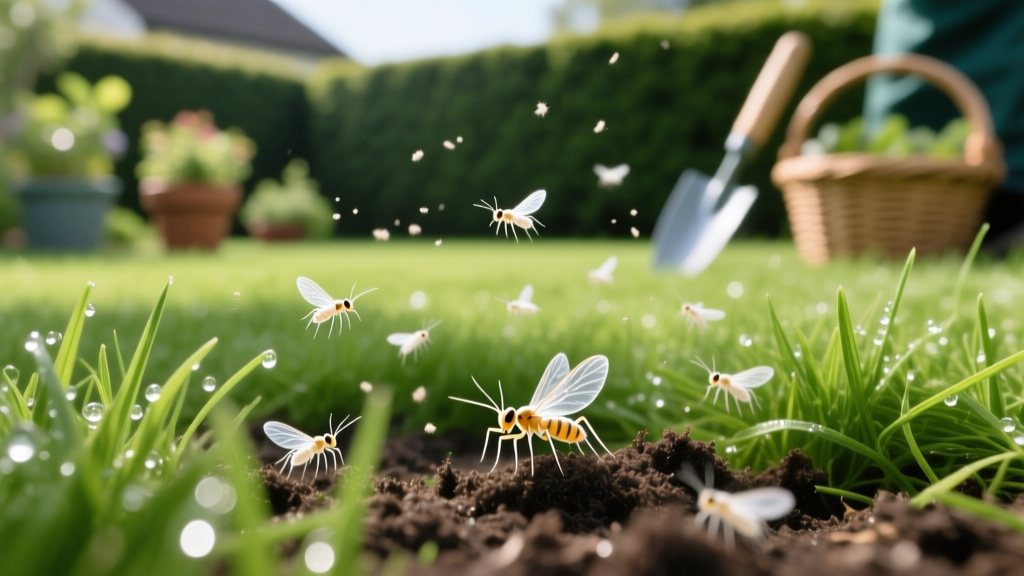
How to Get Rid of Small White Flying Bugs in Your Yard
Identifying the Swarm: What Are Small White Flying Bugs?
When a cloud of tiny, white insects erupts from your garden beds the moment you brush past a plant, you are almost certainly dealing with whiteflies. Despite the name, small white flying bugs are not true flies; they are Hemipterans, closely related to aphids and scale insects. The two most destructive species invading North American yards are the Silverleaf whitefly (Bemisia argentifolii) and the Greenhouse whitefly (Trialeurodes vaporariorum). Both species measure roughly 1/16 of an inch, feature powdery white wings, and congregate densely on the undersides of leaves.
Accurate identification is critical because misidentifying these pests can lead to ineffective treatments. Homeowners frequently confuse whiteflies with woolly aphids or fungus gnats. Below is a diagnostic matrix to help you pinpoint the exact pest invading your landscape.
| Pest Type | Visual Characteristics | Primary Location | Flight Pattern |
|---|---|---|---|
| Whiteflies | Powdery white, triangular, 1/16 inch | Undersides of broad leaves | Erratic, short bursts when disturbed |
| Woolly Aphids | White, fuzzy/cottony wax coating, 1/8 inch | Stems, branches, and leaf joints | Sluggish, rarely flies unless migrating |
| Fungus Gnats | Dark grey/black, long legs, 1/8 inch | Soil surface and lower canopy | Hovering, zig-zag flight near soil |
According to the UC Statewide IPM Program, whiteflies reproduce rapidly in warm weather, with a single female capable of laying up to 400 eggs that hatch in less than a week during peak summer temperatures. This exponential breeding cycle is why early detection is non-negotiable for yard defense.
The Damage Cycle: Honeydew, Sooty Mold, and Viruses
Small white flying bugs do not just weaken plants by sucking phloem sap; they act as vectors for secondary diseases and fungal infections. As nymphs and adults feed, they excrete a sugary waste product known as honeydew. This sticky residue coats the leaves below the infestation, creating an ideal breeding ground for black sooty mold (Capnodium species). Sooty mold blocks photosynthesis, causing leaves to yellow, wither, and drop prematurely.
More alarmingly, the Silverleaf whitefly is a known vector for over 100 plant viruses, including the devastating Tomato Yellow Leaf Curl Virus (TYLCV) and Cucurbit Yellow Stunting Disorder Virus. If your vegetable garden is infected, removing the host plants and aggressively treating the perimeter is mandatory to save the rest of your crop.
Proven Treatment Protocols for Yard Defense
Eradicating whiteflies requires a phased approach. Relying solely on chemical sprays often fails because whiteflies rapidly develop resistance to synthetic pyrethroids, and broad-spectrum sprays eliminate the beneficial insects that naturally keep whitefly populations in check.
Phase 1: Mechanical and Organic Knockdown
For early-stage infestations or sensitive ornamental beds, start with physical disruption and organic contact killers.
- Water Blasting: Use a garden hose with a spray nozzle set to a sharp jet. Blast the undersides of the leaves early in the morning. This physically dislodges nymphs and washes away honeydew. Because nymphs cannot easily climb back up the plant, this disrupts their feeding cycle.
- Insecticidal Soaps: Products like Safer Brand Insect Killing Soap (Model #5110-6, approx. $15 for 32 oz) use potassium salts of fatty acids to break down the insect's cuticle. You must spray the undersides of the leaves until dripping. Reapply every 5 to 7 days to catch newly hatched nymphs.
- Neem Oil Applications: Use a clarified hydrophobic extract of neem oil, such as Monterey Neem Oil (Model #7017, approx. $22). Mix at a rate of 1 to 2 tablespoons per gallon of water. Critical Timing: Only apply neem oil at dusk. Spraying oil-based products in direct sunlight will cause severe phytotoxicity (leaf burn), and daytime application risks contacting foraging pollinators.
Warning: The Ant-Whitefly Symbiosis
If you see ants crawling on your infested plants, your whitefly treatment will likely fail. Ants 'farm' whiteflies, protecting them from predators in exchange for harvesting their sugary honeydew. Before treating the whiteflies, you must break this symbiosis. Apply a sticky barrier like Tanglefoot ($12) around the base of tree trunks and shrub stems, or deploy Maxforce Quantum Ant Bait ($35) near the root zones to eliminate the ant colonies protecting the whiteflies.
If you see ants crawling on your infested plants, your whitefly treatment will likely fail. Ants 'farm' whiteflies, protecting them from predators in exchange for harvesting their sugary honeydew. Before treating the whiteflies, you must break this symbiosis. Apply a sticky barrier like Tanglefoot ($12) around the base of tree trunks and shrub stems, or deploy Maxforce Quantum Ant Bait ($35) near the root zones to eliminate the ant colonies protecting the whiteflies.
Phase 2: Biological Warfare
For long-term yard defense, introduce natural predators. The parasitic wasp Encarsia formosa is highly effective against greenhouse whiteflies. These microscopic, non-stinging wasps lay their eggs inside whitefly scales, turning the scales black and killing the pest. You can order live Encarsia formosa cards from biological control suppliers for roughly $30 to $45 per 5,000 wasps. Hang the cards on the lower canopy of affected plants in the early evening.
Phase 3: Chemical Escalation (When Organics Fail)
If a severe infestation threatens to destroy mature landscaping or high-value crops, targeted systemic or residual chemicals are required. As of 2026, neonicotinoid regulations have tightened in several states, so always verify local laws before applying soil drenches.
- Systemic Soil Drench: BioAdvanced 12 Month Tree and Shrub Insect Control (Model #701700B, approx. $28 for 32 oz) contains Imidacloprid. Applied as a soil drench at the base of the plant, the roots absorb the chemical and distribute it to the leaves. When whiteflies feed, they ingest the toxin and die. This method takes 2 to 3 weeks to translocate fully but provides long-lasting protection without harming airborne pollinators.
- Residual Foliar Spray: For immediate knockdown of massive swarms, Bifenthrin-based products like Talstar P (approx. $50 for 3/4 gallon) are highly effective. Mix at 0.5 to 1 fluid ounce per gallon of water. Bifenthrin provides a residual barrier that continues to kill whiteflies for up to 30 days. Note: Bifenthrin is highly toxic to aquatic life and bees; never spray near water features or blooming flowers.
Preventative Yard Scaping to Stop Reinfestation
According to Clemson University Home & Garden Information Center, cultural practices are your first line of defense against recurring whitefly outbreaks.
- Reflective Mulches: Whiteflies navigate by sight and are highly deterred by UV reflection. Laying down silver reflective mulch (approx. $25 for a 3x100 ft roll) beneath vegetable crops like tomatoes and peppers disorients the adults, preventing them from landing and laying eggs.
- Nitrogen Management: Whiteflies are intensely attracted to the lush, tender new growth stimulated by high-nitrogen synthetic fertilizers. Switch to slow-release, organic nitrogen sources like feather meal or compost to promote steady, hardened growth that is less palatable to sap-sucking insects.
- Companion Planting: Integrate Nasturtiums and Marigolds into your beds. While some debate their efficacy as trap crops, strong-smelling herbs like basil, thyme, and rosemary help mask the scent of your primary host plants, making it harder for migrating whiteflies to locate them.
Frequently Asked Questions
Do small white flying bugs bite humans or pets?
No. Whiteflies possess piercing-sucking mouthparts designed exclusively to penetrate plant phloem. They cannot bite humans, dogs, or cats, and they do not transmit diseases to mammals. They are strictly an agricultural and ornamental nuisance.
Why do my whiteflies keep coming back after spraying?
Whitefly eggs are highly resistant to most contact sprays, including soaps and neem oil. If you spray and only kill the adults, the eggs will hatch 5 to 7 days later, resulting in a new swarm. You must maintain a strict 5-day spraying schedule for at least three consecutive weeks to break the reproductive cycle, or switch to a systemic soil drench.
Can I use household vinegar to kill whiteflies?
Vinegar is not recommended. While acetic acid can desiccate soft-bodied insects, the concentration required to kill whiteflies will also severely burn and defoliate your plants. Stick to formulated insecticidal soaps or horticultural oils that are buffered to protect plant tissue while eliminating the pests.

