
Pest Control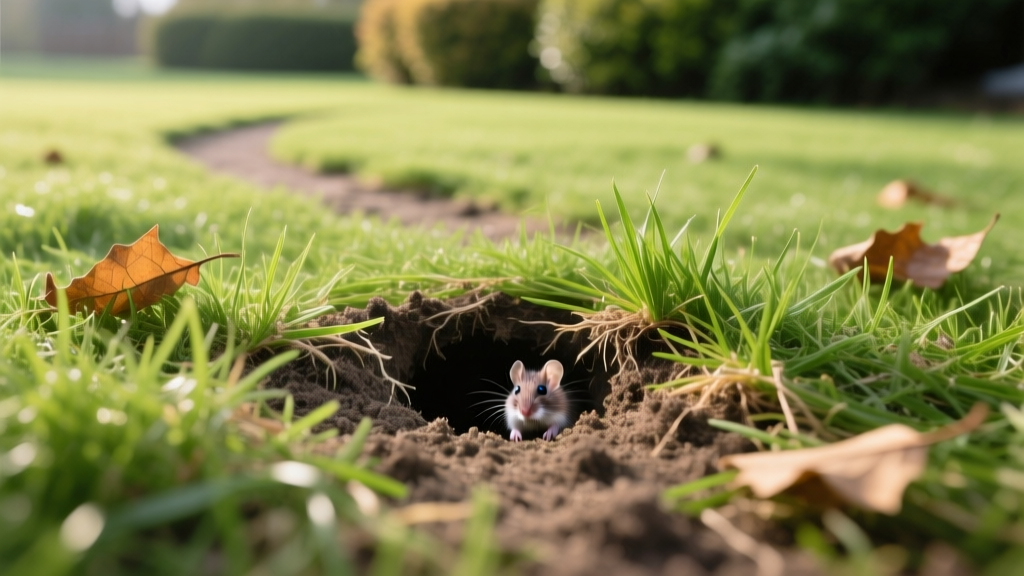
Is That a Vole Hole? Lawn Damage ID and Deterrence
The Anatomy of a Vole Hole: Visual Identification
Finding a mysterious hole in your turf is the first visible sign of a subterranean turf war. Before deploying traps or chemical repellents, accurate identification is mandatory. A vole hole is distinctly different from the burrows created by other common lawn rodents. Voles (often incorrectly called field mice or meadow mice) are compact, heavy-bodied rodents that create shallow, extensive runway systems just beneath the soil surface or directly through the grass thatch.
To confirm you are looking at a vole hole, measure the opening. Vole entry and exit holes typically range from 1.5 to 2 inches in diameter—roughly the size of a golf ball. Unlike mole or gopher holes, vole holes feature clean, rounded edges and are completely devoid of excavated dirt mounds. Voles push soil aside laterally to create their runways rather than pushing it up to the surface. You will almost always find a vole hole connected to a visible surface runway: a 1- to 2-inch wide path of clipped grass leading directly into mulch beds, thick groundcover, or tall weedy areas.
⚠️ Warning: The Mole Trap Mistake
Do not deploy scissor-jaw or harpoon mole traps over a vole hole. Vole tunnels are rarely deeper than 2 to 3 inches, while mole traps require deep, structural tunnels to trigger properly. Setting a heavy-duty mole trap on a shallow vole runway will only tear up your turf, fail to catch the vole, and pose a severe hazard to pets and foraging birds.
Vole Holes vs. Mole, Gopher, and Mouse Burrows
Misidentifying the rodent leads to wasted money on ineffective treatments. Use this diagnostic matrix to differentiate a vole hole from other common lawn excavations.
| Rodent | Hole Diameter | Dirt Mound? | Surface Runways? | Primary Damage |
|---|---|---|---|---|
| Vole | 1.5 - 2.0 inches | No | Yes, visible in grass | Root girdling, bulb consumption |
| Mole | Rarely visible | Yes (volcano-shaped) | No (raised ridges) | Uprooting turf, soil aeration |
| Pocket Gopher | 2.5 - 3.5 inches | Yes (fan/crescent-shaped) | No | Severe root destruction |
| Field Mouse | 0.5 - 1.0 inch | No | Faint, hidden in thatch | Seed theft, minor bark gnawing |
The Hidden Cost: Root Girdling and Turf Destruction
The hole itself is not the primary threat; it is merely the gateway to the root zone. According to Penn State Extension, voles are herbivores that feed on the roots, tubers, and bark of ornamental plants and turfgrasses. When you see a vole hole near a prized hosta, tulip bed, or young fruit tree, the rodents are likely engaging in root girdling—chewing a complete ring around the taproot or subterranean stem, which severs the plant's vascular system and causes sudden, unexplained wilting and death.
In turfgrass, particularly Kentucky bluegrass and fine fescues, voles clip the grass blades at the soil line to maintain their runways and consume the tender crown tissue. This results in spongy, detached patches of sod that easily roll back like a carpet, a symptom frequently and incorrectly blamed on white grub infestations.
Step-by-Step Vole Hole Remediation and Turf Repair
Simply kicking dirt into a vole hole guarantees the colony will re-excavate it within 48 hours. Proper remediation requires collapsing the tunnel network and altering the soil composition to deter future digging.
- Probe the Extent: Insert a 3/8-inch steel rebar or a long screwdriver into the vole hole. Map the tunnel's direction and depth. Vole tunnels rarely exceed 3 inches deep but can extend laterally for 10 to 15 feet.
- Hydraulic Collapse: Attach a jetting nozzle to your garden hose. Insert the nozzle into the hole and blast water at high pressure for 30 to 60 seconds. This liquefies the shallow tunnel walls, collapsing the runway without waterlogging the surrounding deep soil.
- Apply a Deterrent Fill Mix: Do not use pure topsoil. Mix 70% screened topsoil, 20% coarse masonry sand, and 10% crushed gravel (1/4-inch aggregate). The sharp edges of the gravel and the poor burrowing structure of the sand discourage re-excavation.
- Overseed and Fertilize: Tamp the mix down firmly until flush with the surrounding grade. Apply a high-phosphorus starter fertilizer (such as a 10-18-10 NPK ratio) and overseed with a shade-tolerant or sun-dense turf blend matching your existing lawn. Water lightly twice daily for 14 days to establish the new root matrix.
Advanced Deterrence: Breaking the Vole Habitat Loop
Eradicating a single vole does not solve the problem; a single breeding pair can produce up to 60 offspring in a year. Long-term deterrence requires modifying the habitat and deploying targeted repellents.
Physical Exclusion Barriers
For high-value ornamental trees and shrubs, physical exclusion is the only 100% effective deterrent. Purchase 1/4-inch galvanized hardware cloth (approx. $25 for a 25-foot roll). Cut a strip wide enough to encircle the tree trunk with a 2-inch overlap. Bury the bottom edge 6 inches deep into the soil, and bend the lowest 2 inches outward at a 90-degree angle (forming an "L" shape) to prevent voles from digging under the barrier. Keep the top of the mesh at least 18 inches above the expected winter snow line.
Chemical and Botanical Repellents
Castor oil-based repellents are highly effective for turf-wide application. Products like Bonide Mole & Vole Repellent (priced around $35 for a 10-pound bag) work by coating the root zones and soil with an unpalatable, irritating film. Apply at a rate of 2 to 3 pounds per 1,000 square feet using a broadcast spreader, and water it in immediately to push the active ingredients into the top 2 inches of the soil where voles forage. Reapply every 3 to 4 weeks during peak spring and autumn activity.
Expert Insight on Sonic Spikes: Save your money. Multiple university studies, including research highlighted by the University of Maryland Extension, have conclusively proven that ultrasonic and solar sonic spikes do not deter voles. Voles quickly habituate to the vibrations, and the sound waves fail to penetrate dense clay soils or thick root mats.
Habitat Modification: The 3-Inch Mulch Rule
Voles rely on dense cover to avoid aerial predators like hawks and owls. Pull all mulch, pine straw, and groundcover at least 3 inches away from the base of trees, shrubs, and foundation plantings. Maintain your turf at a mowing height of 2.5 to 3 inches; anything taller provides a canopy that hides surface runways from predators.
When to Call a Wildlife Control Professional
If you count more than 15 active vole holes across a standard 5,000-square-foot lawn, or if you observe severe bark stripping on fruit trees during the winter months, the colony has likely exceeded the threshold for DIY management. Licensed wildlife control operators utilize specialized bait stations containing zinc phosphide or chlorophacinone, which are restricted-use pesticides not available to consumers. Professional eradication and exclusion services typically range from $250 to $450 depending on property size and the extent of the tunnel network.

