
Pest Control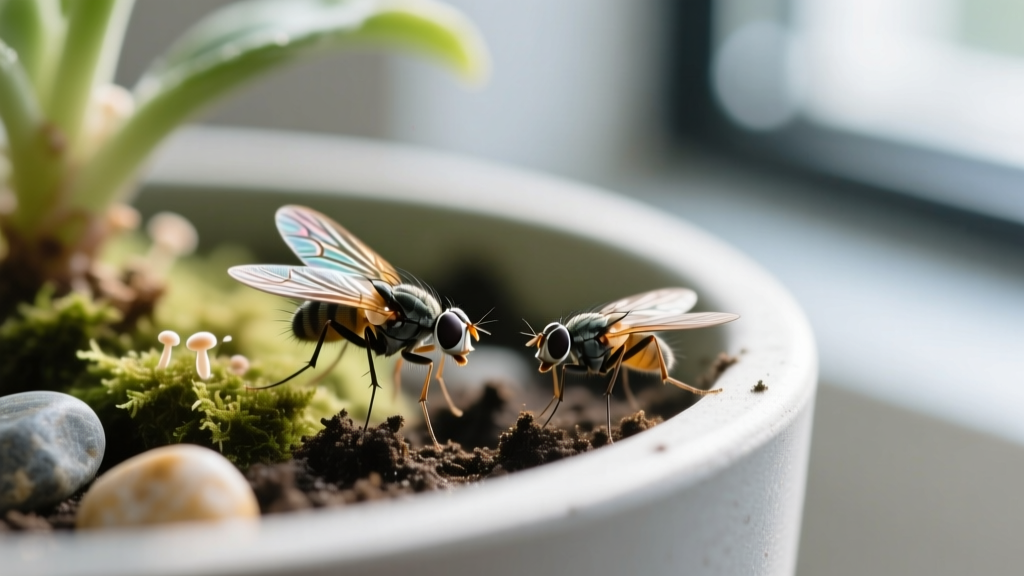
Gnats Up Close: How to Identify and Eliminate Yard Invaders
Most homeowners treat all small, swarming insects as the same generic nuisance, reaching for broad-spectrum aerosol sprays that fail to address the root cause. However, when you examine gnats up close, distinct morphological and behavioral differences emerge. The term 'gnat' is a colloquial catch-all for several unrelated dipteran families, primarily fungus gnats (Sciaridae), biting midges (Ceratopogonidae), and eye gnats (Chloropidae). Each requires a radically different yard defense strategy.
Applying a larvicide designed for soil-dwelling fungus gnats will do nothing to stop a swarm of biting midges breeding in a nearby retention pond. Effective pest management begins with precise identification and targeted micro-habitat disruption. Below is a comprehensive, science-backed framework for identifying, profiling, and eliminating gnat populations in your outdoor spaces.
The Magnifying Glass Approach: Identifying Gnats Up Close
To defend your yard, you must first know your enemy. Capturing a specimen and viewing gnats up close through a 10x jeweler's loupe or a smartphone macro lens reveals critical identification markers. According to University of Minnesota Extension entomologists, misidentification is the leading cause of treatment failure in residential pest control.
| Species | Size & Morphology (Up Close) | Primary Yard Habitat | Human Impact |
|---|---|---|---|
| Fungus Gnats (Bradysia spp.) | 1/8 inch long; dark gray/black; distinct Y-shaped wing venation; long segmented antennae. | Top 2 inches of moist, organically rich soil; compost bins; potted nursery stock. | Nuisance swarming; larvae damage fine plant root hairs. |
| Biting Midges (Culicoides spp.) | 1/16 inch (no-see-ums); mottled or patterned wings; robust thorax; short mouthparts. | Muddy shorelines, tree holes, overwatered turf margins, and salt marshes. | Painful, itchy bites; severe allergic reactions in sensitive individuals. |
| Eye Gnats (Siphunculina spp.) | 1/12 inch; shiny black; smooth wings lacking complex venation; sponging mouthparts. | Decaying organic matter, unturned compost piles, grass clippings, and animal waste. | Swarm around eyes and mucous membranes; potential vectors for conjunctivitis. |
Breeding Ground Profiling: Where They Hide in Your Yard
Gnats do not randomly infest yards; they exploit specific micro-climates. Fungus gnats, for instance, require a volumetric water content (VWC) of >40% in the top two inches of soil to successfully oviposit. If your yard is experiencing a gnat outbreak, you are likely overwatering or suffering from poor soil drainage.
⚠️ Critical Warning: The Mulch Trap
Applying thick layers of hardwood mulch (>3 inches) against the foundation of your home or around shrub bases creates an ideal, perpetually damp breeding matrix for fungus and eye gnats. Maintain a 3-inch maximum depth and keep mulch at least 6 inches away from plant stems and structural foundations to disrupt the larval food web.
Mapping Your Yard's Vulnerabilities
- Shaded North-Facing Beds: Evaporation rates are 40-60% slower here, keeping soil moisture in the danger zone for gnat larvae.
- Compost Tumblers: Unsealed or improperly balanced (high nitrogen/low carbon) compost generates the exact bacterial decay eye gnats require.
- Irrigation Overspray: Sprinkler heads hitting paved surfaces create shallow, muddy puddles that biting midges use as nurseries.
Targeted Yard Defense Protocols
Once you have identified the species and mapped the breeding grounds, execute the following step-by-step eradication protocol. This integrated pest management (IPM) approach prioritizes biological controls over synthetic pyrethroids, which harm beneficial pollinators and fail to penetrate the soil canopy where larvae reside.
Step 1: Moisture Calibration and Soil Drenching
Purchase a reliable analog or digital moisture meter (e.g., the XLUX Soil Moisture Meter, approx. $12). Insert the probe 2 inches into the soil. If the reading is above 7 on a 1-10 scale, halt irrigation immediately. Allow the top layer to dry to a reading of 3 or 4. This alone will kill up to 60% of fungus gnat eggs through desiccation.
Next, apply a biological larvicide. Bacillus thuringiensis var. israelensis (Bti) is a naturally occurring bacterium that produces Cry4 and Cyt1 proteins. When ingested by gnat larvae, these proteins bind to receptors in their alkaline midgut, causing cellular lysis and death within 48 hours. Bti is entirely harmless to mammals, birds, and earthworms.
- Product: Summit Mosquito Bits (Granular Bti)
- Application Rate: 4 tablespoons per gallon of water (steep for 30 minutes, strain, and use as a soil drench) OR apply dry granules at 1 oz per 10 square feet.
- Frequency: Every 7-10 days for three consecutive cycles to break the 21-day pupation window.
Step 2: Adult Population Knockdown
While Bti handles the larvae, you must trap the flying adults to prevent further egg-laying. Yellow sticky cards (e.g., Aspectek Sticky Stakes) are highly effective for monitoring and trapping fungus gnats, which are phototactic and attracted to the 550nm wavelength of yellow light. Place one stake per 15 square feet of garden bed.
For biting midges and eye gnats, which are less attracted to yellow, deploy a UV/CO2 suction trap like the DynaTrap 1/2 Acre Flying Insect Trap (approx. $130) at the perimeter of your property, at least 20 feet away from your primary seating areas.
Step 3: Foliar and Surface Disruption (Severe Infestations)
If larvae populations are devastating ornamental root systems, introduce Azadirachtin (the active compound in neem oil extract). Unlike standard neem oil, which acts as a suffocant, isolated azadirachtin acts as an insect growth regulator (IGR), disrupting the molting hormone (ecdysone) pathways of the larvae.
- Product: AzaMax (1.2% Azadirachtin)
- Cost: ~$35 for 16 oz (yields up to 48 gallons of spray).
- Protocol: Mix 1 oz per gallon of water. Apply as a soil drench at dusk to prevent UV degradation and avoid foliar burn on sensitive plants.
2026 Product Cost & Efficacy Breakdown
Budgeting for yard defense requires understanding the cost-to-coverage ratio. The table below outlines the most effective, scientifically validated products for gnat control available this year.
| Product / Brand | Active Ingredient | Target Gnat Stage | Est. Cost per 1,000 sq. ft. | Efficacy Rating |
|---|---|---|---|---|
| Summit Mosquito Bits | Bti (Biological) | Larvae | $4.50 | 9.5/10 |
| AzaMax | Azadirachtin (IGR) | Larvae / Nymphs | $8.00 | 8.5/10 |
| Aspectek Sticky Stakes | Adhesive / Yellow Pigment | Adults (Trapping) | $2.00 | 7.0/10 |
| DynaTrap 1/2 Acre | UV Light / CO2 / Fan | Adults (Trapping) | $130.00 (One-time hardware) | 8.0/10 |
| Monterey Garden Insect Spray | Spinosad (Bacterial) | Larvae / Adults | $6.50 | 9.0/10 |
Frequently Asked Questions
Can I use bleach or hydrogen peroxide to kill gnat larvae in my yard?
While a 3% hydrogen peroxide solution (mixed at 1 part peroxide to 4 parts water) will kill larvae on contact via oxidation, it also indiscriminately destroys beneficial soil microbiology, mycorrhizal fungi, and earthworms. It is a short-term fix that degrades overall soil health, making plants more susceptible to future stress. Bti remains the superior, ecologically safe alternative.
Why are the gnats in my yard worse at dusk?
Biting midges (Culicoides) and fungus gnats are highly sensitive to light intensity and humidity. As the sun sets, ambient humidity rises and UV radiation drops, triggering their mating and feeding swarms. If you are dealing with dusk swarms, prioritize spatial repellents containing metofluthrin (e.g., Thermacell Patio Shield) during the 45 minutes before and after sunset.
Do predatory nematodes work for outdoor gnat control?
Yes. Steinernema feltiae are microscopic nematodes that actively hunt and infect gnat larvae in the soil. They are highly effective but require strict environmental controls: soil temperature must be between 60°F and 75°F, and the soil must remain consistently moist. If your yard dries out frequently, nematodes will die off before completing their life cycle.
The Final Word on Yard Defense
Successfully managing gnat populations requires moving beyond surface-level annoyance. By examining gnats up close to confirm their species, mapping the specific moisture profiles of your landscape, and deploying targeted biological agents like Bti and Azadirachtin, you can reclaim your outdoor spaces without resorting to toxic, broad-spectrum chemicals that harm the broader ecosystem.

