Pest Control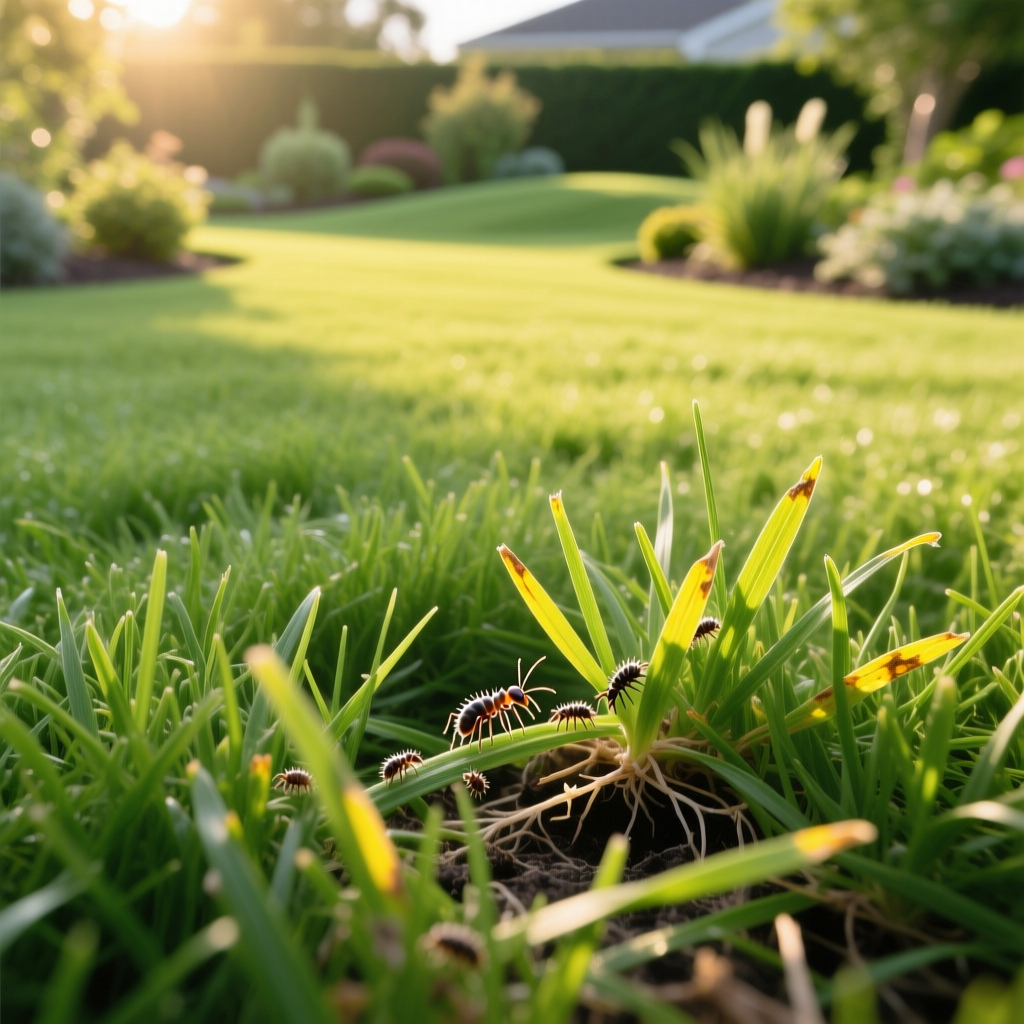
Identifying & Controlling Bermudagrass Mite Damage in Lawns
Sarah ChenPublished
Bermudagrass is one of the most popular, resilient, and widely used warm-season turfgrasses in the world. Known for its aggressive growth, drought tolerance, and ability to withstand heavy foot traffic, it is a staple for homeowners, sports fields, and commercial landscapes alike. However, even the toughest grass varieties are susceptible to microscopic threats that can wreak havoc on an otherwise pristine lawn. Among the most frustrating and elusive of these pests is the Bermudagrass mite (Aceria cynodoniensis).
Unlike common lawn pests such as grubs or chinch bugs, Bermudagrass mites are virtually invisible to the naked eye. They do not chew on grass blades or pull up roots; instead, they inject toxic saliva into the plant tissue, fundamentally altering the way the grass grows. The resulting damage is often misdiagnosed as a fungal disease, nutrient deficiency, or drought stress, leading to ineffective treatments and prolonged lawn decline. Understanding how to properly identify, prevent, and control Bermudagrass mite damage is essential for maintaining a thick, healthy, and vibrant turf.
In this comprehensive guide, we will explore the biology of the Bermudagrass mite, detail the exact symptoms of an infestation, and provide actionable cultural and chemical control strategies to help you reclaim your lawn. For more general tips on maintaining this resilient turf, be sure to review our complete Bermudagrass care guide.
How to Identify Bermudagrass Mite Damage in Your Lawn
Because Bermudagrass mites are microscopic—measuring only about 0.2 millimeters in length—you will rarely see the pests themselves. Instead, identification relies entirely on recognizing the unique physiological responses of the grass to the mite's feeding habits. The mites live and feed exclusively within the leaf sheaths (the tubular base of the leaf blade that wraps around the stem), making them incredibly difficult to detect and treat.
When the mites feed, they inject a toxic saliva that disrupts the plant's natural growth hormones. This disruption leads to a very specific set of visual symptoms that distinguish mite damage from other common turf issues.
Key Symptoms of Bermudagrass Mite Damage
- Witches' Broom (Rosetting): This is the hallmark symptom of a mite infestation. Instead of growing vertically, the grass stems become severely stunted, and the internodes (the space between leaf nodes) shorten dramatically. This causes the leaves to cluster tightly together at the tips of the stems, creating a tufted, broom-like, or rosette appearance.
- Stunted Vertical Growth: While the surrounding healthy grass continues to grow normally, infested patches will appear unusually short and compacted, even shortly after mowing.
- Yellowing and Browning Tips: The tightly clustered leaves often turn pale yellow or brown at the tips. As the damage progresses, the entire tuft may die back, leaving small, brownish patches scattered throughout the lawn.
- Thinning Turf and Weed Invasion: As the Bermudagrass struggles to grow and photosynthesize effectively, the overall canopy thins out. This opens up the soil surface to sunlight, inviting opportunistic weeds to take root in the weakened areas.
- Spongy Texture: Heavily infested lawns may develop a spongy or uneven texture underfoot due to the abnormal, compacted growth patterns of the grass stolons and shoots.
How to Confirm a Mite Infestation
If you suspect Bermudagrass mites based on the presence of witches' broom, you can confirm the diagnosis with a simple field test. Carefully pull up a few stems of the affected grass, ensuring you get the base of the plant. Using a pair of scissors, snip off the lower portion of the leaf sheath and place it on a piece of white paper. Under bright sunlight, use a 10x to 20x magnifying loupe or jeweler's glass to inspect the area. If mites are present, you will see tiny, translucent, worm-like creatures with four legs at the front of their bodies crawling away from the light. Alternatively, you can place the grass clippings in a clear plastic bag, seal it, and leave it in the sun for an hour. The heat will force the mites to crawl out of the sheaths and onto the inside of the bag, where they can be easily spotted.
Understanding the Bermudagrass Mite Life Cycle
To effectively control any pest, you must understand its life cycle and behavior. Bermudagrass mites belong to a family of pests known as eriophyid mites. Unlike spider mites, which are round and have eight legs, eriophyid mites are elongated, cylindrical, and possess only four legs. They are highly host-specific, meaning they only feed on Bermudagrass and will not migrate to other grass species like Zoysia, St. Augustine, or Fescue.
During the colder winter months, adult female mites overwinter deep within the leaf sheaths, thatch layer, and protected crevices of the grass crowns. As soil and air temperatures begin to warm in the spring, the mites become active and begin laying eggs within the protective confines of the leaf sheaths. The life cycle from egg to adult can be completed in as little as one to two weeks during peak summer temperatures, allowing populations to explode rapidly.
Because they spend their entire lives hidden inside the leaf sheath, they are shielded from many broad-spectrum contact insecticides and environmental hazards. Furthermore, as the grass grows or is disturbed by wind, water, animals, and lawn equipment, the mites are easily dispersed to new areas of the yard. This rapid reproduction and protected lifestyle make early detection and targeted treatment absolutely critical for effective management.
Cultural Practices for Prevention & Lawn Health
The best defense against Bermudagrass mite damage is a thick, vigorously growing lawn. Mites thrive in stressed turf, particularly grass that is suffering from poor soil conditions, improper mowing, or excessive thatch. Implementing robust cultural practices will not only prevent severe outbreaks but also help your lawn recover faster if an infestation does occur. For a deeper dive into building a resilient lawn, check out our mowing best practices and fertilization schedules.
Optimize Your Mowing Strategy
Bermudagrass mites cause the internodes to shorten, which naturally raises the growing point of the grass. If you are mowing at a standard height, you may be repeatedly scalping the infested grass, removing the few healthy leaves it has left and further stressing the plant. During an active infestation, slightly raising your mowing height can reduce stress on the turf. However, the most effective mowing strategy for mite prevention is an aggressive spring scalping. By mowing the lawn extremely low (just above the soil line) as it breaks dormancy in early spring, you physically remove the overwintering mites, their eggs, and the dead leaf sheaths they call home. Bagging and disposing of these clippings immediately is crucial to prevent re-introducing the pests to the lawn.
Manage Thatch and Soil Compaction
Thatch—the layer of dead and living organic matter between the soil surface and the green grass canopy—acts as a perfect insulated harbor for overwintering mites. A thatch layer thicker than half an inch will trap moisture, block pesticide penetration, and provide a safe haven for pests. Regular dethatching and aeration are vital. Core aeration relieves soil compaction, encourages deep root growth, and improves the overall vigor of the grass, making it less susceptible to the stunting effects of mite saliva.
Balance Your Fertilization
It is a common misconception that pushing rapid, lush growth with heavy nitrogen applications will help the grass outgrow the mite damage. In reality, excessive nitrogen creates soft, succulent tissue that is easier for mites to pierce and feed upon. Furthermore, high nitrogen levels can exacerbate thatch buildup. Stick to a balanced, slow-release fertilizer program that provides adequate potassium and phosphorus to promote strong root systems and cellular resilience, rather than just top growth.
Irrigation Management
While Bermudagrass is highly drought-tolerant, prolonged water stress weakens the plant's natural defenses. Conversely, frequent, shallow watering keeps the leaf sheaths constantly moist, creating an ideal microclimate for mite reproduction. Water your lawn deeply and infrequently to encourage deep rooting, and try to irrigate in the early morning so the grass canopy has time to dry out during the day.
Effective DIY & Chemical Control Solutions
When cultural practices are not enough to keep Bermudagrass mite populations in check, targeted chemical interventions become necessary. Because the mites are hidden inside the leaf sheath, standard contact insecticides used for surface-dwelling pests like chinch bugs or armyworms will largely fail. You must use products specifically labeled for eriophyid mites and apply them in a way that ensures the active ingredient penetrates the leaf sheath.
Horticultural Oils and Insecticidal Soaps
For homeowners seeking an organic or low-toxicity approach, horticultural oils and insecticidal soaps can be effective, provided they are applied correctly. These products work by smothering the mites and disrupting their cellular membranes. The major challenge is coverage; the oil or soap must physically touch the mite to kill it. To achieve this, you must apply the spray with a high volume of water and use a high-quality non-ionic surfactant (wetting agent). The surfactant reduces the surface tension of the water, allowing the spray solution to slide down the grass blade and penetrate deep into the leaf sheath where the mites are hiding. Applications must be repeated every 7 to 14 days during peak season to catch newly hatched eggs.
Sulfur-Based Miticides
Wettable sulfur or liquid sulfur formulations have a long history of success against eriophyid mites. Sulfur creates a hostile environment for the mites and acts as a mild fungicide, which can help prevent secondary fungal infections in the damaged tissue. Sulfur is generally safe for the environment and beneficial insects once it dries, but it can cause phytotoxicity (leaf burn) on Bermudagrass if applied during periods of extreme heat (above 85°F) or if mixed with oil-based products. Always read the label carefully and test a small area of your lawn before doing a broadcast application.
Synthetic Miticides
For severe infestations, synthetic miticides containing active ingredients like abamectin, bifenthrin, or lambda-cyhalothrin may be required. Abamectin, in particular, is highly effective against mites because it has translaminar properties, meaning it can absorb into the leaf tissue and reach the mites feeding inside the sheath. When using synthetic chemicals, timing is everything. The first application should be made in early spring just as the grass is greening up and the mites are becoming active. A second application 14 to 21 days later will help eliminate any survivors and break the reproductive cycle. Always follow the manufacturer's instructions regarding personal protective equipment (PPE), application rates, and environmental safety, particularly regarding runoff into storm drains and waterways.
When to Call Professional Lawn Care Services
While many homeowners can manage mild mite outbreaks with diligent cultural care and over-the-counter miticides, severe or recurring infestations often require the expertise of a licensed lawn care professional. If your lawn is exhibiting widespread witches' broom, massive thinning, and fails to respond to DIY treatments, it is time to seek professional help.
Licensed pest control operators and agronomists have access to commercial-grade miticides and systemic products that are not available to the general public. These professional formulations often provide longer residual control and deeper tissue penetration. Furthermore, professionals can accurately diagnose the issue, ensuring that the damage is indeed caused by mites and not a complex combination of nematodes, fungal pathogens, and nutrient lockout.
A professional service will also implement a comprehensive Integrated Pest Management (IPM) plan. This holistic approach combines precise chemical applications with advanced cultural practices, such as professional-grade dethatching, soil testing, and customized fertility programs. By addressing the underlying environmental stressors that allowed the mite population to explode in the first place, professionals can provide a long-term solution rather than just a temporary fix. To explore more about managing turf pests holistically, visit our main pest control hub.
Frequently Asked Questions
Can Bermudagrass mites spread to other types of grass?
No, Bermudagrass mites (Aceria cynodoniensis) are highly host-specific. They have evolved to feed exclusively on Bermudagrass and its specific cultivars. If you have a lawn that features a mix of Bermudagrass and other warm-season grasses like Zoysia, St. Augustine, or Centipede, the mites will not migrate to or damage those other species. However, they can easily spread to neighboring Bermudagrass lawns via wind, water runoff, contaminated mowing equipment, or by hitching a ride on pets and wildlife.
Will my Bermudagrass recover after a mite infestation?
Yes, Bermudagrass is incredibly resilient and will recover, provided the mite population is brought under control and the lawn is given the proper resources to heal. Recovery requires patience. Once the mites are eliminated, the grass will slowly begin to produce normal, elongated internodes again. To speed up the recovery process, lightly verticut or dethatch the lawn to remove the dead, tufted growth, apply a balanced fertilizer, and ensure consistent, deep watering. In cases of extreme damage where large patches of turf have died completely, you may need to overseed or lay new sod in those specific areas.
How often should I apply miticides for Bermudagrass mites?
The frequency of application depends entirely on the specific product you are using and the severity of the infestation. For contact-based organic treatments like horticultural oils or insecticidal soaps, applications are typically required every 7 to 14 days during the peak spring and summer months to interrupt the rapid breeding cycle. For professional-grade or translaminar synthetic miticides, two applications spaced 14 to 21 days apart in the early spring are often sufficient to suppress the population for the remainder of the season. Always adhere strictly to the re-application intervals listed on the product label to avoid chemical burn and environmental contamination.
Do natural predators help control Bermudagrass mites?
In a balanced ecosystem, natural predators such as predatory mites (like Phytoseiulus persimilis), ladybugs, lacewings, and certain parasitic wasps do feed on eriophyid mites. However, because Bermudagrass mites spend their entire lives hidden deep inside the protective leaf sheaths, they are largely inaccessible to these beneficial insects. While maintaining a biodiverse yard and avoiding broad-spectrum insecticides will help preserve these natural predator populations, biological control alone is rarely sufficient to stop a severe, active outbreak of Bermudagrass mites.
Is it possible to completely eradicate Bermudagrass mites?
Complete and permanent eradication of Bermudagrass mites from a landscape is virtually impossible. Because they are microscopic, easily transported by the wind, and protected inside the plant tissue, a few individuals will almost always survive treatment and overwinter in the thatch or soil. The realistic goal of any pest management program is not total eradication, but rather population suppression. By keeping the mite numbers below the economic and aesthetic damage threshold through proper mowing, thatch management, and targeted spring treatments, your Bermudagrass will remain thick, healthy, and visually indistinguishable from a completely pest-free lawn.