
Pest Control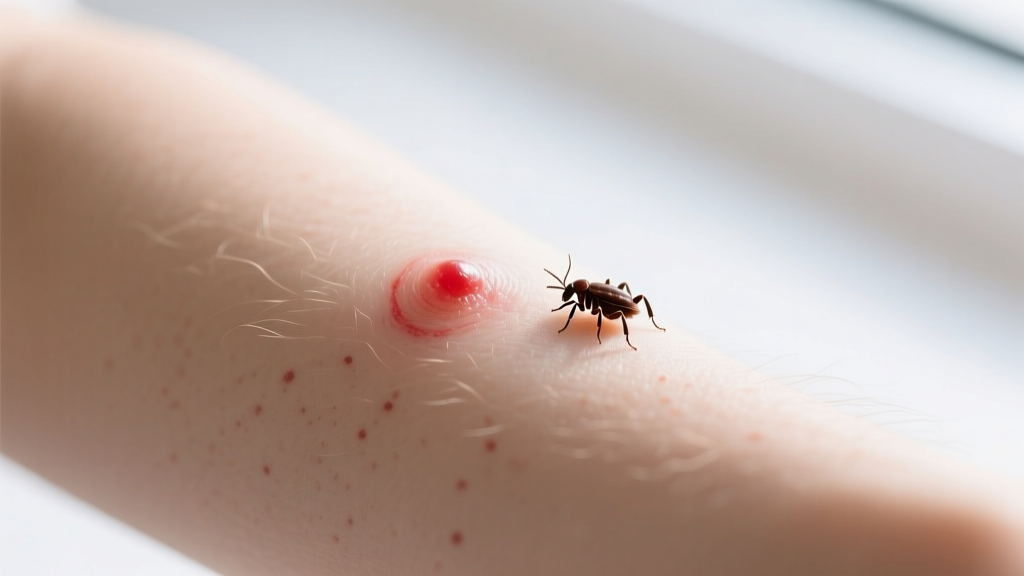
What Do Fleas Look Like on Humans? Bite Identification Guide
The Core Misconception: Do Fleas Actually Live on Humans?
When homeowners search for what fleas look like on humans, they often expect to find images of the insects nesting in human hair or crawling continuously across the skin. Biologically, this is a misconception. Unlike head lice (Pediculus humanus capitis), fleas are transient parasites. They do not live, breed, or nest on human hosts. Human skin lacks the dense fur required for fleas to hide and lay eggs, and our body temperature (98.6°F) is slightly too high for optimal flea reproduction compared to the 101°F–103°F baseline of dogs and cats.
Instead, fleas use humans as opportunistic, temporary blood meals. They jump onto exposed skin—typically the ankles and lower legs—bite, feed for a few minutes, and immediately jump off to retreat into the environment (carpets, yard thatch, or pet bedding). Therefore, when you are trying to identify a flea problem on your person, you are almost exclusively looking at the dermatological evidence of the bite, rather than the insect itself.
Expert Insight: Over 90% of home and yard flea infestations are caused by the cat flea (Ctenocephalides felis), even in households that only own dogs. The true "human flea" (Pulex irritans) is exceedingly rare in modern, climate-controlled homes and is mostly associated with agricultural or wildlife settings.
What the Insect Looks Like (If You Manage to Spot It)
If you do catch a glimpse of a flea on your skin before it jumps, it will appear as a tiny, fast-moving speck. According to the Centers for Disease Control and Prevention (CDC), adult fleas share these specific morphological traits:
- Size: 1.5 to 3.3 millimeters long (roughly the size of a pinhead or a grain of coarse black pepper).
- Color: Dark mahogany to reddish-brown. They appear darker after engorging with blood.
- Shape: Laterally compressed (flattened side-to-side, like a surfboard), which allows them to navigate easily through animal fur.
- Wings: Completely wingless.
- Mobility: Capable of jumping up to 13 inches vertically and horizontally in a single bound—roughly 150 times their body length.
Identifying Flea Bites on Human Skin
Because the insect itself is rarely seen on the body, dermatological identification is the primary diagnostic tool. Flea bites trigger an allergic reaction to the proteins found in flea saliva. The visual presentation is highly distinct from other common household pests.
The Visual Signature of a Flea Bite
A standard flea bite presents as a small, raised red bump (papule) measuring 2 to 5 millimeters in diameter. The defining characteristic is the central hemorrhagic punctum—a tiny, dark red or purple dot in the exact center of the bump, which marks the point where the flea's proboscis pierced the epidermis. This central dot is often surrounded by an erythematous halo (a lighter red, inflamed ring) caused by localized histamine release.
The "Breakfast, Lunch, and Dinner" Pattern
Fleas are easily disturbed while feeding. If a human moves, swats, or shifts their weight, the flea will detach, move a few inches, and bite again. This results in a highly specific clustering pattern colloquially known among entomologists as "breakfast, lunch, and dinner." You will typically see groups of three or four bites arranged in a tight, irregular cluster or a short, zigzagging line, almost always concentrated on the feet, ankles, and lower calves.
Bite Comparison Matrix: Fleas vs. Bed Bugs vs. Mosquitoes
Misidentifying the pest leads to wasted time and incorrect pest control treatments. Use this diagnostic matrix to differentiate your bites.
| Feature | Flea Bites | Bed Bug Bites | Mosquito Bites |
|---|---|---|---|
| Primary Location | Ankles, lower legs, feet | Torso, arms, neck, face | Random, any exposed skin |
| Pattern | Irregular clusters of 3-4 | Linear or zigzag rows | Scattered, isolated bumps |
| Central Punctum | Yes (dark red dot) | No | Rarely visible |
| Size & Shape | 2-5mm, hard papule with halo | 5-10mm, flat or slightly raised | 10mm+, puffy, soft welt |
| Onset of Itch | Immediate to 12 hours | Delayed (up to 14 days) | Immediate |
Medical Treatment Protocol for Flea Bites
The Mayo Clinic advises that while flea bites are generally a nuisance rather than a severe medical threat, the intense pruritus (itching) can lead to secondary bacterial infections if scratched excessively. Follow this step-by-step protocol to manage symptoms:
- Immediate Cleansing: Wash the affected area with mild soap and cool water. This removes residual flea saliva and surface bacteria, reducing the histamine reaction.
- Topical Corticosteroids: Apply an over-the-counter 1% hydrocortisone cream (e.g., Cortizone-10) directly to the punctum. Apply twice daily for up to 7 days to suppress localized inflammation.
- Oral Antihistamines: For widespread clusters or severe allergic reactions (papular urticaria), take a non-drowsy oral antihistamine. Cetirizine (Zyrtec) 10mg or Fexofenadine (Allegra) 180mg taken once daily blocks systemic histamine receptors.
- Infection Prevention: If the skin is broken from scratching, apply an OTC antibiotic ointment (like Polysporin) and cover with a standard adhesive bandage to block Staphylococcus bacteria entry.
Eradicating the Source: Yard and Perimeter Defense
Treating your skin only addresses the symptom. To stop the bites, you must break the flea life cycle in your environment. Only 5% of a flea population consists of biting adults; the remaining 95% exists as eggs, larvae, and pupae hidden in your yard and carpets.
Targeting the Yard's "Transition Zones"
Flea larvae are photophobic (light-fearing) and desiccate rapidly in direct sunlight. They thrive exclusively in shaded, humid microclimates. In a lawn setting, this means the "transition zones"—the perimeter where the lawn meets wooded areas, the soil beneath raised wooden decks, and the shaded areas around dog houses or shrubbery.
Biological Control (Nematodes): The most effective, eco-friendly yard treatment is the application of beneficial nematodes, specifically the species Steinernema carpocapsae. These microscopic worms actively hunt and destroy flea larvae and pupae in the soil.
Application Specifics: Purchase a commercial formulation (e.g., Arbico Organics Nematodes, approximately $35 for 10 million nematodes covering 2,000 sq. ft.). Apply using a hose-end sprayer at dusk (UV light kills nematodes). Water the lawn immediately before and after application to push the nematodes into the top 2 inches of soil where larvae reside.
Indoor Chemical Intervention: The Role of IGRs
Vacuuming daily removes up to 30% of adult fleas and stimulates pupae to emerge. However, chemical treatment requires an Insect Growth Regulator (IGR). Products containing Pyriproxyfen (such as PT Ultracide, ~$25 per 20oz can) mimic the flea's juvenile hormone. When larvae ingest pyriproxyfen-treated dust, they are biologically trapped in the larval stage and cannot molt into biting adults. Always read the Environmental Protection Agency (EPA) guidelines before applying indoor aerosols, and ensure pets and humans vacate the premises until the product is completely dry.
Warning: The Pupal Window
Flea pupae are encased in a sticky, silken cocoon that is virtually impermeable to all chemical insecticides. If you treat your home and still see adult fleas emerging 5 to 10 days later, the treatment did not fail. The adults are hatching from pre-existing, chemical-resistant pupae. Maintain your IGR treatment and continue vacuuming daily to trigger emergence via vibration; the newly hatched adults will die upon contact with the residual insecticide before they can lay new eggs.
Flea pupae are encased in a sticky, silken cocoon that is virtually impermeable to all chemical insecticides. If you treat your home and still see adult fleas emerging 5 to 10 days later, the treatment did not fail. The adults are hatching from pre-existing, chemical-resistant pupae. Maintain your IGR treatment and continue vacuuming daily to trigger emergence via vibration; the newly hatched adults will die upon contact with the residual insecticide before they can lay new eggs.
Frequently Asked Questions
Can fleas transmit diseases to humans?
Yes, though it is rare in modern domestic settings. Fleas are known vectors for murine typhus, cat scratch disease (Bartonella henselae), and, historically, the bubonic plague. In the United States, the most common secondary issue is tapeworm infection (Dipylidium caninum), which occurs if a child accidentally ingests an infected flea.
Why do my flea bites have a massive, swollen halo?
This is a condition known as papular urticaria, a localized hypersensitivity reaction to flea saliva proteins. It is most common in children and individuals who have not been repeatedly exposed to fleas. The swelling can reach 2 to 3 inches in diameter and may feel warm to the touch, mimicking a spider bite.
Will taking a hot shower kill fleas on my body?
If a flea is currently on your skin, yes, hot water and soap will drown it or wash it down the drain. However, because fleas do not nest on humans, showering will not cure an infestation. The fleas waiting in your carpet or yard will simply jump back onto you the moment you step out of the bathroom.

